★★★★
 Another
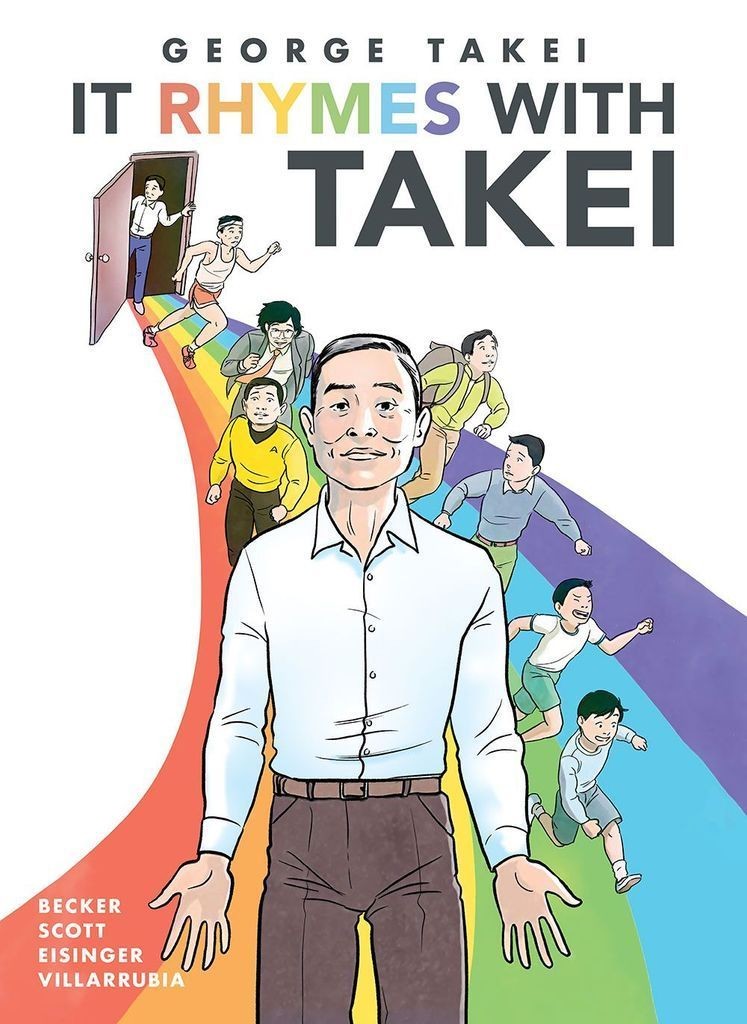
 great graphic memoir by George Takei. While I am a huge fan of George Takei, I'm not accustomed to reading graphic novels, so I admit this style of storytelling always takes some getting used to for me.
There are certainly LGBTQIA+ books for kids, but I would categorize this one as YA. There's nothing explicit, but the graphic novel medium was pretty effective at suggesting more extensive meaning behind a few chosen words, particularly when sexual activity was involved. Also, gay slurs do appear in the dialog.
George Takei didn't publicly come out as gay until he was 68 years old, and this graphic memoir explains why. Being gay was a constant source of fear and anxiety for him. He lived a tortured life, always in dread of being exposed, afraid that his sexuality becoming public would destroy his acting career. It may even have held him back from political aspirations. Sadly, some of his concerns were validated when a private coming out caused a distressing rift in his family.
It was comforting to read how George Takei's Buddhist upbringing helped him to accept himself and avoid the common pitfall of self-hatred. (p. 30-31) And I absolutely loved reading about how he met his husband Brad and how their relationship grew.
In addition to chronicling George Takei's personal relationship with his own sexuality and his activism for the LGBTQIA+ community, the book also touched upon other issues such as immigration, politics, racial equity, and police brutality. In one poignant observation illustrating a common thread throughout history and current events, George Takei realized that "even my fellow Japanese Americans who had been exploited themselves, were nonetheless capable of exploiting others." (p. 37)
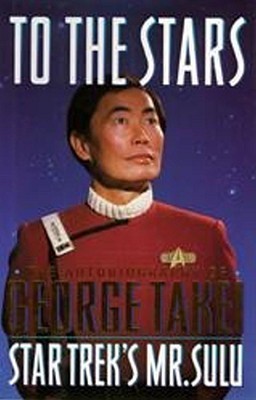
Bits and pieces reminded me of his 1994 autobiography
To the Stars, which I read decades ago and can't remember too well anymore. I pulled out the book for a quick comparison and had fun discovering that some lines in the graphic memoir were taken from the autobiography almost verbatim! But even when telling of the same event, the perspectives presented sometimes differed between the books. For example, when recounting a college production called
Portraits in Greasepaint, both books described it as a stepping stone on his career path because a casting director saw him in that performance and ended up casting him in a film; however, the graphic memoir also mentioned a romantic relationship with a fellow male cast member (p. 96), additional context that was not included in the 1994 book, which did not discuss his sexuality at all. I just might re-read
To the Stars, to piece together the narratives from both books and mentally integrate them into a more complete picture.
While overall a very inspiring book, I was a little conflicted about the ending. Much was made of how Biden defeated Trump in 2020, how the "worst policies of Trump's grievance government" were "repudiated", and how we, as a nation, "regained our deepest sense of [decency]." (p. 325) But then, the following pages acknowledged that now, in 2025, "once again, it is a heady time and a fraught time." (p. 328) The book is a timely reminder that progress is possible, and that "the strength of our nation is in its abundant diversity" (p. 333), yet there was no reckoning of what Trump's 2024 re-election says about America.
Apropos nothing, it was surprisingly jarring to see some of the illustrations depicting the norms of an earlier time, e.g. George Takei riding a motorcycle without a helmet in 1964 (p. 128) and George Takei holding his infant nephew in his arms in the back seat of a car - no car seat! - in 1966. (p. 166)
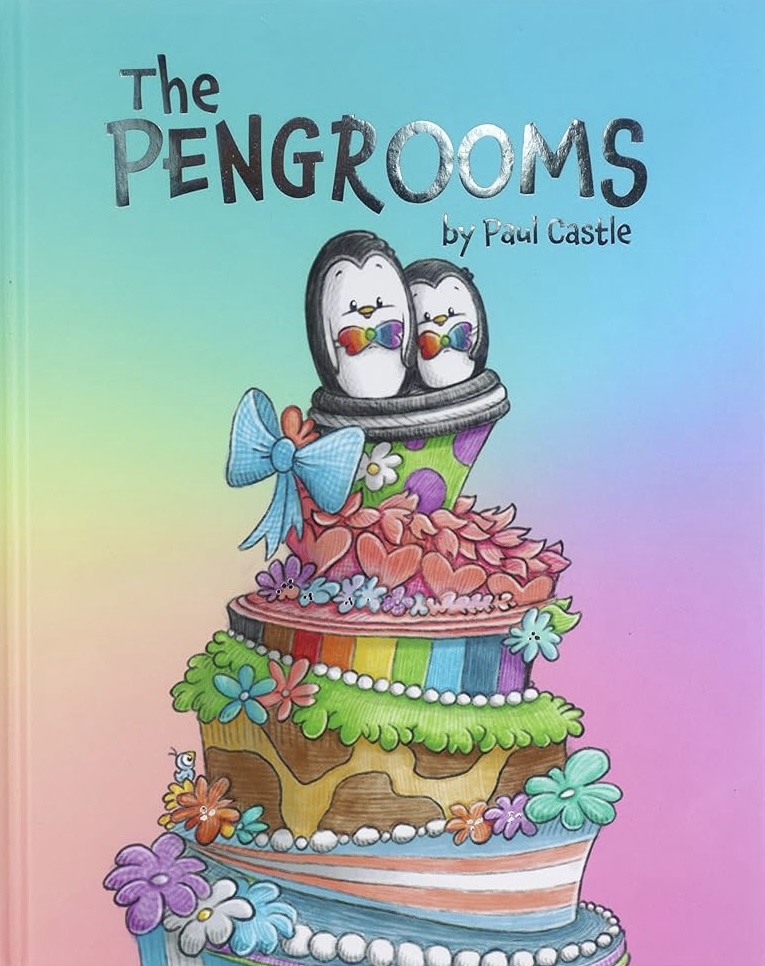 I love the inclusivity of an LGBTQIA+ children's book, especially one that doesn't feel heavy-handed. This book is just a cute story about a pair of penguins - presumably both male based on the title - who make and deliver custom wedding cakes to other animal couples, culminating in the penguins' own wedding.