Showing posts with label book: 4 stars. Show all posts

Friday, September 5, 2025

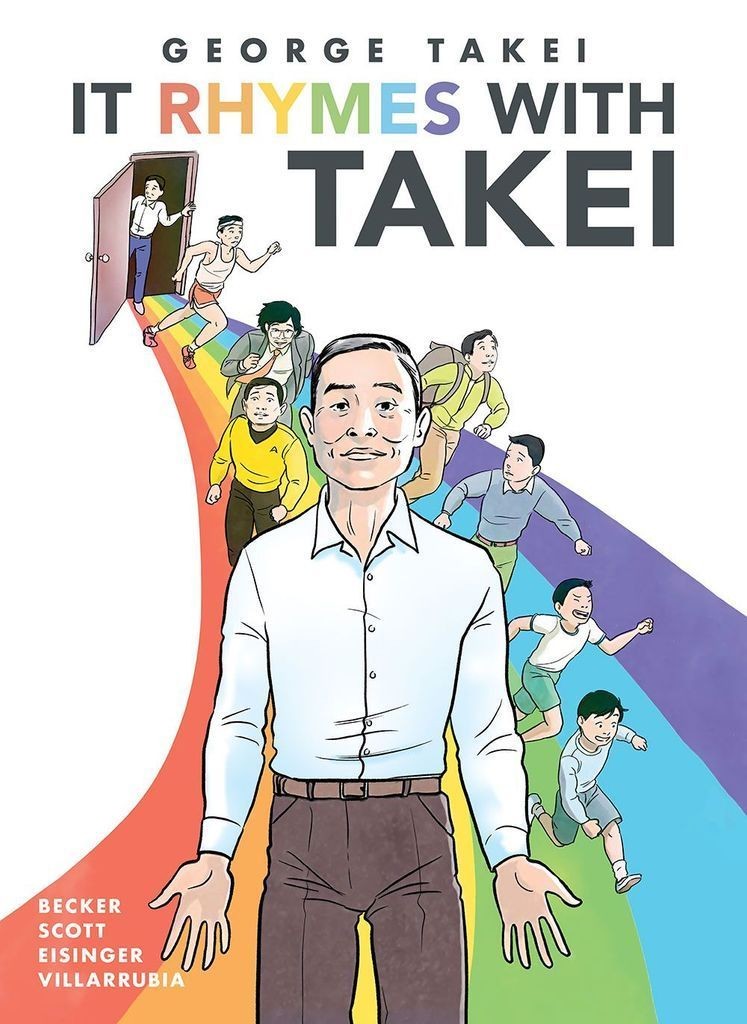
It Rhymes with Takei by George Takei

★★★★

Another great graphic memoir by George Takei. While I am a huge fan of George Takei, I'm not accustomed to reading graphic novels, so I admit this style of storytelling always takes some getting used to for me.

There are certainly LGBTQIA+ books for kids, but I would categorize this one as YA. There's nothing explicit, but the graphic novel medium was pretty effective at suggesting more extensive meaning behind a few chosen words, particularly when sexual activity was involved. Also, gay slurs do appear in the dialog.

George Takei didn't publicly come out as gay until he was 68 years old, and this graphic memoir explains why. Being gay was a constant source of fear and anxiety for him. He lived a tortured life, always in dread of being exposed, afraid that his sexuality becoming public would destroy his acting career. It may even have held him back from political aspirations. Sadly, some of his concerns were validated when a private coming out caused a distressing rift in his family.

It was comforting to read how George Takei's Buddhist upbringing helped him to accept himself and avoid the common pitfall of self-hatred. (p. 30-31) And I absolutely loved reading about how he met his husband Brad and how their relationship grew. 

In addition to chronicling George Takei's personal relationship with his own sexuality and his activism for the LGBTQIA+ community, the book also touched upon other issues such as immigration, politics, racial equity, and police brutality. In one poignant observation illustrating a common thread throughout history and current events, George Takei realized that "even my fellow Japanese Americans who had been exploited themselves, were nonetheless capable of exploiting others." (p. 37)

Bits and pieces reminded me of his 1994 autobiography To the Stars, which I read decades ago and can't remember too well anymore. I pulled out the book for a quick comparison and had fun discovering that some lines in the graphic memoir were taken from the autobiography almost verbatim! But even when telling of the same event, the perspectives presented sometimes differed between the books. For example, when recounting a college production called Portraits in Greasepaint, both books described it as a stepping stone on his career path because a casting director saw him in that performance and ended up casting him in a film; however, the graphic memoir also mentioned a romantic relationship with a fellow male cast member (p. 96), additional context that was not included in the 1994 book, which did not discuss his sexuality at all. I just might re-read To the Stars, to piece together the narratives from both books and mentally integrate them into a more complete picture. 

While overall a very inspiring book, I was a little conflicted about the ending. Much was made of how Biden defeated Trump in 2020, how the "worst policies of Trump's grievance government" were "repudiated", and how we, as a nation, "regained our deepest sense of [decency]." (p. 325) But then, the following pages acknowledged that now, in 2025, "once again, it is a heady time and a fraught time." (p. 328) The book is a timely reminder that progress is possible, and that "the strength of our nation is in its abundant diversity" (p. 333), yet there was no reckoning of what Trump's 2024 re-election says about America. 

Apropos nothing, it was surprisingly jarring to see some of the illustrations depicting the norms of an earlier time, e.g. George Takei riding a motorcycle without a helmet in 1964 (p. 128) and George Takei holding his infant nephew in his arms in the back seat of a car - no car seat! - in 1966. (p. 166)

Monday, October 28, 2024

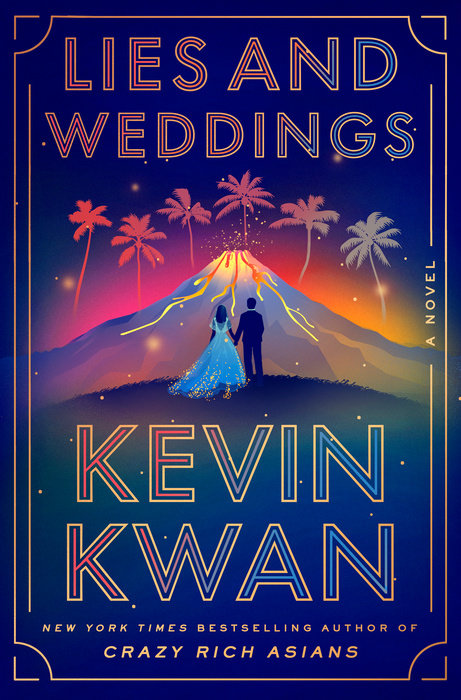
Lies and Weddings by Kevin Kwan

★★★★

*** WARNING!! This review contains spoilers!! ***

An entertaining read with short episodic chapters. Very easy to imagine this book as a hit streaming TV series! I think being a fan of the British TV show Midsomer Murders, with all their episodes featuring English country estates, helped me to enjoy this book even more, allowing me to easily imagine Greshamsbury Hall and the surrounding village.

Once again, Kwan brings us into the world of the uber rich, only this time, it's not just Asians in Asia, but also half-Asians as well as English landed aristocracy, international investors, and Persian-Iranian-Americans drowning in opulence in Hawaii, Morocco, Los Angeles, and Venice. I kept my phone handy to search up words and references I didn't recognize, from fashion and architecture terminology to famous people and places. This time, part of the fun of all the astonishing over-the-top luxury was the disapproval of the more social justice minded characters.

The narrator including each character's educational pedigree since nursery school with their first appearance was downright hilarious (I was disappointed when this feature dropped away in the LA part of the book), and frequent cheeky footnotes added an additional layer of humor. I actually laughed out loud a couple times.

I had every intention of giving this book 5 stars, until the festivities got to Venice. Everything suddenly got to be a bit much. Not that the characters had been very deep to begin with, but now their actions just felt like plot devices. By this point, the inevitable conclusion was obvious, and I was surprised to find myself losing interest, as the ending was not what I had hoped it would be.

*** Warning: Stop reading here to avoid spoilers!! ***

Even Arabella, as willfully oblivious as she was, should have been able to see that Eden didn't care enough about what other people think to be blackmail-able. And I had high hopes for Martha Dung, but she turned out to be not much more than yet another billionaire with an over-the-top lifestyle, willing to throw money at acquaintances she just met. Mostly, I didn't like how ultimately, it was okay for characters to choose love as long as everyone turned out to be secretly wealthy, thereby making them acceptable. I would have liked to have seen how Bea and Rufus - and all the Greshams, really - would have adjusted to life as "regular people", having to get jobs and live within their means. And in the end, I wanted more for Freddy Farman-Farmihian, who I found to be the most interesting character; I was impressed with how Kwan wrote him to elicit a specific first impression, and then developed him so that my opinion of him took an almost 180-degree turn.

Finally, I think there's a fun reference to a character from Crazy Rich Asians, making this book feel like a spin-off, or at least like it exists in the same universe.

Wednesday, April 17, 2024

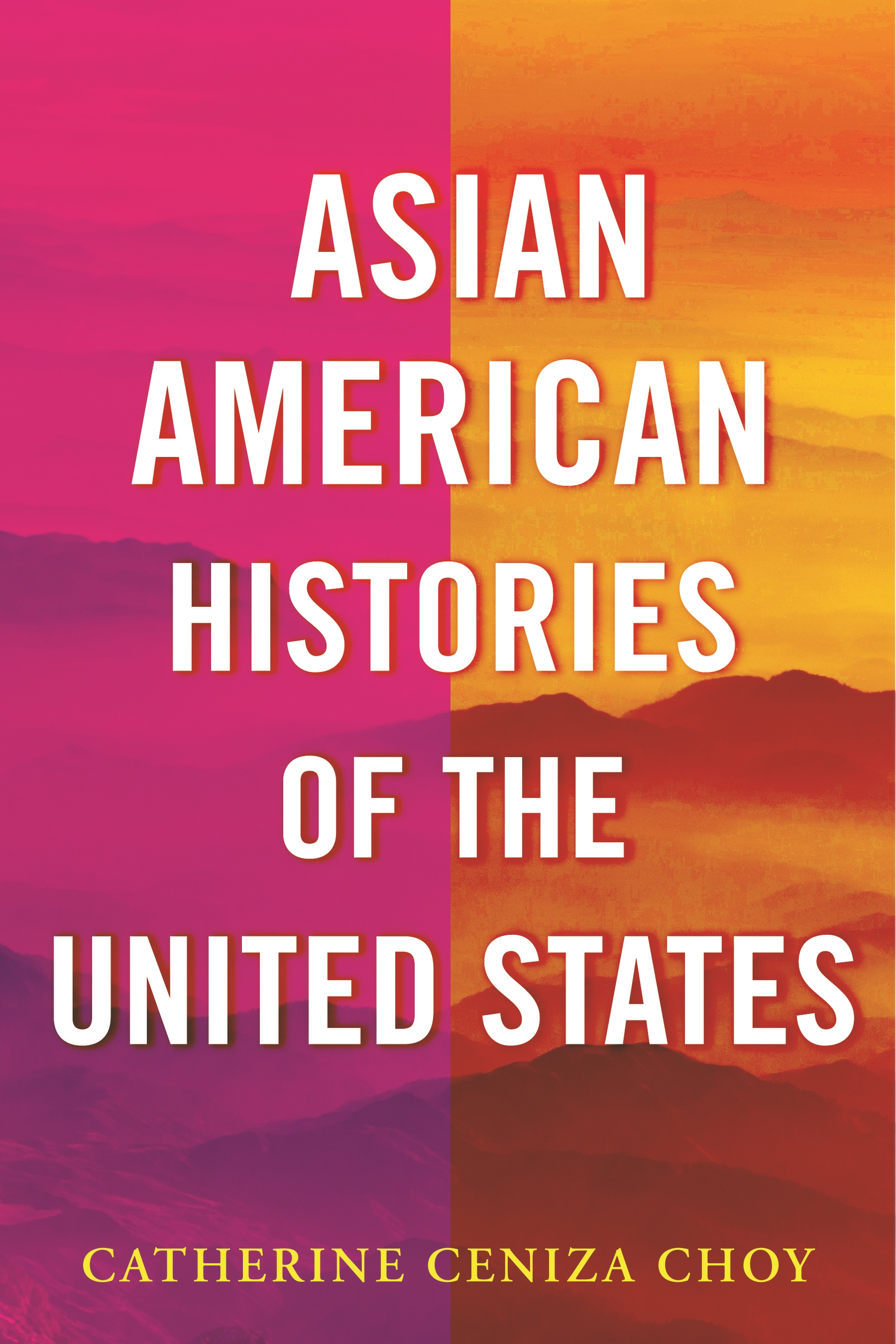
Asian American Histories of the United States by Catherine Ceniza Choy

★★★★

Throughout American history, Asians have been stereotyped as both "subhuman and superhuman threats." (p. x) "An Asian American woman is a lotus blossom, but also a dragon lady." (p. xi) Asian Americans are "whiz kids... who do not complain" (p. ix) but also "harbingers of disease and immorality." (p. x) How did we get here? The author addresses this question "by emphasizing three interconnected themes in Asian American histories of the United States: violence, erasure, and resistance." (p. xii)

Notably, she immediately dispels the myth that Asian Americans are a monolith. She showcases the diversity within the demographic by purposely "writing this book... to narrate and to integrate less well-known stories about Asian Americans... such as Indian, Korean, Filipino, and Cambodian Americans, as well as mixed race and adopted Asian Americans, among others." (p. xvi)

In the preface, the author explains how most Asian American history courses and books tend to cover topics chronologically, "ending approximately in the 1980s...with scant attention to more contemporary issues." (p. xvii) I have found this to be exactly the case in my experience, and I was intrigued by her decision to feature "multiple temporal origins of Asian American history, beginning in 2020, with subsequent chapters moving back in time... [to] illuminate connections among historical events hitherto unseen, such as... the continuity of historical alliances between Black and Asian Americans, from Frederick Douglass's 1869 speech advocating for Chinese immigration to Yuri Kochiyama and Malcolm X's friendship in the 1960s." (p. xvii)

Truly, the author's unique approach made Asian American history feel less like static past events and more like modern-day issues. For example, the book started with the COVID-19 pandemic, highlighting the work of Stop AAPI Hate in documenting anti-Asian violence and discrimination, and tied the resurgence of racism at the start of the pandemic to the long history in America of "association of Asian bodies with disease" (p. 2) dating back to the first wave of Asian immigrants in the 1800s. It also provided context to how "COVD-19 was taking a disproportionate toll on Filipino American nurses" (p. 12) by fleshing out the decades-long history of Filipino nurses in the American healthcare workforce. She also connected the 2021 killings of 6 Asian American women in spas in north GA to America's history of sexualizing and objectifying Asian women, starting with the Page Act of 1875, which "created a system of enforcement that conflated Asian women's migration with prostitution." (p. 158)

Other often overlooked Asian American histories that are discussed in this book: the arrival and contribution of refugees from Vietnam, Cambodia, and Laos, including the involvement of the U.S. in creating the situations from which they fled; the role of Asian Americans in U.S. farming, agricultural workers' rights, and the restaurant industry; the service and treatment of Asian Americans in the U.S. military; the effect of imperialism and the struggle for independence in their homelands on Korean, Filipino, and Indian immigrants.

Overall, this book is a great survey-level introduction to parts of Asian American history that are somehow both commonly overlooked and also contemporarily relevant. It does not delve into any great detail, and is not academically dry. The author frequently presents anecdotal stories of diverse Asian American experiences that personalize the topics, including episodes from her own life, showing that Asian American history is not just a field of study, but a living history unfolding all around us, even within our own Asian American families.

Incidentally, I have just one complaint: On page 46, the author refers to a "Lao Student Association" that promotes "Lao culture", and then on page 47, there's a "Laotian American Society" that supports the "Laotian community". What's the difference between "Lao" and "Laotian"? An explainer would have been helpful. I searched it up and found this article: "Is it 'Lao' or 'Laotian'? In Laos, There's a Big Difference".

Friday, December 1, 2023

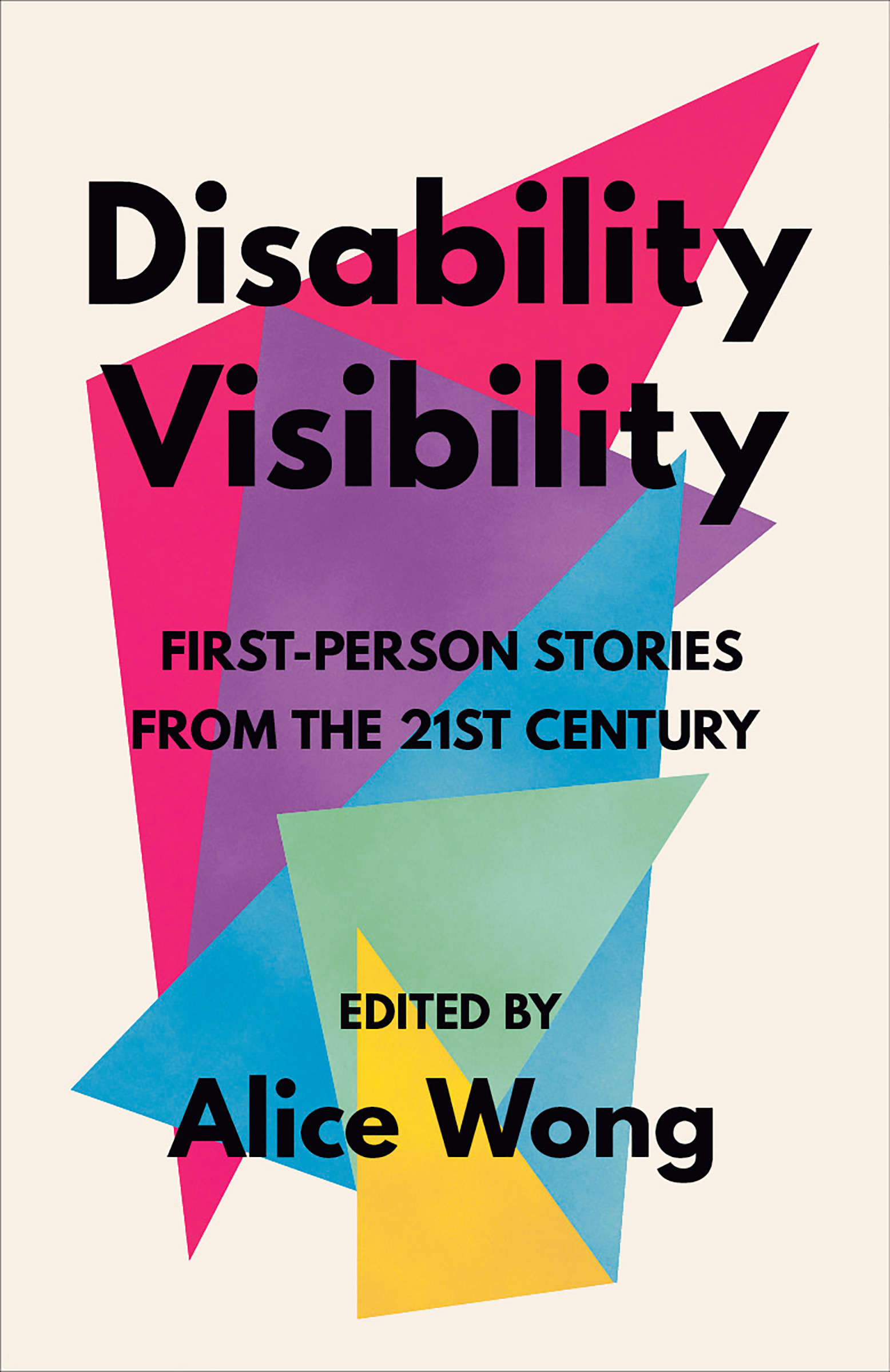
Disability Visibility: First-Person Stories from the Twenty-First Century edited by Alice Wong

★★★★

This book is a "must read" not in a page-turning-I-couldn't-put-it-down kind of way, but rather, because everyone should be exposed to the ideas in these essays.

As someone just beginning to learn about disability justice, I picked up the book after hearing about the editor, but all the writers were new to me. Pro Tip: There's an "About the Contributors" section towards the end of the book with a paragraph-long blurb on each author. I also found myself researching some of the writers online, to learn even more about who they are and what they do.

Some essays include "content notes" at the start of the piece, essentially a "content/trigger warning", so the reader is prepared to confront topics like sexual assault or suicide.

Was it uncomfortable reading personal stories about people's disabilities? Yep. But it was the kind of uncomfortable that everyone needs to sit with. These are people! These are their lives! There's the incarcerated deaf man who is punished as recalcitrant when he's handcuffed and unable to sign or write, and is denied an interpreter when his deafness is even acknowledged. The amputee with a prosthetic leg who needs to make sure she walks an "average" (p. 74) number of steps a day, recorded by the leg's technology, in case her insurance company tries to deny her the leg on the grounds she doesn't use it enough. All people deserve dignity and to be included in our definitions of humanity and society. People with disabilities deserve more than survival; they deserve to have access to all the opportunities and spaces abled people have, with whatever assistance they need, without feeling like a burden to others.

What's most striking about this collection is how intersectional the essays are. This book is not just about disabilities in themselves, but about being a disabled black woman, or making a significant contribution to science as a blind astronomer. Authors offer their perspectives on disability and parenting, or disability and sexuality. There's an essay about having to reconcile being disabled and Muslim during Ramadan, when those with medical conditions are exempt from fasting; a fashion manifesto about disabled queer clothing; a piece about navigating disability as an Asian American in an immigrant family with a culture that stigmatized disabilities. Some of the authors are born with disabilities, some are disabled by new onset medical conditions or injuries. Some accept their disabilities as part of their identity while others may hope for a cure or recovery. The essays drive home the point that "the presence or absence of a disability doesn't predict quality of life." (p. 9) 

Since learning about disability activism, I've been increasingly frustrated at how DEI (Diversity, Equity, and Inclusion) leaders and organizations routinely ignore disability. They rightly fight for so many marginalized groups but somehow stop short of recognizing that "disability rights are civil rights" (p. xvii). According to an essay by the Harriet Tubman Collective, "60 to 80 percent of the people murdered by police are... Disabled and/or Deaf people." (p. 237) When the Movement for Black Lives completely omitted any mention of disability from their 6-point platform released in 2016, the Harriet Tubman Collective said, "It is disingenuous, at best, and violently irresponsible at worst, to claim to want justice for those who have died at the hands of police, and neither name disability nor advance disability justice." (p. 240) It looks like the Movement got the message, because their website does now mention disability and ableism. This awareness still needs work at the local level, where I have yet to see any DEI initiatives address disability. (Notably, in these covid times, widespread masking would allow people at higher risk for severe illness to more safely enter public spaces, yet masking as a disability accessibility issue is widely disregarded.) 

On a personal note, I don't consider myself disabled, but having had cancer, and having gone through related surgeries and chemo and other treatments - some that have left me with permanent, uncomfortable-but-not-disabling side effects - I understand plainly that anyone can become disabled at any time, and I feel I've existed, perhaps sometimes still exist, temporarily, within the disability world. Some aspects of disability resonate with me and, in particular, an essay by Ellen Samuels struck me like an epiphany. (One of the many things I learned in this book is that the disabled community is reclaiming the word "crip", slang for "cripple"; I would not use the term myself, but I am including it below as part of the original quote.)

"Crip time is time travel. Disability and illness have the power to extract us from linear, progressive time with its normative life stages and cast us into a wormhole... Some of us contend with the impairments of old age while still young... we rage silently--or not so silently--at the calm straightforwardness of those who live in the sheltered space of normative time... Crip time is grief time... What I have found much harder to let go is the memory of my healthier self. With each new symptom... I grieve again for the lost time, the lost years that are now not yet to come... crip time is broken time. It requires us to break in our bodies and minds to new rhythms... It forces us to take breaks, even when we don't want to... It insists that we listen to our bodyminds so closely, so attentively, in a culture that tells us to... push the body away from us while also pushing it beyond its limit... crip time is vampire time... we live out of time, watching others' lives continue like clockwork while we lurk in the shadows." (p. 190-192, 195-196)

Saturday, October 7, 2023

Rememberings by Sinéad O'Connor

★★★★

I regret that it was Sinéad O'Connor's death that finally spurred me to read her book. I was a fan of her music in high school and college, but I admit I didn't much follow her personal life.

This is the second memoir in a row that I've read by someone who died shortly after the book was written, which adds a certain amount of gravitas to the book. It was heartbreaking to read her plans for her future: "So this is only my first memoir. My intention is to live a long life and keep diaries this time so I won't forget." (p. xii) Towards the end, she described her next album, which was never released.

I think Sinéad O'Connor is a good storyteller. Her prose was sometimes lyrical, sometimes cheeky. She wrote as if she were speaking, so the text is dotted with "ain't" and "dunno" and "gonna". Each chapter is a short vignette, most just a few pages long. Black-and-white photos are interspersed. The book is mostly in chronological order, but sometimes it jumps around in order to follow the full thread of a theme or person. I read the book with a certain amount of apprehension, knowing unpleasant things would be revealed.

She is honest and vulnerable, child-like and God-loving, especially in the first two parts that describe her childhood and early adulthood, yearning for love and being drawn to gentleness. The whole book is a reminder to have grace for others, and to treat others kindly, because you really don't know what they may be going through.

In the last part of the book, she wrote of her adulthood and later albums. Fans will appreciate that she explained the story behind many of her songs. She mostly provided only a glimpse of her personal life at that point, and in the chapter called "The Wizard of Oz," she explained that after she had finished writing up to and including the Saturday Night Live Pope photo-ripping incident, she "had an open-surgery radical hysterectomy... followed by a total breakdown... and by the time I'd recovered, I was unable to remember anything much that took place before it." (p. 267)

(An aside: As someone who has also gone through surgical menopause due to ovary removal, though my experience was not nearly as extreme as hers, I welcome any opportunity to raise awareness of women's health and GYN procedures. If you have a uterus and ovaries, please make sure you have a GYN doctor you trust, and if something unexpected should arise, be open with other women in your life; very likely someone knows something about what you're going through and can offer information, insight, or support.)

What is abundantly clear throughout the book is that through all her life's ups and downs, she had music. She genuinely conveys her deep, abiding, life-long love for music and singing.

Her rock-n-roll lifestyle may be shocking to some readers, but despite the way music executives tried to market her, she was always "a punk, not a pop star." (p. 149) She lived her life true to her lyrics in "The Emperor's New Clothes" - Whatever it may bring / I will live by my own policies / I will sleep with a clear conscience / I will sleep in peace. I was really struck by how principled she was: "To the great consternation of many, I refused all the awards I was personally offered for my second album. Because I knew... that I wasn't getting awards because of anything I stood for. Rather, I was getting awards because I'd... sold a lot of records. Commercial success outranked artistic merit. I made a lot of money for a lot of men who couldn't actually have cared less what the songs were about. And in fact would prefer I told no one." (p. 149) Those rich men did a good job enforcing their preference, because even when she tore up the Pope's picture on Saturday Night Live, I clearly remember how it was a big scandal and everyone was all up in arms about it, but as a young teen at the time, I had no idea she did it to protest child abuse within the Catholic church. I feel a bit guilty now for having been a part of the commercialization of her music, one of those people who enjoyed her songs without understanding how intensely personal they were, without really seeing her.

I was also profoundly moved by her account of how she was booed at a Bob Dylan celebration concert a couple weeks later. I searched up the video of this performance on YouTube, and it's incredible: As she walks onto the stage, you can see in her face how happy she is to be a part of an event in honor of one of her personal heroes. She's supposed to sing a beautiful rendition of Bob Dylan's "I Believe In You" (one of my favorite songs to listen to around Christmas), but then, you see the realization dawn on her face as she processes the booing. You can see the wheels turning in her head, she makes an on-the-spot decision to change her song, and she belts out "War" by Bob Marley - the same song she sang on SNL just before tearing up the photo - and you can see she is all anger and defiance and hurt. She was truly an extraordinary woman, standing up for abused children when no one else would even acknowledge the problem.

Quite remarkably (since there is so little reference to the covid-19 pandemic in contemporary culture), the epilogue was written in the spring of 2020; she described the state of the pandemic, and America, at the time, and was hopeful. Again, she had plans.

Reading her book, it felt like she was alive again. When I finally put the book down upon finishing it, the reality of her death was such a weight of sadness.

Friday, November 4, 2022

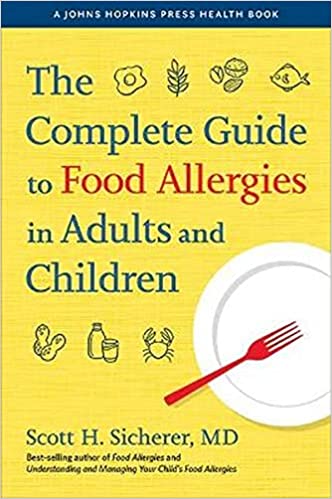
The Complete Guide to Food Allergies in Adults and Children by Scott H. Sicherer

★★★★

I've been managing my children's life-threatening food allergies for over 13 years, since my youngest was 18 months old. On the one hand, this book was extremely informative; there's a lot of misinformation out there, so it's good to have a reliable go-to source. On the other hand, there are things I wish the book included, but didn't.  

First, what I liked. The information was delivered very straightforwardly in question-and-answer format. The book was comprehensive, covering not just allergies but also other food-related conditions like intolerances and sensitivities. 

The section on oral food challenges (p. 83-90) and all of chapter 4 on anaphylaxis and epinephrine (p. 98-130) were especially instructive and helpful. In particular, I appreciated that the book was very clear about treating anaphylaxis with epinephrine as the first line of defense, and how other medications (e.g., antihistamines, bronchodilators, and corticosteroids) are supplemental interventions. (p. 118-120)

Chapter 6 on "Mastering Allergen Avoidance" (p. 159-203) was also excellent. I wish EVERYBODY - teachers, parents, family members, employers, all medical professionals - could read this chapter!! 

Importantly, when discussing oral immunotherapy (OIT), the book stated unambiguously that "the primary benefit is to increase the threshold of reactions" (p. 268) and "this is a treatment, not a cure." (p. 272) I was relieved to see this information so clearly presented because in my experience, it is very common for people to misunderstand OIT and believe it is a full-fledged cure.

Now, what I wish the book had included. Everything below is going to sound nit-picky, but if there's one thing managing allergies has taught me, it's the importance of being thorough!

For the most part, the Q-and-A format helped make the book approachable. Occasionally, though, I think it broke up a topic unnecessarily. A person skimming the book might read one answer and think it was complete, not realizing additional information is presented under another question. For example, this question and answer appeared on page 32: "If I am allergic to one nut, do I need to avoid all nuts? A person may be allergic to one or two or many nuts. Avoiding all nuts when there is an allergy to just one or two is a personal decision." Reading just this excerpt, a reader might think that the decision is a simple matter of personal preference. It's not until later on the same page that the nuances were described. A separate question asked: "What considerations are important in deciding whether to eat some types of nuts when there are allergies to other types?" The paragraph-long answer to this question pointed out, "Because nuts are often processed together it is difficult to find ones that are not at risk for cross-contact." So, it turns out, the decision involves a deeper understanding of nut manufacturing processes and also a personal risk assessment. Because of this tendency for details regarding a specific issue to be broken up among several questions, I wish some questions were grouped together, with a "main question" serving as a section header, and related questions listed underneath, maybe as bullet points. 

Along the same lines, I didn't understand why small pieces of information were separated out in the "Delving Deeper" section on pages 157-158. This section consisted of just 3 paragraphs, one each for addressing questions related to FPIES, eosinophilic esophagitis, and atopic dermatitis. Each topic had a whole section earlier in the same chapter, so why weren't these paragraphs just included in their respective sections?

I was disappointed that the brief section on allergic-like reactions to alcoholic beverages (p. 45-46) did not at all mention the "Asian flush", which was only alluded to in passing under an earlier question about alcohol intolerance. (p. 5) Asians having allergic-like reactions to alcohol is not a true allergy, but it is a well-known issue caused by a deficiency of the enzyme aldehyde dehydrogenase 2 (ALDH2), a condition similar to lactose intolerance, which was examined more closely. (p. 3-5)

Chapter 3, "All about Allergy Tests," was extensive, yet still managed to omit one of my most pressing questions: Can both the skin test and blood tests be positive even when there is no allergy? I actually found it odd that this question was not posed, since the opposite question was asked and answered: "Can both the skin test and blood tests be negative even when there is an allergy?" (p. 77)

I also wish the section on antihistamines (p. 116-119) was more thorough. On page 117, different types/brands were mentioned, e.g. diphenhydramine (Benadryl), cetirizine (Zyrtec), and fexofenadine (Allegra), but loratadine (Claritin) was noticeably absent; why? This section mostly discussed antihistamines as a group, but there's a whole bunch of questions regarding the different types/brands that I frequently see debated, and they were not addressed at all: What's the difference among these options? Does it matter which one you take? Why would a doctor prescribe one over another? Can a person build up tolerance to one type/brand, thereby requiring a switch to another type/brand? Is any particular type/brand recommended for acute allergic reactions vs. on-going maintenance of seasonal/environmental allergies? If one type/brand of antihistamine is routinely used daily for maintenance, will the same type/brand still be effective for an acute reaction? Is it better to use the same type/brand for an acute reaction, or a different type/brand? Is it possible to exceed an allowable daily dose limit if taking a specific type/brand of antihistamine for an acute reaction when the daily maintenance dose of the same medication has already been taken, and if so, is that okay?

On page 189, a question asked, "How does one know when a student is capable of carrying emergency medication?" I especially appreciated that a specific age was NOT given (it really depends on the child), but I was disappointed to see "self-carry" conflated with "self-administer", as the first item on the list said, "They express a desire to carry and self-administer epinephrine." But there are grown adults with a fear of needles who don't "desire" to self-administer! My children were responsible enough to self-carry (they knew EpiPens were not toys and were only to be taken out and used by a parent, teacher, or other supervising adult) years before they were confident or capable enough to self-administer. In fact, on the following page, the answer to a related question about self-treating says, "If your school allows your child to self-carry, be sure to emphasize that this situation does not mitigate the need for an adult to take full responsibility for administering the medication in the event of an emergency" (p. 190); so a child CAN self-carry even if they aren't expected to self-administer, and I wish that distinction was made clearer. Also, parents of newly diagnosed young children might appreciate a few suggestions - perhaps by being directed to "see chapter 11" (see next paragraph) - on HOW epinephrine autoinjectors can be self-carried (e.g., in a SPIbelt or small cross-body bag), as well as tips on how to keep the autoinjectors within the acceptable temperature range (e.g., use an insulated bag for extended time in excessively hot/cold conditions).

Chapter 11 "Accessing Help and Information to Manage Food Allergies" was surprisingly short. I excitedly flipped to this chapter early when the author advised, "Chocolate may be better purchased from specialty manufacturers that cater to people with food allergies (see the resources in chapter 11)" (p. 27), expecting to see a list of allergen-free chocolatiers. Alas, there was none; the singular reference to "Foods Allergen-free specialty manufacturers; local allergy-friendly restaurants and bakeries; cookbooks; recipes" (p. 291) was almost comically unhelpful. I understand why the author would want to avoid any appearance of supporting a for-profit company, but maybe just a little more direction in how to go about finding some of those resources might have been nice. For example, someone dealing with a new diagnosis might appreciate knowing that nut-free ice cream shops, multi-allergen-free bakeries, and nut butters free from cross-contamination by other tree nuts do exist.

Okay, that's it. I know the "what I wish the book said" list is longer than the "what I liked" list, but the book certainly did not have any misinformation, and in terms of volume of information and value added, it was definitely worth the read.
Thursday, September 8, 2022

Symptoms of Being Human by Jeff Garvin

★★★★

*** Warning: This review contains spoilers!! ***

CW/TW: assault, sexual assault

For those who might appreciate a heads-up, this book does include the slurs "dyke" and "faggot" directed at the main character.

What Loveless did in terms of helping me to understand aromanticism and asexuality, this book did in regards to gender fluidity. I can't speak to how authentic the portrayal of gender dysphoria is, but I'd definitely recommend both these books for adults and parents who want to better understand these concepts.

Interestingly, the author purposely withheld the main character Riley's assigned gender at birth. Admittedly, I was curious at first, especially because I figured even Riley's new classmates could find the answer, since whether Congressman Cavanaugh had a son or a daughter would be public information. But the lack of disclosure really drove home the point that it doesn't matter. Riley is a person, end of story. The book is written in the first person, so we never even see Riley's preferred pronouns; for this review, I'll use "they".

Unlike any other book I've ever read, this book offers some valuable mental health representation. Riley has a therapist, uses techniques taught to them by their therapist to cope with stress and anxiety throughout the day, and takes antidepressant and anti-anxiety medication.

I liked that more than once, the book presented one point of view, and then later on presented an opposing point of view. These differing perspectives showed how complex gender issues can be. For example, we know, of course, that Riley is frustrated when others try to put them into a "girl" box or "boy" box. Yet, when Riley starts at a new school, every new person they meet is identified as a "girl" or "boy". It seemed kind of hypocritical! Eventually, Riley acknowledges their own tendency to put people into gender boxes, and they even feel a sense of shame for having misjudged other people's gender identity. (p. 154)

I also really appreciated that the bullies in this book are not entirely one-dimensional. We don't get to know their motivations explicitly, but it's made clear that they aren't just evil, they have complex home lives, too, and other contributing factors that influence their thinking and behavior.

As much as I got out of this book, I can't help but feel it was lacking in two specific ways. When I think about gender identity, the first two things that come to mind are bathrooms and pronouns. Yet, this book did not address either of these issues. It just seemed to me that figuring out which bathroom to use, and thinking about how certain pronouns make them feel, would be a significant part of Riley's experience as a gender fluid person, and I wonder if not discussing these matters was a missed opportunity.

The ending was satisfying, yet it also felt like there were too many loose ends. Solo said the entire football team had Riley's back, but how did that come to be, when they had always deferred to Vickers as their leader? What kind of consequences do Vickers and Sierra have to face, and how are they viewed by their peers if/when their actions become public knowledge? What happens with Erik and his hopes of joining the football team?

Finally, there was one minor detail that just didn't sit right with me. At one point, while spiraling out of control, Riley destroyed someone else's belongings, and didn't apologize. (p. 290) I get that Riley was destructive in a kind of unconscious or subconscious way - they're not willfully causing damage with any specific purpose - and we know that they've damaged their own property before, too. But taking anger out on someone else's things feels like it crosses a very specific boundary. The items weren't important, and in the same scene, Riley did apologize for saying hurtful things and the friendship is intact, but I would have liked to see an apology for their actions, as well as their words.

Friday, July 29, 2022

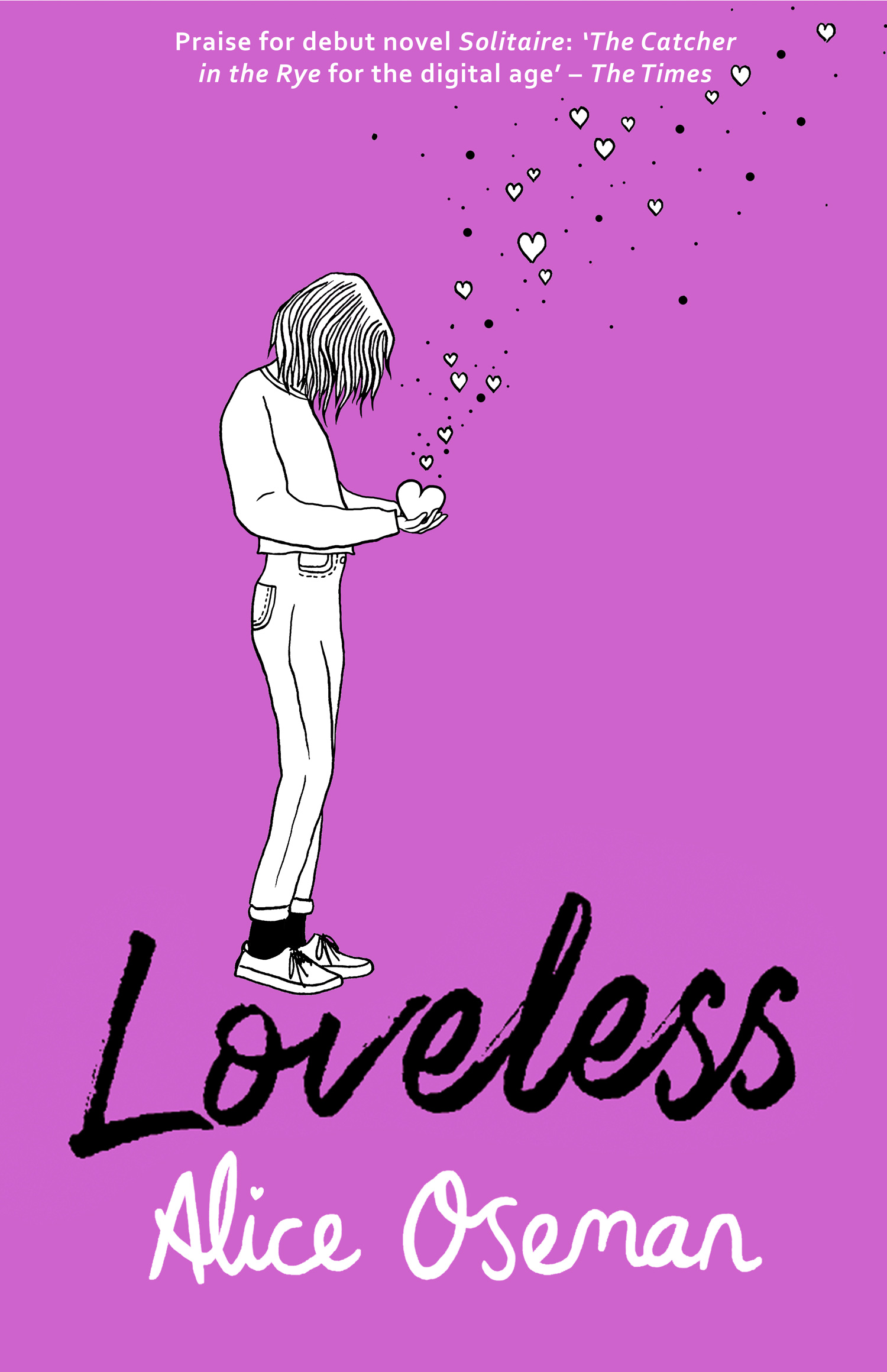
Loveless by Alice Oseman

★★★★

A truly important - and funny! - book that goes a long way in normalizing the exploration and discussion of sexuality. There is plenty of drama to move the story along, but really the primary plot is Georgia coming to terms with being aromantic and asexual.

In the beginning, I was put off by how Georgia, an 18-year-old student starting university, centered sex and romance, believing that everybody is supposed to have a romantic partner. She saw herself as the weird one for not having kissed anyone yet, let alone not having had sex. But as it turned out, one of the key points of the book was Georgia realizing that there are no rules about how you "should" behave or what you "ought" to do when it comes to relationships. You do what feels right to you, as long as you're not hurting anyone. You do you. A very healthy, empowering message.

Perhaps this message was best summed up by Georgia's roommate, when she said to Georgia, "I think it's pretty amazing that you haven't felt peer-pressured into doing anything [sexually] by now. You haven't made yourself do anything you didn't want to do. You haven't kissed anyone just because you're scared of missing out. I think that's one of the most mature things I've ever heard, actually." (p. 118)

There's also a meaningful point about friendships, how they can be just as valuable as romances. I really enjoyed Georgia's friendships, both the comfort and familiarity she shared with her old friends and the exciting novelty of getting to know her new friends.

This book is very modern, with lots of teenage slang, including very casual use of the f-word. I even had to Google some of the lingo, e.g., apparently "AU" means "alternative universe" in fan fiction.

More notably, though, potential readers might appreciate a heads up in knowing that this book is very frank and open about sex, sexuality, masturbation, attraction, social norms, and identity. ("Hand jobs" and "getting fingered" are explicitly mentioned.) The book lays bare a few variations of difficult and awkward conversations, which is actually great, in a way, because if you have similar questions yourself, you can just read this book and spare yourself those conversations in real life!

On a lighter note, it was fun reading a book that was set in the UK. Georgia didn't go to college, she went to "uni", which apparently is usually a 3-year endeavor, not 4 like in the U.S, and typically does not require sharing your dorm room with a roommate. Georgia and her friends drank a lot, but since the drinking age is 18 in the UK, presumably it was all legal. At times it felt like Georgia's uni experience revolved a bit too much around drinking culture, but I admit it was realistic, so it's probably a good thing for teenage readers to be exposed to that kind of party lifestyle safely in a book, giving them a chance to think about how they might handle certain situations.

The only other thing I wanted to mention is that I found the part about Georgia explaining aro-ace identity to her cousin a bit convenient plot-wise, like, just as soon as Georgia figured it out herself, she's in a position to support someone else in the exact same struggle? But I admit it was a useful scene because it showed how older people, who didn't grow up with the open-mindedness and terminology of today, might be moving through life, doing the best they can, without having the wherewithal to fully understand their own identity. 

Overall, a good read for mature teenagers - and their parents! - to better understand the range of sexual identities out there. It also provides a lot of good modeling on how to talk about such matters.

Sunday, July 10, 2022

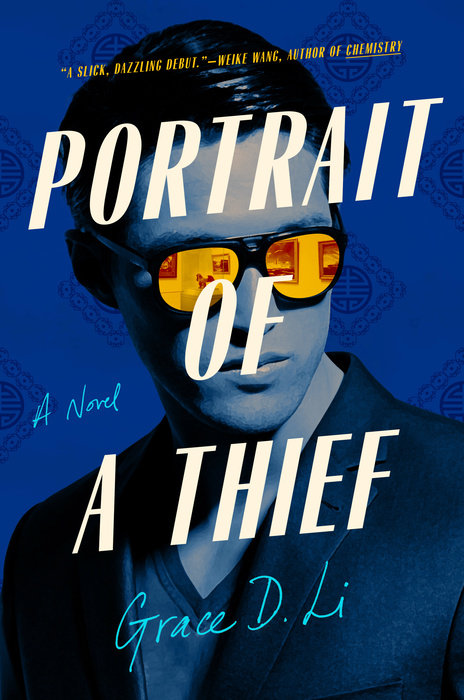
Portrait of a Thief by Grace D. Li

★★★★

In a somewhat improbable premise, five college-aged Chinese Americans agree to commit a series of art heists.

For about the first third of the book, it felt like the heist was contrived to simply be the means by which these characters would come together. The pacing was slow and deliberate, each character engaging in much introspection and self-analysis as they looked to justify their decision to join the crew. As children of immigrants, each with their own unique experiences, they examined their familial relationships and self-identities, tried to understand their place in the Chinese diaspora and make sense of their uncertain futures. The weight of immigrant dreams and unresolved sense of self hung over almost every conversation, action, and interaction.

When the first heist finally started to come together, a healthy dose of suspended disbelief was necessary. Here we had a young adult crew, all somewhere on the stereotypical Asian child-of-immigrants predetermined path to success (e.g., elite school, pre-med or engineering, etc.), with little to no relevant criminal experience (except what one happened to conveniently pick up as the son of the FBI expert on Chinese art theft), planning a heist in 4 weeks while also holding down their full-time studies or job. The main characters being on the precipice of change positioned them well for so much self-reflection, but maybe the story would have been a little more believable if they were all just a bit older.

Still, seeing the first heist come together was a satisfying development. The pace picked up, though the book never quite became a page-turner for me. About halfway through, an unexpected twist finally hooked me and got me wondering how things would end.

I found it difficult to become fully immersed in the book because I was constantly distracted by the author's writing style. The prose leaned into the art theme, was excessively descriptive and poetic with careful attention being paid to the way light or darkness fell into a room, or on someone's face, or over a city, with colors of gold and red or gray. The author relied heavily on this: a set-up employing the word "this", followed by a colon, followed by some kind of revelatory statement.

Yet, I gave this book 4 stars. It resonated with me in a very personal way that does not often happen. I enjoyed the main characters and their changing relationships; each of them felt like someone I could have known in college, and in them I recognized pieces of myself and my Chinese American community growing up. And it wasn't just the complicated identity stuff that I found relatable, but also the casual references to boba and dumplings. Also, Chinese characters were dropped in-line with English text, not just the pinyin romanization but actual Chinese characters! The representation just felt amazing.

Sunday, March 27, 2022

Fight: How Gen Z is Channeling Their Fear and Passion to Save America by John Della Volpe

★★★★

I'm a liberal Gen Xer and a political news junkie. The state of local and national politics frequently gets me feeling hopeless and beat down, but I'm wary of putting too much pressure on Gen Z to "save us all" because 1) that's too much of a burden to place on anyone and 2) why shouldn't we expect Gen Zers to lose engagement, or drift to the political center as they age?

The author first lays the foundation so we can understand Generation Z in the context of the generations that came before them. "As children, the world for baby boomers and many Gen Xers often began and ended on their block; for Gen Z, there is no limit, and with this brings an unparalleled understanding of humanity and empathy." (p. 32) The author argues that Gen Z will not "abandon progressive values for conservatism as they age" (pg. 12) because "we have raised Zoomers to be an uncommonly empathetic generation." (p. 13) 

The author believes that Gen Z's compassion for their fellow human beings, as well as their fears that arise from the current state of the world (e.g., school shootings, police brutality, college debt, climate change, etc.), naturally lead to having progressive values that prioritize human rights, the climate crisis, gun safety, income inequality, etc. It's those progressive policies that will help "save America". To illustrate Gen Z's preference for progressive ideals and their record-level political engagement, the author presents all kinds of polling data as well as quotes from actual Gen Zers he has interviewed. He shines a spotlight on Gen Z activists like the Parkland school shooting survivors and Greta Thunberg, among others. 

Interestingly, Gen Z white nationalists and insurrectionists are also featured, showing that the world is truly engaged in a battle to win the hearts and minds of young people, and a more progressive future is not guaranteed.

The messages and lessons of this book feel urgent. Recent political events are analyzed through a Gen Z lens, and it's clear we need to pay attention to Gen Z RIGHT NOW if we want to leverage the power of their numbers and passion for progressive change. 

Though the book's topic of an entire generation having to fight to save America is inherently depressing, the foreword by David Hogg, a Gen Z activist and school shooting survivor from Parkland, sets a positive and optimistic tone for the book, which ultimately left me with a solid sense of hope.

My only disappointment was the lack of attention on Asian Americans. Asian Americans were included in some of the data (p. 21), but not others (p. 47). Also, there was no mention of the Stop Asian Hate movement in the section about hate crimes increasing under Trump's presidency. (p. 81) To give him the benefit of the doubt, it's possible that the author didn't purposely exclude Asian Americans so much as he couldn't write about an issue that was unfolding in real time while he was actively writing the book, presumably in 2020 and 2021. He discussed the 2020 elections in great detail - as a political pollster, he would have been processing the election data as it was collected - but maybe he didn't have pandemic-related data at his fingertips; much of the anti-Asian violence grew out of the covid-19 pandemic, of which the author mostly made only passing mentions, admitting early on that it was "a global pandemic...with a yet-undetermined impact." (p. 17)  

Saturday, January 29, 2022

Son (The Giver #4) by Lois Lowry

★★★★

*** Warning: This review contains spoilers!! ***

This story is divided into three sections. Book I, in which we go back to the events of The Giver and see the timeline from Claire's perspective, made for a slow start for me. Since I knew what would happen, I was anxious to move forward and get to the events after Jonas took Gabe from the community. 

I found Book II much more engaging. I appreciated the author's creativity in inventing yet another isolated community, unique in its own way. I also enjoyed the way Clair discovered mundane things and found them enchanting because she had never known them before. Still no answers were given, however, regarding how this world came to be, and I was left wondering why Claire's original home was so technologically advanced while all other communities were so primitive.

Book II as a whole made me think of how it is that our lives are made out of distinct phases that come and go. We are who we are because of the experiences we've had and the people we meet - this is where Claire witnessed how loving parents treat their children, and where she learned about romantic love - and sometimes, though there may be nothing wrong with where we are, we still need to move forward. 

The entire series came to a satisfying conclusion in Book III, and I was pleased to see some of my questions from Messenger answered. It was gratifying to finally understand Trademaster, who in this book was more clearly the Devil, at times even being described like a snake. (p. 264) I was especially happy to at last read the scene, in which Claire confides in Jonas, that I had been waiting the whole book to read. (p. 311)

In the end, there seemed to be a message of how, if you put good intentions out into the world, that good is reflected and given back to you. Just as evil feeds off of hate, goodness is made stronger by love.

This being the last book of the series, I knew the world had a supernatural component. But as with The Giver, a large chunk of the book passed without any reference to any magical powers or beings, and I was lulled into thinking of Claire's world as merely characterized by the communities in which she lived. The sudden appearance, more than halfway through the book, of something supernatural felt jarring.

As much as I enjoyed Claire's story, there were two things that irked me.

First, I wish the author had included a scene showing Claire and Alys saying goodbye. I had eagerly anticipated this scene, feeling sure it would be emotional and meaningful, and was surprised and disappointed when I realized it was omitted. Here Claire was the daughter Alys had never had, and Alys was the loving mother Claire had never had, surely their parting was significant.

Second, why wouldn't Claire - upon finding Gabe in the village and realizing that Jonas was there, too - go to Jonas, tell him her whole story, and figure out a plan for meeting Gabe earlier?! I can't understand how she waited SEVEN YEARS, until she was practically on her death bed, to make a move. It pained me to think of all those years lost and wasted.

One final note from a parental perspective. Though I categorized the first 3 books of this series as children's books, this one I think borders on young adult, mainly because of one line in which Einar described the abuses he suffered from his father and implied sexual assault. (p. 207) Still, younger readers might just gloss over the oblique reference and not even realize they've missed anything. 

Tuesday, October 26, 2021

Quiet Power: The Secret Strengths of Introverts by Susan Cain

★★★★

I bought this book as soon as it came out, since both my kids have introverted tendencies. But since the book is geared towards middle and high schoolers, and my kids were still in elementary school at the time, the content just didn't feel too relevant yet. Now that my kids are both teenagers, I'm glad I remembered to give this book another go; actually, I wish I had read it just a few years earlier, as I think this book can be helpful as soon as kids are in middle school and/or in their tween years.

Kids are the intended audience for this book, but I read it as a parent. I appreciated the insight into teen perspectives, and there were plenty of illustrative examples validating the experiences and feelings of introverted kids. The book also offered many concrete suggestions on how to "stretch" yourself as needed for various situations, and I came away with specific things I can do to help support my kids as they navigate school, friendships, and life at home.

The book is divided into four parts - school, socializing, hobbies, and home - each focused on how to leverage or manage your introverted nature in that particular arena. Every chapter ends with a clear, concise summary of key takeaway points, a convenient go-to section in case you have a reluctant reader or you're short on time.

Much of the content consists of stories of other introverts who achieved some level of success in some area, generally not in spite of their introversion but because of it. Sometimes a motivational story about a famous person made me think, "Great, but that person is clearly exceptional in their field, how does this help me, an ordinary person?" Stories about specific teenagers at first made me feel like, "Who is this random person?!" but in the end they did inspire a sense of, "Well, if they can do it, then so can I!"

I especially appreciated the afterword for teachers, describing how introverts can be better accommodated in schools, where the extroverted student ideal tends to be more frequently rewarded.

Thursday, August 5, 2021

While Justice Sleeps by Stacey Abrams

★★★★

I don't usually read political thrillers, but I follow American politics, and the author being Stacey Abrams was enough to pique my interest.

I got the feeling that Abrams really enjoyed writing this book. There were lots of fun word choices, like when a woman is described as "an eggplant-attired matron of impeccable breeding and questionable chromatic theory." (p. 177) I could just imagine the author chuckling to herself and being really proud of that phrasing.

This book is a light read, easy and entertaining. My husband would call it "popcorn reading". There is drama from the very beginning and the action is non-stop, with quite a few unexpected developments. It was certainly a page-turner for me, with sufficient suspense to keep me wondering and occasional oblique references to things you assume will be spelled out later. Early on there was what I considered an unrealistic guessing of a password - Do people really have predictable passwords these days? - but I got over it and made sure to put myself into suspended disbelief mode for the rest of the book. It was easy to imagine the story unfolding like in a movie; if it gets adapted, I'd see it for sure!

Incidentally, I appreciated the diversity of the characters; the protagonist is mixed-race white and Black, and her best friend is Asian.

Thursday, July 22, 2021

The BFG by Roald Dahl

★★★★

My son read this book multiple times while in elementary school, and I finally got around to reading it myself.

The Big Friendly Giant's unusual vocabulary makes for super fun reading, especially for reading aloud. The story is a fairy tale complete with giants, an orphan with access to the Queen of England, and a happy ending.

Concerned parents may want to know that the BFG is the only giant who does not eat humans (the BFG pronounces "cannibal" as "cannybull"), and the story is about how the orphan Sophie and the BFG work together to stop the other giants from eating humans. There is an interesting bit of social commentary when the BFG questions how Sophie can judge giants for eating humans when humans themselves kill other humans and eat other animals.

Wednesday, June 9, 2021

Untamed by Glennon Doyle

★★★★

My kids were at the exact right age for me to appreciate Glennon Doyle when her Momastery blog posts first went viral. Her "Don't Carpe Diem" post really resonated with me, and I also loved her post about how a teacher looked out for lonely students in her classroom. 

As my kids grew up, I drifted away from mom blogs. At some point, I heard that Glennon Doyle got divorced and married Abby Wambach the soccer player!? Well, I didn't follow the news, and I haven't read her previous two books, but a friend of mine gifted this book to me, so I read it.

Untamed is mostly short chapters that read like blog entries. It's part memoir, part self-help. Glennon shares the story of how she answered the question, "Who was I before I became who the world told me to be?" (p. 6). The title Untamed refers to the evolution by which she unlearned the expectations imposed by society and learned to know, trust, and be her true self. Using analogies and examples from her own life, she urges her readers to "search for and depend upon the voice of inner wisdom instead of voices of outer approval." (p. 60) I was impressed with her openness in sharing her personal story and journey from feeling broken to feeling whole. 

About halfway through this book, I was prepared to give it a 3-star rating. The ideas were not without merit, but as I have always been a self-reflective and thinking person, they were not new or revelatory to me. In fact, I had a little chuckle when literally the last line of prose in the book finally acknowledged that some people "never become tamed in the first place." (p. 333) Though this first half of the book wasn't exactly relatable for me, I could imagine that her target audience - women who felt "tamed", or caged - would have much to appreciate. Glennon's message is uplifting and encouraging and basically gives readers permission to do whatever is true to themselves, even if it flies in the face of convention. Maybe "permission" isn't the right word, because the whole point is that no one needs permission to control their own lives, but she does provide readers with reassurance that it's okay to do what's right for you, even if others think you are selfish or crazy or weak or a weirdo.

I was pleasantly surprised when my interest piqued as the book progressed, and I decided to bump up the rating to 4 stars. It felt like a bit of an epiphany when she laid out how women have been trained to believe in an elusive ideal of womanhood that actually erases us as individuals, i.e., how "[t]he highest praise [is]: She is so selfless... The epitome of womanhood is to lose one's self completely." (p. 116) She astutely wrote about how her philanthropy led her to understand that "[w]here there is great suffering, there is often great profit," (p. 254) and I also just liked one of her core tenets: "We can do hard things." (pg. 291)

Finally, I think it's noteworthy that Glennon devoted a lengthy, weighty chapter to racism. Again, she did not write anything groundbreaking or eye-opening to me, but she quoted Martin Luther King, Jr.'s views on white moderates and challenged her readers to take a good look at themselves and ask how they might be inadvertently contributing to white supremacy in America. I saw this chapter as Glennon planting seeds of antiracism in an audience of liberal white women who might not otherwise take the time to listen or engage in self-examination. Along the same lines, given her reputation as a Christian blogger, I liked that she used her platform to present LGBTQ and pro-choice perspectives to an audience that might typically lean anti-LGBTQ and anti-choice. In the end, the book seemed to have a "Come for the feminist self-care, stay for the introduction to social justice" kind of vibe.

Monday, May 3, 2021

Interior Chinatown by Charles Yu

★★★★

So clever! Such innovative storytelling! This book is structured as a script, written in a second person narrative with the "you" being the main character, Willis Wu. The world of Interior Chinatown is both meta and metaphorical; the lines are blurred between real life and the TV show in which Willis Wu plays bit parts.

Charles Yu makes on-point social commentary of Asian American representation and stereotypes that is both scathing and funny. He shines a light on societal perceptions of Asian Americans and their struggle to find a place in a world where white and black people are center stage and Asians are relegated to the margins, seen as perpetual foreigners as described on page 119: "To be yellow in America. A special guest star, forever the guest." The relationships, observations, and emotions are authentic and familiar, in my opinion clearly written by an Asian American writing about what he knows. The portrayal of Willis's aging immigrant parents was particularly poignant.

Older Brother sums up the problem in a climactic scene on page 228: "[W]hen you think of American, what color do you see? White? Black? ... We've been here 200 years... Why doesn't this face register as American? ... If we haven't cracked the code of what it's like to be inside this face, then how can we explain it to anyone else?" Over the course of the book, Willis learns to be more comfortable in his own skin and comes to realize that he can pursue his own goals, he doesn't have to be limited by what others have prescribed for him to achieve.  

I especially enjoyed the "Generic Asian Kid" montage on page 157, a universal sequence with no specific Asian American references, beautifully descriptive, of childhood highs and lows spanning all the familiar scenes that make for nostalgic memories. Also, I appreciated the list of anti-Asian U.S. laws on pages 215-216 and 259, which made explicit the systemic racism Asian Americans have faced. 

Tuesday, March 16, 2021

Stamped: Racism, Antiracism, and You by Jason Reynolds and Ibram X. Kendi

★★★★

I picked up this book because I am already a fan of Ibram X. Kendi and Jason Reynolds. I was probably biased to like it even before I read it.

It's clear that this book was written for middle and high schoolers. The tone was casual and conversational, and the text at times flowed better if I imagined Jason Reynolds was speaking the words in front of me. The fact that I think of this book as using "hip lingo" just shows how I am old and not the target audience. 

Though the back cover loudly proclaims, "This is NOT a history book," actually, it is, just not in the traditional sense. The history presented in this book makes clear how anti-Black racism has always been and continues to be used to oppress and divide those without power so that those with power can stay in power or achieve even more political or financial gain. Much of the analysis is presented in terms of segregationism, assimilationism, and antiracism, big ideas that Reynolds makes easily accessible. This book provides the foundation one needs to better understand how racism is not just a problem with people individually, but a systemic problem rooted in policies, and how those policies have come about.

This book calls itself a "remix" of Ibram X. Kendi's book Stamped from the Beginning, which I am now inspired to read. There is so much information, mostly presented in broad strokes, that I am interested in reading the original book, which I assume fleshes out more of the details.  

This book would be a valuable read for any student because it lays bare how the typical history presented in most classrooms is whitewashed, omitting many harsh truths. I wondered, however, if some ideas weren't getting explained well enough for the intended audience of young readers. For example, the book mentioned affirmative action (p. 223, 230), but didn't define it. The reader is assumed to understand that affirmative action should be supported, but for those who haven't thought much about it, or who might not even know what it is, I think some further commentary would have helped to shed light on why affirmative action is considered controversial. 

Thursday, March 4, 2021

Stories of Your Life and Others by Ted Chiang

★★★★

I generally do not read much sci-fi, so I'm not exactly the target audience for this collection of short stories. I picked up this book because my husband, who is a big fan of sci-fi, enjoyed it, and I liked the idea of supporting an Asian American author by reading his work. (It may or may not be worth noting that none of these stories explicitly include any Asian characters, but I'm still putting it on my figurative "Asian" shelf for author representation.)

I very much appreciated the "Story Notes" included at the end of the book, in which the author describes a bit of the motivation behind each story. Reading this section felt like getting bonus "behind the scenes" material.       

Pretty much all of the stories have a thought-provoking premise, so much so that it felt like many of them were written with the express purpose of exploring a particular, profound idea. In "Division of Zero", Chiang asks what would happen if a person's foundation for truth is shattered. In "Seventy-Two Letters", he examines philosophical and moral questions of humanity, as well as the power of language. "Hell is the Absence of God" addresses the common questions of "What happens when bad things happen to good people?" and "Why do good things happen to some people and not others?", but Chiang takes it a step further by bravely writing a story that has "the courage of its convictions", as he explains in the "Story Notes". (p. 280) "Liking What You See: A Documentary" feels like it was an exercise in exploring all sides of an issue, including possible behaviors of involved individuals and organizations, and ending up in a reasonable compromise position.

In many of the stories, I felt a kind of heaviness while reading, maybe even some anxiety, like there was a sense of impending doom. In "Tower of Babylon", it just felt like no good could come from breaching the vault of heaven. In "Understand", the main character's pursuit of superintelligence led him to a dark, isolated existence. "Division of Zero" could very well have used a content warning for suicide. "Story of Your Life" had a grey, depressing aura throughout. (I'm eager to watch Arrival, the film adaptation, to compare with the book.) And while "Hell is the Absence of God" had elements of faith, it was ultimately dispiriting. I was actually quite relieved that the book ended with "Liking What You See: A Documentary", a relatively fun and light-hearted read delivered in a clever, original format. 

As a final note, I will mention that this book sure broadened my vocabulary! It was kind of fun looking up new words practically every few pages, words like "onagers" and "antimacassar". 

Sunday, February 9, 2020

Look Both Ways by Jason Reynolds

★★★★

This book is a collection of 10 short stories all set in the same time and place. When the closing bell rings at Latimer Middle School, students go their separate ways, sometimes alone, sometimes with friends. Every kid has a story. Taken together, we see how complex these students' lives can be, even in middle school.

I really enjoyed this book's format and storytelling. Each chapter starts with a small illustration, one part of a larger tableau (the cover art) depicting all the stories' main characters as they leave school at the end of the day. The students are all classmates, so they weave in and out of each other's stories, a tangential character in one story becoming the main character of another. I can see these crossovers being especially fun for young readers. Maybe they'll read a story and think, "Oh! This story is all about that kid from the other story!" or, "I remember these kids from their story, I know where they are going!"

Narration styles vary; stories may be told in a straightforward chronology, with flashbacks, or using some other unconventional method. At times the prose blends into poetry. Metaphors and similes abound. I have to admit, I am a very literal reader, so I am not sure I understood the "school bus falling from the sky" line that kept popping up throughout the book. The last story provides both some metaphorical context and a literal explanation for the line, which gives a nice sense of closure, though I'm still not sure I get the falling out of the sky part. Maybe it's about school buses representing the unexpected, or maybe it's just silly fun.

As usual, Jason Reynolds does not disappoint with the diversity and complexity of his characters and stories. We have kids of color, yes, but we also get glimpses of illness (sickle cell anemia, cancer, dementia), loss of a loved one, fear (of change, of dogs, of danger), bullying, homophobia, and incarceration. These hard things don't dominate, though, because the young heroes of these stories are busy with hustling schemes, video games, humor, and young love. They are supported by friends who are loyal and brave, and by familiar adults like teachers, a custodian, a crossing guard, a store owner, neighbors, and even a passer-by, people who might seem peripheral, but really are grounding.

My ratings for individual stories ranged from 3 to 5 stars, so I figured on 4 stars overall.

Saturday, January 11, 2020

Lodestar (Keeper of the Lost Cities #5) by Shannon Messenger

★★★★

Events in this book weren't as tight and held together as in the last book, but there were a lot of very interesting developments! The Lodestar itself was a good central theme, and readers can think themselves clever if they figure out the connection to the modified registry files before it's revealed in the book. As usual, a lot of surprises occur at the very end, setting the stage for the next installment.

Incidentally, I'm getting a bit irritated at how frequently everyone says, "That makes sense." It's not confined to one person's manner of speaking, and it seems equally used among multiple characters, old and young. It just seems like a clunky way to ensure that whatever explanation or conjecture is put forward will be accepted, no matter how unlikely or how little evidence there really is to point in that direction. When used as a simple phrase of acknowledgement, I just think a little variety would be welcome, e.g., "Okay," "I get it," "I understand," etc.