Tuesday, June 6, 2023

I Contain Multitudes: The Microbes Within Us and a Grander View of Life by Ed Yong

★★★★★

I'm a big fan of Ed Yong (for his reporting on COVID-19, for which he won the Pulitzer Prize for explanatory reporting), and I picked up this book just to read more of his work.

The topic is fascinating. I have heard of probiotics and the gut bacteria that may be linked to everything from food allergies to Parkinson's Disease. I feel like every person who pushes probiotics should have to read this book. It presents a sweeping history of microbes and discusses both the bacteria that live in and on other animals as well as human microbiomes and the vast universe of microbes that live symbiotically all over and inside our bodies.

In accordance with the book's subtitle, I certainly did gain a much grander view of life. For me, the rest of the title seemed like a bit of a misdirection because I was expecting to read mostly about the bacteria inside of humans, but actually, a lot of the book covers all kinds of bacteria out in the world and in other animals. The way the information was presented made sense - Yong described the history of microbial discoveries and explained all the very many characteristics of bacteria as seen in other animals, and then applied that knowledge to better understand the research on bacteria that affect humans - but I have to admit, the book had a bit of a slow start for me; it was mostly when the subject turned to human microbiomes that I became hooked.

The footnotes were inconveniently located at the back of the book, instead of on the bottom of the page on which they are referenced, which made for a lot of flipping back and forth. While some footnotes simply listed a source, others provided additional context, or a "behind the scenes" anecdote, or just a fascinating or entertaining tidbit; I think it's worth the minor trouble of using a second bookmark to keep your place in the Notes section. (Incidentally, the footnotes in Chapter 3 in my edition were messed up, which made for a bit of confusion.)

I enjoyed the photos included towards the end of the book, but they were not printed in the order of reference in the book's text, which made for a less than ideal experience trying to match up photos with their corresponding section in the text.

Saturday, April 8, 2023

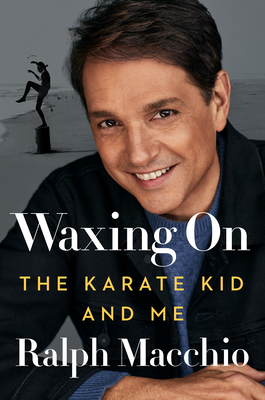
Waxing On: The Karate Kid and Me by Ralph Macchio

★★★★★

Like many others who grew up in the 1980s, I consider The Karate Kid to be representative of my generation. Any time I happen to see the movie playing on TV, I have to stop and watch a few minutes; it doesn't even matter which minutes, it evokes warm feelings of nostalgia every time. Add to that, I am a huge fan of Cobra Kai on Netflix. I LOVE THAT SHOW! It's just so much FUN!! I love seeing all the old characters again, it's like getting together with old friends.

So, I guess you could say I was predisposed to like this book. I was practically giddy when I finally picked it up, and I swear I read the introduction with a smile on my face. The whole book feels like a love letter to the best of the 1980s. It gets 5 stars simply because it was a joy to read.

The writing itself is very conversational, like Ralph Macchio is just talking to you. It's an easy, breezy, enjoyable read filled with fun behind-the-scenes stories from both the original movie franchise and the Cobra Kai series. Ralph Macchio talks about his role as a timestamp in other people's lives and how he came to fully embrace being synonymous with Daniel LaRusso. He is intensely protective of both his own character and the legacy of Mr. Miyagi, and it's clear how gracious he has been in sharing this part of him with the world.

I included the "Asian" tag to highlight the iconic Asian American character of Mr. Miyagi, played by the equally iconic Pat Morita.

Pro Tip: Have the internet close by when reading this book. Ralph Macchio frequently references specific scenes from the movies and Cobra Kai, plus other projects and clips of auditions or cut scenes, many of which are available on YouTube. It was super fun looking up these videos as soon as they were mentioned in the book.

Monday, March 27, 2023

Hormone Repair Manual: Every Woman's Guide to Healthy Hormones After 40 by Lara Briden

★★½

This book was written by a naturopathic doctor. I am a strong believer in science and evidence and data, which means I do not generally subscribe to naturopathy or other forms of alternative medicine. I do, however, acknowledge that the human body is complex, and there is still so much we don't know, which means there may be some aspects of alternative medicine that really do work, and we just haven't done the studies yet. 

I appreciate that the author did not try to replace conventional medicine. In the introduction, she explicitly asked the reader to "speak with your doctor or pharmacist about possible interactions with your medical conditions or medications" (p. viii) when trying her recommendations. I also liked that she included "How to speak with your doctor" sections in which she provided helpful language and wording that can be used to bring up topics with medical doctors.  

I think the average, healthy woman turning 40 will find valuable information in this book, and I want to emphasize that my rating is a reflection of my personal experience reading it. Here's why I picked it up: While in my early 40s, my treatment for hormone-positive breast cancer involved eliminating estrogen from my body, which meant taking medication that put me into medically-induced menopause, and then later getting my ovaries removed, which put me into surgically-induced menopause. I have experienced all the usual symptoms of menopause, but the most common suggestion for managing symptoms is to get hormone replacement therapy (HRT), which is not an option for me because it would completely undermine my breast cancer treatment. So, I am looking for natural remedies to manage symptoms of menopause. 

As it turns out, surgically-induced menopause is quite a bit different from natural menopause, and I was discouraged when the book stated early on that "surgically and medically induced menopause...can produce stronger symptoms than natural menopause and almost always requires estrogen plus progesterone therapy" (p. 9), which I already know is contraindicated for me because of my hormone-positive breast cancer. Just a few pages later, I was encouraged to read, "If you don't want to take hormone therapy, that's perfectly okay because there are other options for many symptoms." (p. 17) I did manage to come away with some helpful suggestions, mostly from Chapter 5 "General maintenance for perimenopause and beyond," Chapter 7 "Rewiring the brain: help for hot flashes, sleep, migraines, memory, and mood," and Chapter 10 "What comes after."  

The writing was straightforward, and the content was conveniently broken into easily digestible chunks. Still, I think the information could have been organized better; the author frequently restated the same information and constantly redirected the reader to other chapters, making the text feel disjointed and repetitive. I read the book cover-to-cover because I wanted to know everything, but perhaps this book would best be used more as a reference, where you skip around and read only the sections that are immediately relevant to you. Incidentally, the author referenced Professor Jerilynn C. Prior so often that I wondered if maybe I should go straight to the source and read her works instead!

I was put off when I read that "the only time estrogen plus progesterone therapy is truly needed is for the prevention of long-term health risks associated with early or medically induced menopause." (p. 128) The word "needed" irked me; given my medical condition as described earlier, even if I "need" hormone therapy for long-term health, I am absolutely not a candidate. The author only mildly dialed back her statement about 10 pages later when she acknowledged, "If you have a personal or family history of breast cancer, you will probably be counseled to avoid estrogen therapy." (p. 139) I guess people with a history or high risk of breast cancer who experience early/medical/surgical menopause are just considered an exception case, and I felt like the message to me was: Hmm. You don't fit into any of the standard boxes. Looks like you are now doomed to poor health with "an increased risk of osteoporosis, heart disease, dementia, and premature death." (p. 140) (For the record, I was aware of these long-term risks associated with surgical menopause before I had my ovaries removed, but they were outweighed by the more pressing risk of breast cancer recurrence.)

Also, I wasn't comfortable with the way the author made assumptions about what my doctor may or may not know, e.g., when she wrote, "Your doctor thinks progesterone's only job is to protect the uterus, but it has many other benefits." (p. 138) Moreover, for almost the entire book, every time she mentioned talking to "your doctor", I imagined a patient talking to their primary care physician or a gynecologist, but it wasn't until late in the book that one of her "How to speak with your doctor" suggestions included, "Should I have a referral to a gynecologist to discuss this possibility?" (p. 227) The realization that gynecologists were not already implicitly included in all previous references to "your doctor" shocked me! I guess it does not go without saying that if you have concerns about menopause or menstrual health, a gynecologist would be a great place to direct questions; if insurance is a hindrance, look for a Planned Parenthood near you.

Monday, March 20, 2023

An Immense World: How Animal Senses Reveal the Hidden Realms Around Us by Ed Yong

★★★★★

Even before reading this book, I was an Ed Yong fan. He's my go-to journalist for pandemic-related articles, for which he won a Pulitzer Prize in explanatory reporting. I appreciated his writing so much that I picked up this book simply because I wanted to read more of his work.

I am not particularly fond of animals (I have no pets and have never found zoos especially interesting), and yet, Ed Yong not only motivated me to read a book about animals, but he totally blew me away with every fascinating detail. This book is filled with astonishing, awe-inspiring revelations about animals and their senses. Yong has a unique gift for science writing; he distills complex ideas into approachable reading while also conveying beauty and wonder. It was truly humbling to realize that the world as we experience it - as humans with our limited 5 senses - is exclusive to us, and that other animals experience the world in their own particular, and sometimes very special, ways. 

Ed Yong's writing flows naturally - he is a master of segues - and he keeps the tone light. Reading this book, and learning all it had to impart, was an effortless delight. I also really enjoyed his footnotes, which sometimes shed an entertaining light on his research in a behind-the-scenes kind of way.

The final chapter poignantly discusses man-made lights and noises and their deleterious effects on animals and insects. Yong refers to quiet and darkness as "endangered sensory environments" and calls on all of us to "save the quiet, and preserve the dark." (p. 338) He encouragingly lists a number of ways humans could reduce light and noise pollution - if only we were sufficiently moved to do so.

Saturday, January 7, 2023

Radical Remission: The Nine Key Factors That Can Make a Real Difference: Surviving Cancer Against All Odds by Kelly A. Turner

★★

This book was mentioned by a friend who was diagnosed with glioblastoma brain cancer. Facing a bleak prognosis, she refused to resign herself to fate and has committed herself to defying the odds. This is not the type of book I usually read, however, when faced with the possibility of imminent death, I can understand the desire to grasp at all possible sources of hope, and I was intrigued.

The premise is fascinating: there are real people whose medically diagnosed cancer disappeared with no known medical reason, so let's study them and try to figure out what happened. Where the book falls short, for me, is how the investigation does not actually look for scientifically supported reasons for recovery, but instead relies almost entirely on each person's opinion on what they think caused their cancer to go away.

First, if you are the kind of person who absolutely never believes in ghosts, don't even try to read this book. There are no ghosts here, but for this book to even be readable, you have to be open to the idea that something might possibly, could be real, even if it defies all reason and there's no scientific explanation. You don't have to buy into alternative medicine, or believe in the paranormal, to get something positive out of this book, but you do need to take everything with a grain of salt.

Now, I am 100% a believer in conventional medicine and science, so I read most of this book with an attitude of, "Wow, that's interesting, not sure I believe all the details, but how amazing that that person is still alive!" The author does not exactly advocate for alternative medicine, in fact, she stated unambiguously that "most people will need conventional medicine to outrun cancer." (p. 9) But right off the bat, in the book's introduction, it's clear that she believes in alternative medicine, since her husband is a traditional Chinese medicine practitioner and studied "an esoteric form of energy healing." (p. 5) When telling the stories of survivors, she gave validity to "[t]he notion that a cancerous tumor is simply a buildup of stuck energy," (p. 94) and she reported matter-of-factly on the various alternative therapies people used, like Reiki or other forms of "energy healing", without any commentary regarding the controversy surrounding those methods.

In fact, it's that lack of transparency that led me to rate this book 2 stars. One of the featured survivors is someone who credits Brazilian John of God for curing his brain tumor. It was a very compelling account, so of course I immediately Googled John of God. Turns out, he's a convicted sex offender! The allegations first surfaced in 2018, and this book was published in 2014, so the author is off the hook for that particular oversight, however, James Randi, known skeptic of paranormal claims, discredited John of God in 2005. I think the complete omission of any reference to documented efforts to expose him as a fraud is downright negligent and detracts from this book's credibility. The author only hinted that John of God may not be legitimate when she wrote that the power of John of God's healing center "could simply be the placebo effect; in other words, our sheer belief that something powerful happens at John of God's center could have caused us to have a deeper meditation experience." (p. 250)

Another thing I wasn't fond of was the author's decision to soften the outlandishness of John of God's healing methods by using carefully chosen words. Though many online articles refer to him succinctly as a "psychic surgeon", the author described John of God as having "the ability to leave his body and go into a trance, thereby allowing the spirit of a higher being to enter his body and perform energetic healing work." (p. 237)

Not all the stories were as off-beat as the one involving John of God, but many of them had alternative medicine elements. Ultimately, I felt conflicted by the personal stories included in each chapter. On the one hand, they were very inspiring and would certainly give hope to a cancer patient with a poor prognosis; on the other hand, all the alternative medicine therapies were beyond belief, if you ask me.

Despite all that, if you can disregard the parts that you find unbelievable, there are valuable insights in this book that would benefit any cancer patient, regardless of prognosis. The nine "key factors" that radical remission patients share all sound very reasonable:

1. Radically Changing Your Diet
2. Taking Control of Your Health
3. Following Your Intuition
4. Using Herbs and Supplements
5. Releasing Suppressed Emotions
6. Increasing Positive Emotions
7. Embracing Social Support
8. Deepening Your Spiritual Connection
9. Having Strong Reasons for Living

Only two items are physically related to your body: changing your diet and taking supplements. While some diets and supplements may be more well-founded than others, at least the author periodically reminded readers to consult their doctors, e.g., "Remember, always speak to your doctor first in case your fast needs to be medically supervised." (p. 28)

If you're like me, you may be surprised that exercise is not on that list. Most health guides lead with diet and exercise, and throughout the book, I kept wondering why exercise was not singled out, especially since it was certainly mentioned in passing, e.g., "Thanks to a combination of yoga, hiking, and walking, [John] now feels like he's in the best shape of his life" (p. 39) and "[Jenny] also continued with the same daily exercise regimen she had created for herself years earlier." (p. 127) It wasn't until the very end of the book (p. 282) that the author revealed that exercise was not included as the 10th key factor because many patients were too weak to exercise when they first turned to alternative therapies, presumably either because of the cancer itself or due to side effects of having tried conventional treatment like chemotherapy. This explanation is fair, but I just wish she had said it up front at the beginning, so I didn't have to spend the entire book wondering why exercise was being glossed over.

The remaining items all fall under mental and emotional health, and even at face value it's easily conceivable that they each would have a positive effect on healing.

Every chapter concluded with actionable items that a person can do to put into practice the concepts outlined in that chapter. These suggestions were generally sensible and doable and essentially just useful advice for maintaining good mental health. In the end, it's these "Actions Steps" that made the book worth the read, in my opinion.

Friday, November 4, 2022

The Complete Guide to Food Allergies in Adults and Children by Scott H. Sicherer

★★★★

I've been managing my children's life-threatening food allergies for over 13 years, since my youngest was 18 months old. On the one hand, this book was extremely informative; there's a lot of misinformation out there, so it's good to have a reliable go-to source. On the other hand, there are things I wish the book included, but didn't.  

First, what I liked. The information was delivered very straightforwardly in question-and-answer format. The book was comprehensive, covering not just allergies but also other food-related conditions like intolerances and sensitivities. 

The section on oral food challenges (p. 83-90) and all of chapter 4 on anaphylaxis and epinephrine (p. 98-130) were especially instructive and helpful. In particular, I appreciated that the book was very clear about treating anaphylaxis with epinephrine as the first line of defense, and how other medications (e.g., antihistamines, bronchodilators, and corticosteroids) are supplemental interventions. (p. 118-120)

Chapter 6 on "Mastering Allergen Avoidance" (p. 159-203) was also excellent. I wish EVERYBODY - teachers, parents, family members, employers, all medical professionals - could read this chapter!! 

Importantly, when discussing oral immunotherapy (OIT), the book stated unambiguously that "the primary benefit is to increase the threshold of reactions" (p. 268) and "this is a treatment, not a cure." (p. 272) I was relieved to see this information so clearly presented because in my experience, it is very common for people to misunderstand OIT and believe it is a full-fledged cure.

Now, what I wish the book had included. Everything below is going to sound nit-picky, but if there's one thing managing allergies has taught me, it's the importance of being thorough!

For the most part, the Q-and-A format helped make the book approachable. Occasionally, though, I think it broke up a topic unnecessarily. A person skimming the book might read one answer and think it was complete, not realizing additional information is presented under another question. For example, this question and answer appeared on page 32: "If I am allergic to one nut, do I need to avoid all nuts? A person may be allergic to one or two or many nuts. Avoiding all nuts when there is an allergy to just one or two is a personal decision." Reading just this excerpt, a reader might think that the decision is a simple matter of personal preference. It's not until later on the same page that the nuances were described. A separate question asked: "What considerations are important in deciding whether to eat some types of nuts when there are allergies to other types?" The paragraph-long answer to this question pointed out, "Because nuts are often processed together it is difficult to find ones that are not at risk for cross-contact." So, it turns out, the decision involves a deeper understanding of nut manufacturing processes and also a personal risk assessment. Because of this tendency for details regarding a specific issue to be broken up among several questions, I wish some questions were grouped together, with a "main question" serving as a section header, and related questions listed underneath, maybe as bullet points. 

Along the same lines, I didn't understand why small pieces of information were separated out in the "Delving Deeper" section on pages 157-158. This section consisted of just 3 paragraphs, one each for addressing questions related to FPIES, eosinophilic esophagitis, and atopic dermatitis. Each topic had a whole section earlier in the same chapter, so why weren't these paragraphs just included in their respective sections?

I was disappointed that the brief section on allergic-like reactions to alcoholic beverages (p. 45-46) did not at all mention the "Asian flush", which was only alluded to in passing under an earlier question about alcohol intolerance. (p. 5) Asians having allergic-like reactions to alcohol is not a true allergy, but it is a well-known issue caused by a deficiency of the enzyme aldehyde dehydrogenase 2 (ALDH2), a condition similar to lactose intolerance, which was examined more closely. (p. 3-5)

Chapter 3, "All about Allergy Tests," was extensive, yet still managed to omit one of my most pressing questions: Can both the skin test and blood tests be positive even when there is no allergy? I actually found it odd that this question was not posed, since the opposite question was asked and answered: "Can both the skin test and blood tests be negative even when there is an allergy?" (p. 77)

I also wish the section on antihistamines (p. 116-119) was more thorough. On page 117, different types/brands were mentioned, e.g. diphenhydramine (Benadryl), cetirizine (Zyrtec), and fexofenadine (Allegra), but loratadine (Claritin) was noticeably absent; why? This section mostly discussed antihistamines as a group, but there's a whole bunch of questions regarding the different types/brands that I frequently see debated, and they were not addressed at all: What's the difference among these options? Does it matter which one you take? Why would a doctor prescribe one over another? Can a person build up tolerance to one type/brand, thereby requiring a switch to another type/brand? Is any particular type/brand recommended for acute allergic reactions vs. on-going maintenance of seasonal/environmental allergies? If one type/brand of antihistamine is routinely used daily for maintenance, will the same type/brand still be effective for an acute reaction? Is it better to use the same type/brand for an acute reaction, or a different type/brand? Is it possible to exceed an allowable daily dose limit if taking a specific type/brand of antihistamine for an acute reaction when the daily maintenance dose of the same medication has already been taken, and if so, is that okay?

On page 189, a question asked, "How does one know when a student is capable of carrying emergency medication?" I especially appreciated that a specific age was NOT given (it really depends on the child), but I was disappointed to see "self-carry" conflated with "self-administer", as the first item on the list said, "They express a desire to carry and self-administer epinephrine." But there are grown adults with a fear of needles who don't "desire" to self-administer! My children were responsible enough to self-carry (they knew EpiPens were not toys and were only to be taken out and used by a parent, teacher, or other supervising adult) years before they were confident or capable enough to self-administer. In fact, on the following page, the answer to a related question about self-treating says, "If your school allows your child to self-carry, be sure to emphasize that this situation does not mitigate the need for an adult to take full responsibility for administering the medication in the event of an emergency" (p. 190); so a child CAN self-carry even if they aren't expected to self-administer, and I wish that distinction was made clearer. Also, parents of newly diagnosed young children might appreciate a few suggestions - perhaps by being directed to "see chapter 11" (see next paragraph) - on HOW epinephrine autoinjectors can be self-carried (e.g., in a SPIbelt or small cross-body bag), as well as tips on how to keep the autoinjectors within the acceptable temperature range (e.g., use an insulated bag for extended time in excessively hot/cold conditions).

Chapter 11 "Accessing Help and Information to Manage Food Allergies" was surprisingly short. I excitedly flipped to this chapter early when the author advised, "Chocolate may be better purchased from specialty manufacturers that cater to people with food allergies (see the resources in chapter 11)" (p. 27), expecting to see a list of allergen-free chocolatiers. Alas, there was none; the singular reference to "Foods Allergen-free specialty manufacturers; local allergy-friendly restaurants and bakeries; cookbooks; recipes" (p. 291) was almost comically unhelpful. I understand why the author would want to avoid any appearance of supporting a for-profit company, but maybe just a little more direction in how to go about finding some of those resources might have been nice. For example, someone dealing with a new diagnosis might appreciate knowing that nut-free ice cream shops, multi-allergen-free bakeries, and nut butters free from cross-contamination by other tree nuts do exist.

Okay, that's it. I know the "what I wish the book said" list is longer than the "what I liked" list, but the book certainly did not have any misinformation, and in terms of volume of information and value added, it was definitely worth the read.
Thursday, October 13, 2022

The Only One Club by Jane Naliboff

★★

I saw this book recommended as a way to help support covid-cautious kids who continue to wear masks in mask-optional settings, like school. Peer pressure is real, and being the only person in a classroom wearing a mask can be isolating and intimidating.

I really, really wanted to like this book. Growing up in the 1980s, I remember the discomfort and embarrassment of being the only Asian person in my class, the only kid who wore glasses, even the only student in my class who was a member of the Brownies! Young me absolutely would have benefited from the way this book takes being "the only one" of something and turns it on its head as something to be PROUD of. When the main character, Jennifer, realized she was the only Jewish kid in her class, she immediately delighted in being "the only one" and wanted to celebrate it. That premise is fantastic! I just wish the implementation could have been better.

Right off the bat, the book felt dated. Mrs. Matthews, the teacher, had the whole class making Christmas decorations. Back in the '80s, this type of classroom activity was commonplace. Maybe it was still happening here and there in 2004, when this book was first published. But definitely in 2022, when I read this book, a teacher presumably in a public school centering a Christian holiday in the classroom just didn't feel right.

I do love how Jennifer did not for a second feel embarrassed about being the only Jewish kid in her class. Being Jewish was something that could potentially put Jennifer on the receiving end of hateful words and deeds, and being the only one made her particularly vulnerable because she had no obvious or automatic allies. For her to take pride in something that could be used as fodder for taunts or other inappropriate behavior directed towards her is what made Jennifer's attitude and actions particularly brave, meaningful, and mature.

It was strange, then, when her classmates joined The Only One Club for things like: having a last name that is also the name of a bird, having a pet iguana, and being able to jump Double Dutch. These are not the type of differences that would normally cause chidren to feel like they don't belong, as being a different race or religion, or being the sole mask-wearer, would. Moreover, some of the reasons didn't even make sense! TWO twin girls joined by being "the only one(s?)" who were twins?! And then the teacher joined because she was "the only one" who wasn't already in the club, thereby negating her reason for joining as soon as she joined!

According to the illustrations, Jennifer's class was wonderfully culturally diverse. Alongside some of the superficial differences, it would have been easy to include more substantial differences, e.g., one kid could have been the only one who was Chinese, another could have been the only one who spoke Spanish, this kid could have been the only one with glasses, or a wheelchair, and that kid could have been the only one with asthma, or a food allergy.

Speaking of food allergies, the exchange between Jennifer and Jonah during lunch nearly gave me a conniption! With a "mouth full of peanut butter", "Jonah gave her a raspberry, spraying peanut butter all over the lunch table"!!!!! The illustration literally had food particles on a trajectory to land on Jennifer's food! What if Jennifer was allergic to peanuts!? What if the next kid to sit at that table was allergic!?

Anyway. This book might be a good option for its Hanukkah theme, but as a book about inclusion, I feel it doesn't quite get across the idea that inclusion needs to extend to attributes that may make individuals feel out of place because they are atypical compared to a widely accepted norm.

Tuesday, September 20, 2022

Just Ask! Be Different, Be Brave, Be You by Sonia Sotomayor

★★★½

This book is a good read-aloud to help encourage young kids to ask questions when they see differences in the people around them, which hopefully would take the place of whispers, gossip, teasing, or fear.

Each two-page spread of illustrations and text discusses a different medical condition or developmental disability. It is noteworthy that the book never uses the word "disability", and the dust jacket uses the phrase "differently abled". I suspect these word choices are somewhat controversial, since even in 2019, when this book was published, there already existed guidelines regarding language surrounding disabilities (copyright 2018 at the time of this writing) that advised against "differently abled".

Still, I applaud the book's existence. It's hard enough to talk about disabilities and identities among adults, so I appreciate that this book broaches the subject with kids, tries to normalize differences, and can serve as a springboard for further discussions.

The conditions covered are: diabetes, asthma, use of wheelchair, blindness, deafness, dyslexia, autism, stuttering, Tourette's syndrome, ADHD, food allergies, and Down syndrome.

As a parent of children with food allergies, I wish the food allergy page mentioned EpiPens as a just-in-case tool for people with life-threatening food allergies, since some kids may feel self-conscious about self-carrying their epinephrine autoinjectors.

Also, the autism page says "I have autism" and "Tiana also has autism", even though, again, in 2019 (when this book was published) the debate regarding preferred language (link to article published in 2015), e.g., "person with/has autism" vs. "autistic person", was already well under way. I think there are no easy answers, but maybe the book could have at least exposed readers to both options by using "I'm autistic" in one sentence and "Tiana also has autism" in the other.

Overall, not perfect, but serves a purpose.

Thursday, September 8, 2022

Symptoms of Being Human by Jeff Garvin

★★★★

*** Warning: This review contains spoilers!! ***

CW/TW: assault, sexual assault

For those who might appreciate a heads-up, this book does include the slurs "dyke" and "faggot" directed at the main character.

What Loveless did in terms of helping me to understand aromanticism and asexuality, this book did in regards to gender fluidity. I can't speak to how authentic the portrayal of gender dysphoria is, but I'd definitely recommend both these books for adults and parents who want to better understand these concepts.

Interestingly, the author purposely withheld the main character Riley's assigned gender at birth. Admittedly, I was curious at first, especially because I figured even Riley's new classmates could find the answer, since whether Congressman Cavanaugh had a son or a daughter would be public information. But the lack of disclosure really drove home the point that it doesn't matter. Riley is a person, end of story. The book is written in the first person, so we never even see Riley's preferred pronouns; for this review, I'll use "they".

Unlike any other book I've ever read, this book offers some valuable mental health representation. Riley has a therapist, uses techniques taught to them by their therapist to cope with stress and anxiety throughout the day, and takes antidepressant and anti-anxiety medication.

I liked that more than once, the book presented one point of view, and then later on presented an opposing point of view. These differing perspectives showed how complex gender issues can be. For example, we know, of course, that Riley is frustrated when others try to put them into a "girl" box or "boy" box. Yet, when Riley starts at a new school, every new person they meet is identified as a "girl" or "boy". It seemed kind of hypocritical! Eventually, Riley acknowledges their own tendency to put people into gender boxes, and they even feel a sense of shame for having misjudged other people's gender identity. (p. 154)

I also really appreciated that the bullies in this book are not entirely one-dimensional. We don't get to know their motivations explicitly, but it's made clear that they aren't just evil, they have complex home lives, too, and other contributing factors that influence their thinking and behavior.

As much as I got out of this book, I can't help but feel it was lacking in two specific ways. When I think about gender identity, the first two things that come to mind are bathrooms and pronouns. Yet, this book did not address either of these issues. It just seemed to me that figuring out which bathroom to use, and thinking about how certain pronouns make them feel, would be a significant part of Riley's experience as a gender fluid person, and I wonder if not discussing these matters was a missed opportunity.

The ending was satisfying, yet it also felt like there were too many loose ends. Solo said the entire football team had Riley's back, but how did that come to be, when they had always deferred to Vickers as their leader? What kind of consequences do Vickers and Sierra have to face, and how are they viewed by their peers if/when their actions become public knowledge? What happens with Erik and his hopes of joining the football team?

Finally, there was one minor detail that just didn't sit right with me. At one point, while spiraling out of control, Riley destroyed someone else's belongings, and didn't apologize. (p. 290) I get that Riley was destructive in a kind of unconscious or subconscious way - they're not willfully causing damage with any specific purpose - and we know that they've damaged their own property before, too. But taking anger out on someone else's things feels like it crosses a very specific boundary. The items weren't important, and in the same scene, Riley did apologize for saying hurtful things and the friendship is intact, but I would have liked to see an apology for their actions, as well as their words.

Friday, July 29, 2022

Persuasion (2022 Netflix Movie)

★★★

It's been a long time since I've read the book, so I can't remember many of the details anymore. I am pretty sure that scenes and dialogue were added to help move things along, which I know is not unreasonable, since condensing the book into one two-hour movie is a tall order.

The race-blind casting was fun and in line with modern race-conscious sensibilities. The Anne character broke the 4th wall to address the audience directly, a method of explaining things that I really didn't mind. But the dialogue itself being modernized felt weird, and the entire movie had a playful mood that did not match what I remember of the book, which I think of as having more gravitas (except, perhaps, for sister Mary's antics).

I think Dakota Johnson acted well, but she was too pretty to be the Anne of the book, who is supposed to be not very physically attractive. Also, I did not find Wentworth well-cast. Finally, the swoon-worthy love letter near the end is the highlight of this book for me, but the most meaningful lines were read aloud in Anne's voice, and I really wish they were read in Wentworth's.

This movie was entertaining, but mostly it made me want to re-read the book, so I can better judge its faithfulness to the original material.

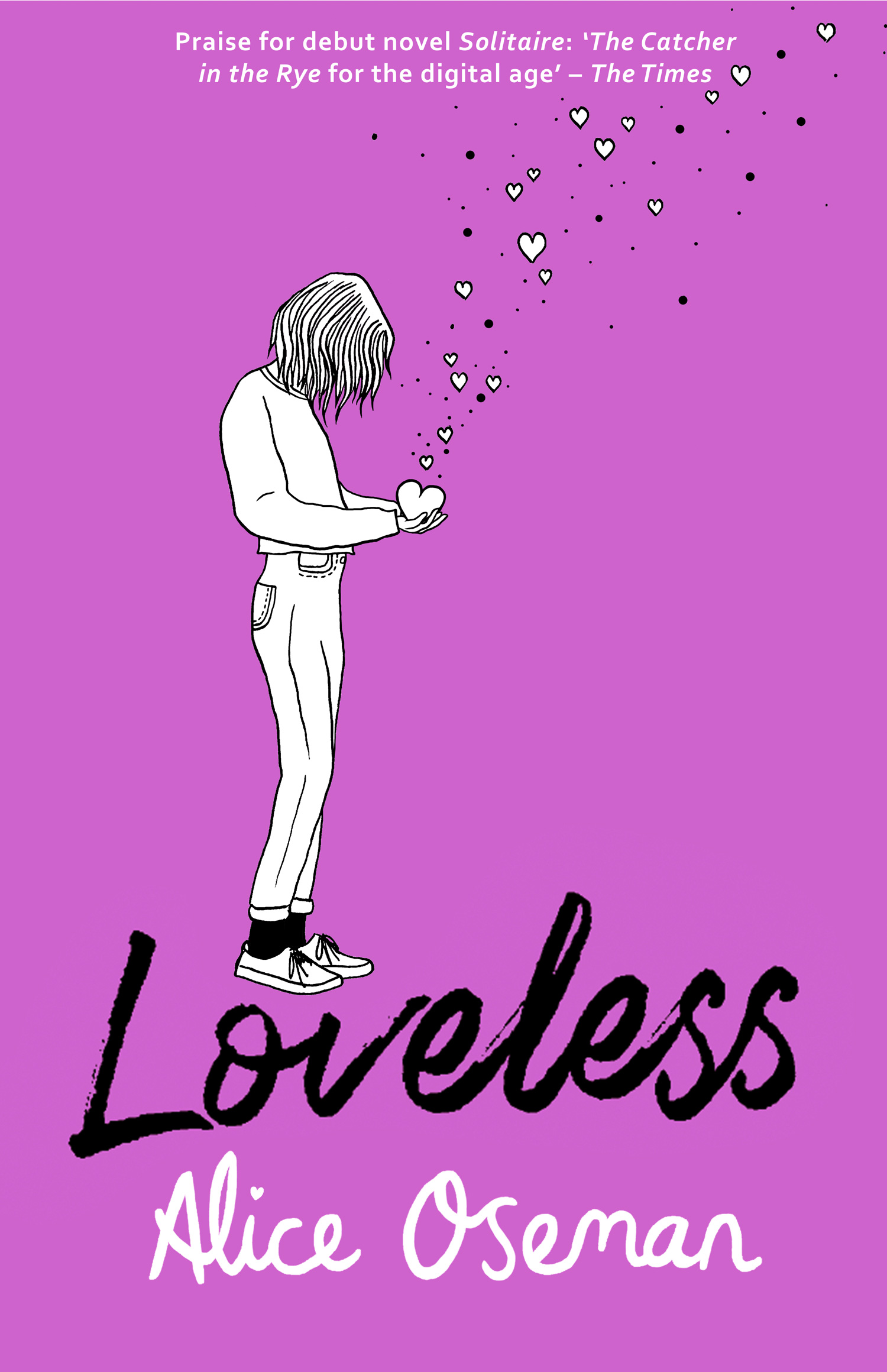
Loveless by Alice Oseman

★★★★

A truly important - and funny! - book that goes a long way in normalizing the exploration and discussion of sexuality. There is plenty of drama to move the story along, but really the primary plot is Georgia coming to terms with being aromantic and asexual.

In the beginning, I was put off by how Georgia, an 18-year-old student starting university, centered sex and romance, believing that everybody is supposed to have a romantic partner. She saw herself as the weird one for not having kissed anyone yet, let alone not having had sex. But as it turned out, one of the key points of the book was Georgia realizing that there are no rules about how you "should" behave or what you "ought" to do when it comes to relationships. You do what feels right to you, as long as you're not hurting anyone. You do you. A very healthy, empowering message.

Perhaps this message was best summed up by Georgia's roommate, when she said to Georgia, "I think it's pretty amazing that you haven't felt peer-pressured into doing anything [sexually] by now. You haven't made yourself do anything you didn't want to do. You haven't kissed anyone just because you're scared of missing out. I think that's one of the most mature things I've ever heard, actually." (p. 118)

There's also a meaningful point about friendships, how they can be just as valuable as romances. I really enjoyed Georgia's friendships, both the comfort and familiarity she shared with her old friends and the exciting novelty of getting to know her new friends.

This book is very modern, with lots of teenage slang, including very casual use of the f-word. I even had to Google some of the lingo, e.g., apparently "AU" means "alternative universe" in fan fiction.

More notably, though, potential readers might appreciate a heads up in knowing that this book is very frank and open about sex, sexuality, masturbation, attraction, social norms, and identity. ("Hand jobs" and "getting fingered" are explicitly mentioned.) The book lays bare a few variations of difficult and awkward conversations, which is actually great, in a way, because if you have similar questions yourself, you can just read this book and spare yourself those conversations in real life!

On a lighter note, it was fun reading a book that was set in the UK. Georgia didn't go to college, she went to "uni", which apparently is usually a 3-year endeavor, not 4 like in the U.S, and typically does not require sharing your dorm room with a roommate. Georgia and her friends drank a lot, but since the drinking age is 18 in the UK, presumably it was all legal. At times it felt like Georgia's uni experience revolved a bit too much around drinking culture, but I admit it was realistic, so it's probably a good thing for teenage readers to be exposed to that kind of party lifestyle safely in a book, giving them a chance to think about how they might handle certain situations.

The only other thing I wanted to mention is that I found the part about Georgia explaining aro-ace identity to her cousin a bit convenient plot-wise, like, just as soon as Georgia figured it out herself, she's in a position to support someone else in the exact same struggle? But I admit it was a useful scene because it showed how older people, who didn't grow up with the open-mindedness and terminology of today, might be moving through life, doing the best they can, without having the wherewithal to fully understand their own identity. 

Overall, a good read for mature teenagers - and their parents! - to better understand the range of sexual identities out there. It also provides a lot of good modeling on how to talk about such matters.

Monday, July 11, 2022

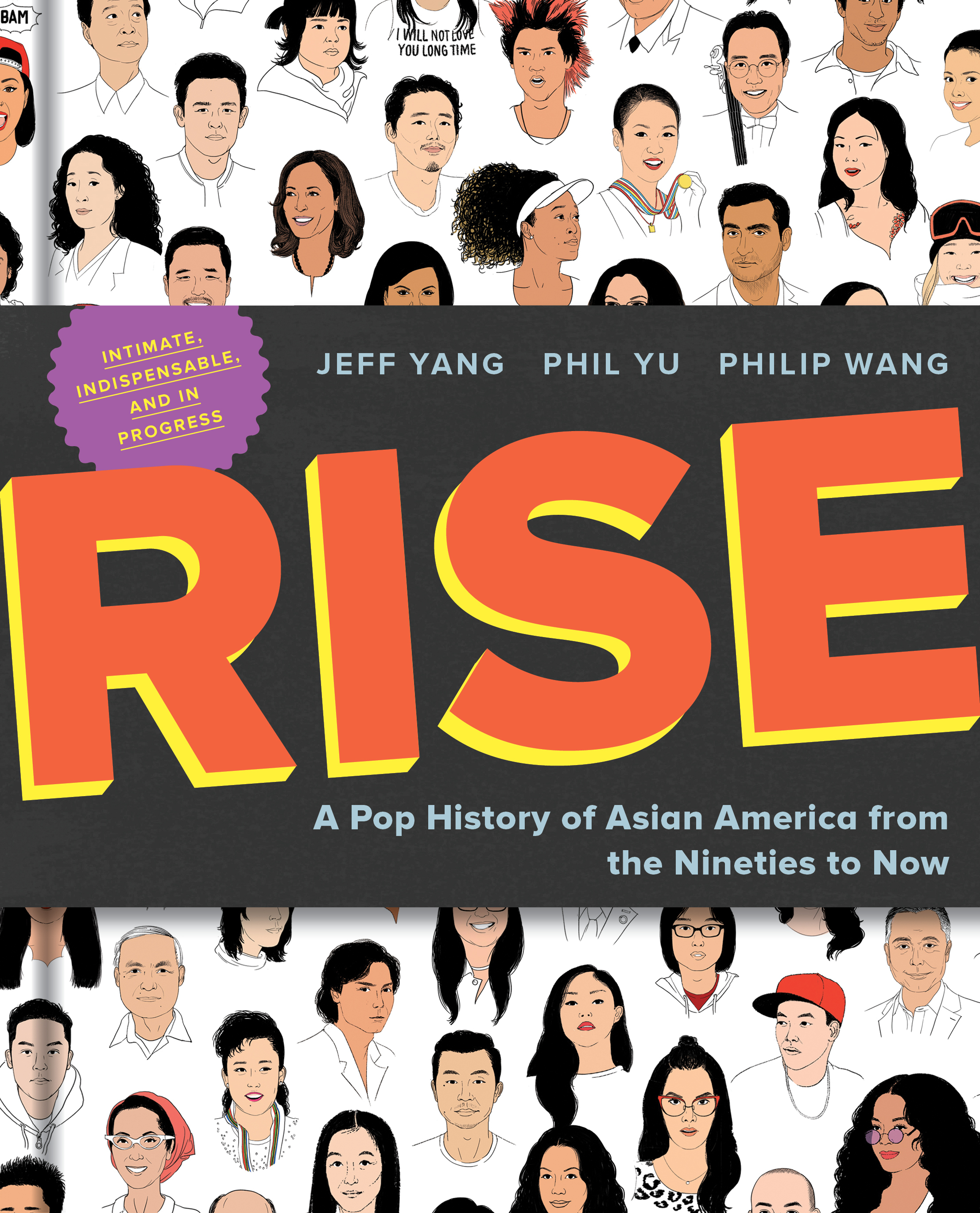
Rise: A Pop History of Asian America from the Nineties to Now by Jeff Yang, Phil Yu, and Philip Wang

★★★★★

As fun as it is informative!

This book is about the rise of Asian America, a self-defined community (separate from the idea of "Asians in America") that broke through stereotypes and bamboo ceilings. The growth of Asian America's visibility was spurred by the coming of age of kids born to a wave of Asian immigrants who first arrived in the U.S. when exclusionary immigration laws were lifted in the late 1960s. 

I am one of those kids! This book, more than any other, resonated with me in an unprecedented way. It absolutely made me feel seen. Everything, literally everything, down to the list of songs in "Original Synth: The Anthems of Young Asian America" (p. 26-27) rang true for me. In "Finding Our Religion" (p. 279), I actually burst out laughing at #27: "People singing hymns in an Asian language and English at the same time, creating cacophony" (p. 281) - a hilarious truth I witnessed in my youth and had totally forgotten.

Rise is a collection of essays, illustrations, graphic novel content, photos, timelines, lists, infographics, quotes, commentary - all of it raising up Asian American people, culture, accomplishments, and issues. The three authors - whose work I've followed online for years! - wrote most of the content, but plenty of other prominent Asian Americans have bylines or were interviewed. (If you aren't familiar with a particular contributor, there's a handy list with biographical blurbs at the back of the book.) It's very much a coffee table book - printed on heavy,  photo quality paper with content organized in colorful, eye-catching, easy-to-digest chunks - but I read it from start to finish, cover-to-cover, every word, every caption. I just could not get enough of it.

The vast majority of the book upliftingly covers "the good", e.g., Asian American representation in entertainment, sports, arts, politics, etc. Sufficient space is also given to "the bad", e.g., yellowface and cultural appropriation, and "the ugly", e.g., controversial topics like tiger parenting.

Though the book's subtitle focuses attention on the 1990s and later, there's actually a very enlightening "Before" section that presents a brief but thorough overview of Asian American history through the 1980s. I was in high school and college during the 1990s, so that section felt personally nostalgic for me. And with much of the 2010s still fresh in my mind, I really enjoyed getting a behind-the-scenes look at Fresh Off the Boat, Crazy Rich Asians, Linsanity, and #StarringJohnCho.

Sunday, July 10, 2022

Portrait of a Thief by Grace D. Li

★★★★

In a somewhat improbable premise, five college-aged Chinese Americans agree to commit a series of art heists.

For about the first third of the book, it felt like the heist was contrived to simply be the means by which these characters would come together. The pacing was slow and deliberate, each character engaging in much introspection and self-analysis as they looked to justify their decision to join the crew. As children of immigrants, each with their own unique experiences, they examined their familial relationships and self-identities, tried to understand their place in the Chinese diaspora and make sense of their uncertain futures. The weight of immigrant dreams and unresolved sense of self hung over almost every conversation, action, and interaction.

When the first heist finally started to come together, a healthy dose of suspended disbelief was necessary. Here we had a young adult crew, all somewhere on the stereotypical Asian child-of-immigrants predetermined path to success (e.g., elite school, pre-med or engineering, etc.), with little to no relevant criminal experience (except what one happened to conveniently pick up as the son of the FBI expert on Chinese art theft), planning a heist in 4 weeks while also holding down their full-time studies or job. The main characters being on the precipice of change positioned them well for so much self-reflection, but maybe the story would have been a little more believable if they were all just a bit older.

Still, seeing the first heist come together was a satisfying development. The pace picked up, though the book never quite became a page-turner for me. About halfway through, an unexpected twist finally hooked me and got me wondering how things would end.

I found it difficult to become fully immersed in the book because I was constantly distracted by the author's writing style. The prose leaned into the art theme, was excessively descriptive and poetic with careful attention being paid to the way light or darkness fell into a room, or on someone's face, or over a city, with colors of gold and red or gray. The author relied heavily on this: a set-up employing the word "this", followed by a colon, followed by some kind of revelatory statement.

Yet, I gave this book 4 stars. It resonated with me in a very personal way that does not often happen. I enjoyed the main characters and their changing relationships; each of them felt like someone I could have known in college, and in them I recognized pieces of myself and my Chinese American community growing up. And it wasn't just the complicated identity stuff that I found relatable, but also the casual references to boba and dumplings. Also, Chinese characters were dropped in-line with English text, not just the pinyin romanization but actual Chinese characters! The representation just felt amazing.

Sunday, June 19, 2022

We Were Dreamers: An Immigrant Superhero Origin Story by Simu Liu

★★★★★

A beautiful memoir.

Simu Liu names his parents' treatment of him as abuse (p. 123), and he spent much of his teenage and young adult years being an attention-seeking tryhard. But, oh, he was genuine. He just so earnestly wanted to feel accepted. His path to self-discovery and reconciliation with his parents was nothing short of remarkable. He writes engagingly and comes across as embodying both a bold self-confidence that fuels his pursuit of acting dreams and a realistic sense of humility that ensures he fully appreciates his successes.

Right off the bat, in the prologue, I knew this book would not let me down. Being a superhero in a Marvel movie could not be farther from my own experiences, but Simu Liu's account of his parents' reaction to his landing the role of Shang-Chi resonated with me. I am also a child of Chinese immigrants, and while Simu's family history is vastly different from mine, the culture was familiar, his personal story reminiscent of the many stories within my own community growing up. Yes, representation really does matter, and I especially appreciated his discussion towards the end of the book about how Asian Americans in the entertainment industry rallied around him and helped him to lean into his Asianness.

I think this book would be a great read for teens who may feel lost, oppressed by their parents, or who otherwise feel a sense of not being worthy. Simu Liu is obviously an exception case in that he has a rare gift for performance - not everyone can grow up to be a superhero, after all - but still, this book shows how meaningful it is to feel seen, how important it is to be true to yourself, and that there is always hope for a better existence, for a healthier relationship with your parents.

All that said, I have to say, I found it fascinating how, early in the book, Simu Liu took pains to not make any political commentary, presumably to avoid any repercussions from the long arm of the Chinese government. He makes it clear that his family in China was "unencumbered by any political aspirations whatsoever." (p. 9) I found it jaw-dropping how he matter-of-factly wrote about the Cultural Revolution with absolutely no judgment, for example, when he described how his paternal grandfather lived in a "self-imposed house arrest" to hide from the "Red Guard, a militia of radicalized Chinese youth that harassed, beat, and sometimes killed [intellectuals] in the name of the revolution." (p. 23). I mean, what?! When his father was a child, the Chinese government "required millions of Chinese families to send their children away from home to work in mountainous areas or farming villages to learn the value of hard labor... [and his father's sister], at age fifteen, volunteered to be the one to leave." (p. 24) Seriously, WHAT?!? He even used the euphemism "cadre school" (p. 36) to describe the labor camp to which his maternal grandfather was sent. If any reader is unfamiliar with Communist China's Cultural Revolution, Red Guard, and labor camps, this book provides a shockingly inadequate introduction. I have to assume the downplayed content was an explicit decision to avoid conflict with China, since Shang-Chi and the Legend of the Ten Rings is controversial in China, and Simu Liu has already gotten into hot water for some past comments.

Sunday, May 1, 2022

Troublemaker by John Cho with Sarah Suk

★★★★★

It wasn't intentional, but my library just happened to fill my hold request so that I read this book over April 29, the 30th anniversary of the LA riots.

The 1992 riots in Los Angeles serve as the backdrop for this story, which unfolds at the intersection of immigration, child-of-immigrant identity, racial injustice, and gun violence. On top of all that, the main character Jordan is trying to navigate strained relationships with both his father and his friend. Jordan's life is complicated, as many children's lives are. In that way, it reminded me of the book Blended, which also has themes of race and gun violence, and also openly addresses the many issues children face in real life. I appreciate these books for providing a framework for kids to process complex issues in age-appropriate ways.

I'm not Korean, but I'm an American-born child of Asian immigrants, and the Park family dynamics were familiar; the portrayal of Korean American experiences felt authentic.

Some parents might like to know that though the title may allude to John Lewis's quote about getting into "good trouble", there is quite a lot of actual "troublemaking" in this book, from cheating in school to stealing from family to hitchhiking with strangers! Every such action is presented with clear disapproval, and it's obvious that the decisions to engage in these activities were poor and reckless. I think the right vs. wrong morality is evident, so kids aren't likely to want to emulate Jordan and Mike. In fact, I actually think it's solid representation to show that yes, sometimes kids make bad decisions. Sometimes those decision come from a place of weakness or curiosity, sometimes they come from a place of desperation or wanting to do good, but no matter the motivation, bad decisions do not make for a "bad kid", and I think that's an important message for all kids to understand.

While Jordan is trying to unpack a lot of big and meaningful questions, the events of the book actually take him on an exciting adventure, making for an engaging and entertaining read even if you're not particularly interested in the social justice issues.

There is no Korean glossary, but there is an Author's Note at the back of the book. I think I might even recommend reading that first, to help frame and set the context for the book.