Thursday, April 25, 2019

Song of the Trees (Logans #3) by Mildred D. Taylor

★★★

After reading Roll of Thunder, Hear My Cry, book 4 in the series about the Logan family, I figured it'd be worth reading the rest of the series as well.

I have to admit, I did not realize this book is essentially a short story. I'm actually glad I read it after reading Roll of Thunder, Hear My Cry, because that meant I went into this book already knowing who the characters were. Without that pre-existing connection, I'm not sure I would have felt as invested in this story.

Song of the Trees tells of the episode, referenced in Roll of Thunder, Hear My Cry, in which a white man takes advantage of Papa not being home to strong-arm Big Ma into allowing him to cut down trees on her land. The book conveys a deep appreciation for nature while reaffirming David Logan's dignity in the face of overt racism.

Wednesday, April 24, 2019

It Ain't So Awful, Falafel by Firoozeh Dumas

★★★★★

A downright funny book about a girl in middle school who moves to Newport Beach, CA from Iran by way of Compton. Her name is Zomorod, but in an effort to fit in better, she decides to go by Cindy. This book provides a unique glimpse into a very specific time in U.S. history: the late 1970s during the Iran hostage crisis.

That description probably makes this book sound random, but it's really a tight story. Through Cindy and her family, we get a look at a special kind of immigrant experience, one in which Cindy is expected to live a normal American life while knowing that her friends, her family, and the place she considers "home" are suffering indescribable injustices, fear, and turmoil. It's rare in a children's book, but Cindy's family is just not a typical, happy family. They are sad, and they become depressed. In the end, though, because it is a children's book after all, thanks to the kindness of friends and neighbors, everything turns out fine.

Now that description probably makes this book sound heavy and serious, but it's really such a fun read! Cindy is determined to make friends and have all-American experiences, despite her parents' lack of desire to assimilate themselves. She's smart and plucky and well-adjusted, and her energy is practically contagious.

This book offers so many relatable child-of-immigrant experiences, including having a name no one can pronounce, being your parents' translator, and having a family that doesn't openly communicate like the American families on TV. The details of life in the late 1970s might be new to young readers, but it was perfectly nostalgic for me, what with the passing mentions of Sears, cassettes, and pop culture references from my childhood.

Being an immigrant from Iran was bad enough because Cindy was frequently treated as an "other", but when the Iran hostage crisis happens, her life is upended. Now suddenly she is associated with the most hated country in America, and she is forced to face xenophobia head-on.

I was born in the 1970s, but growing up I knew nothing about Iran beyond hearing about "the Iran hostages" and associating Iran with Ayatollah Khomeini. This book provided an eye-opening lesson in U.S. history at a level appropriate for young readers. Most kids born and raised in America know about freedom of speech, but I can imagine some lines in this book could make a real impression on those who might not realize that not all countries enjoy such freedoms.

One small heads-up for parents who may want to know: There is a passing mention of "venereal disease" in the context of a classroom prank.

An excellent "window" book for today's middle grade readers, both entertaining and educational!

Sunday, April 21, 2019

The Little Prince by Antoine de Saint-Exupéry

★★★★★

*** Warning: This review contains spoilers!! ***

I don't care what anyone says, I refuse to believe that the little prince dies. I see him as the manifestation of the pilot's childhood innocence, and while many of us may lose touch with our inner child as we grow up, I don't think we ever lose that sense of youth completely. Our inner child may get buried deep inside us, maybe we never again consciously recognize them, but I think they live on inside us; I definitely do not think they die.

In fact, I see all the planets and their inhabitants as pieces of our adult selves, some being more prominent in one's character than others. None of them ever die, the potential for each personality trait exists within us, it's just a matter of which ones manifest in us the most, and to what extent.

And yes, I know snakes can represent loss of innocence, or evil, in books... And the little prince makes clear statements to and about the yellow snake regarding the snake's poison... But the pilot himself believes the little prince did go back to his planet, and that's good enough for me!

Anyway, one of the messages of the book is, "What is most important is invisible." So really, what's most important is that the spirit of the little prince lives on. It's not actually important to know for sure if the little prince physically "dies" on our earth or not, if he figuratively "dies" as part of his mode of transportation back home, or if he literally dies.

Saturday, April 20, 2019

An Unlikely Journey: Waking Up from My American Dream by Julián Castro

★★★★★

An inspiring read that shows just how much America has to gain by welcoming immigrants and investing in all people equally. As a memoir, this book is very approachable. Only a small bit of policy is mentioned towards the end, when Castro discusses his political offices.

Julián Castro describes the American dream not as a sprint, or even a marathon, but a relay in which each generation passes along what they have achieved in the hopes that the next generation might have even better and more accessible opportunities for success. He tells his own family history, an example of this relay for the American dream.

Castro is a Mexican-American who grew up in an underprivileged part of San Antonio, TX in a single-parent, multi-generational household. He and his identical twin brother Joaquin shared a special bond, and together they were raised by a passionately politically active mother who taught them how to help improve their community by taking action. There's always some debate about nature versus nurture, but it's fascinating that Julián went on to become a San Antonio city councilman, then mayor, then President Obama's Secretary of Housing and Urban Development, while Joaquin became a state representative in Texas, and then a congressman in the U.S. House of Representatives.

Through his life story, it's clear how Castro developed his sense of service and giving back. He believes that all people have ability and ambition, and it is mostly a lack of opportunity that holds back those of modest means. As someone who received critical mentoring along the way, he believes in both acknowledging the efforts of those who paved the path before him, and also reaching back and helping those who will follow behind him. His dedication to his hometown of San Antonio is admirable.

Sunday, April 14, 2019

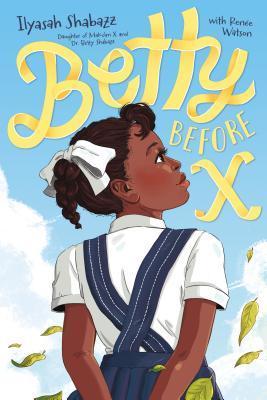
Betty Before X by Ilyasah Shabazz and Renée Watson

★★★★★

A wonderful middle grade book that exposes young readers to civil rights activism in the 1940s from a tween's point of view.

There's so much I love about this book. Mostly, I love the idea of showing young readers that every person who has ever made a difference in this world - every musician, athlete, activist, or scientist - was once a child, just like the rest of us. Each child has so much potential!

The book has a Biblical theme of "reaping what you sow", and as Betty tends to her "planted seeds" in relationships and activism, she learns that both require patience, care, and attention before she can "reap" any rewards. But Betty herself is also a seed, and through the love and guidance of those around her, she matures into a strong, thoughtful, and compassionate leader.

I like that the book touches upon race-related realities of growing up black, like how Betty and her friends rely on Ebony magazine for hairstyle ideas, and how dark-skinned Betty notices that even in Ebony, lighter skin is held up as desirable.

There's also some good modeling of respectful dialogue between Mr. Malloy and Deacon Boyd, who disagree in how they believe Negroes should go about trying to achieve equality. In the same way, Betty shows us that even though she and Phyllis have similar disagreements, they can still be friends.

There are a lot of positive messages woven into the story. Betty learns to overcome hardships by finding the good and praising it, and by counting her blessings. She also develops a strong sense of doing by following the Biblical passage that says "faith without works is dead." (James 2:26)

Young readers will get a sense of how life was different in the 1940s. The word "Negro" is used. Betty listens to records with her best friend Suesetta, enjoys learning to sew, and the local activist organization is called the Housewives' League. Only the boys in her family go sledding. Getting a whipping is nothing to call the police about, though it is still serious enough to justify a change in custody. And, of course, Betty's experiences while shopping illustrate the injustice, cruelty, and dehumanization of the overt racism of the time period.

Parents should know that this book does mention Leon Mosley, a 15-year-old black boy who was shot in the back and killed by police officers in 1948. Even if readers are aware of the current Black Lives Matter movement, perhaps they might be surprised to learn that policy brutality is not new, and the events currently being protested are just the same as events that were protested 70 years ago.

The back of the book includes several interesting sections that help shed light on how much of the book was fact, and how much was fiction.

One final thing to note: Despite the reference to Malcolm X in the title, the book doesn't actually talk about Malcolm X at all. The title might be confusing for some young readers who aren't familiar with Malcolm X. The extent of his mentions are basically limited to the dust jacket's front inside flap, which says, "Before Betty Shabazz met Malcolm X..." and the Author's Note at the back of the book, which says, "Dr. Betty Shabazz... is known to many as the wife of El Hajj Malik El Shabazz (Malcolm X)." This book is 100% about Betty Shabazz and does not in any way try to explain who Malcolm X was, and it's just fine with me if maybe a child reads it and one day later learns who Malcolm X is and thinks, "Oh, he's the guy who married Betty Shabazz"!

Wednesday, April 10, 2019

Repentance by Andrew Lam

★★★★

Disclosure: I know the author, Andrew Lam, and I read an early draft. I received an advance copy of the book.

Daniel is a Japanese-American surgeon whose marriage is on shaky ground. During World War II, his mother was incarcerated in the Manzanar Japanese internment camp while his father served in the all Japanese-American 442nd Regimental Combat Team. Daniel is estranged from his father, but is forced to come to terms with their relationship when he flies out to visit his parents in response to a medical emergency. Chapters alternate between "present day" scenes in the late 1990s and flashbacks to WWII-era events. The book offers both action-filled war sequences and tender moments.

I especially appreciate that this book brings attention to parts of Asian-American history - Japanese internment and the 442nd - that most people don't even know about. Andrew Lam does justice to their legacies, effectively conveying the unique position occupied by Japanese-American soldiers in the U.S. military and the extent of their bravery, as well as the injustice and sufferings of the Japanese-Americans detained in concentration camps.

While the events that unfold are suspenseful and absorbing, ultimately they serve to depict the human condition through the characters of Daniel and his father. Like each of us, they are flawed. We are presented with a poignant story of expectations and resentment, honor and loss, repentance and atonement.

While I thoroughly enjoyed the twist and turns of the storytelling, I have to admit, I'm a real stickler about representation and accuracy. On page 13, Daniel's half-white, half-Asian son is unfortunately described as "exotic", which perpetuates the idea that mixed race people are a kind of "other".

On page 47, there is this line: "There weren't any camps for German Americans or Italian Americans." I think this statement could be misleading... It's true there weren't any large-scale camps dedicated exclusively for Germans and Italians, and Germans and Italians weren't rounded up en masse like the Japanese, but they were detained on an individual basis, sometimes alongside Japanese detainees. More than 11,000 people of German ancestry and about 3,000 people of Italian ancestry, including U.S. citizens, were incarcerated during World War II, though those numbers pale compared to the 120,000 people of Japanese ancestry who were imprisoned.

Anyway, overall, an entertaining story that I could easily imagine on a big screen.

Friday, April 5, 2019

Blended by Sharon M. Draper

★★★★★

*** Warning!! This review contains spoilers!! ***

I think this middle grade book is perfect for helping to stimulate much-needed age-appropriate discussions about race, identity, class, and divorce.

There's so much I appreciate about this book. Mostly, I like that it can serve as a "mirror" for so many children who more often than not get "windows". There aren't a lot of books about children with divorced parents who don't get along, but I'm sure there are plenty of kids who could relate to Isabella's frustrations as she alternates weeks between mom's house and dad's house. I can imagine kids feeling relieved and understood as they read about Isabella's mixed emotions, especially regarding things that other people simply expect her to be happy about.

Of course, Isabella has the added confusion of trying to make sense of her identity as the child of a white mother and a black father. Children's books about people of color are still few and far between, let alone books about biracial children. In this book, biracial children can relate to Isabella's confusion as she comes to terms with her racial identity, including her experiences that are uniquely tied to being mixed race. All children of color might be able to relate to the incidences involving the way other people treat her based on her perceived race.

Going even farther, Isabella's two households are separated not only by race, but also by class. Her father is a white collar professional who has a large and formal home. Her mother is a blue collar worker who has a modest and laid back home. Class differences are rarely addressed in children's books, but surely children notice when their friends have much fancier, or much more modest, houses and lifestyles.

On top of all that, this book does a huge service by modeling productive race discussions in classrooms, among friends, and between parents and children. Isabella's white friend Heather even serves as a positive example of allyship.

I've read some other people's reviews already, and I sort of feel like I want to address some of the most common complaints. Many people dislike that there were "too many" issues, but I strongly disagree. This is Isabella's life, complicated and messy, just as many children's lives are in real life. I appreciate that this book reflects that reality.

Some people thought the narrative voice of 11-year-old Isabella didn't sound genuine, or they got annoyed with her constant references to slime and brand names. Obviously this is a matter of opinion, but I really found Isabella's dialogue and perspectives to be authentic. I could easily imagine the printed words being spoken to me by a 6th grader.

Another common complaint is that the race-related events just weren't believable, or were treated too heavy-handedly. Personally, I was constantly making connections to real-life events, and I think they are worth exploring. When Isabella's black friend Imani finds a noose in her locker, I was reminded of the 10-year-old Muslim girl who received hate notes in her school cubby. When Isabella and Imani are confronted by a security guard in a store, I was reminded of the three black teenage boys who were accused of shoplifting at a Nordstrom Rack. And when Isabella was shot during a police stop, I was reminded of both Tamir Rice, the 12-year-old black boy who was fatally shot by police officers who mistook a toy gun for a real gun, and also Stephon Clark, a black man who was fatally shot by police officers who mistook a cell phone for a gun.

All of that might sound kind of intense for a children's book, and I'm always quick to give a heads-up in my reviews to alert parents of any content that might call for concurrent or follow-up conversations. So definitely be aware that this book addresses police brutality and Black Lives Matter. Still, I think the material is presented in approachable, age-appropriate ways, and I think the topics covered are worth talking about with upper elementary and middle school kids.

Wednesday, April 3, 2019

Sunny (Track #3) by Jason Reynolds

★★★★★

This book is written as a series of diary entries by Sunny. I have to admit, I was a little put off by the format, because I enjoy reading dialogue. But Sunny's authentic middle school voice really won me over. I think Jason Reynolds does a fabulous job capturing Sunny's all-over-the-place kind of internal monologue.

What I liked most about this book is how Sunny really feels himself to be "weird", different from other kids. And he's not wrong. His mother died giving birth to him, so he carries around the guilt of feeling like he's his mother's murderer. He's been homeschooled his entire life, so up until he joined the track team, he had no friends his own age, and his whole life revolved around his home. I think it can be really valuable for young readers to see a character who truly feels a kind of loneliness, a person their age who doesn't fit the mold of a "typical" kid. Still, he is typical because when it comes down to it, all he wants is what everyone wants, the love of family, supportive friends, and to do what he enjoys.

Also valuable is for young readers to see how complex and full Sunny's "non-standard" life is. There're a lot of disparate ideas that all come together through Sunny. He empathizes with cancer patients at the hospital where his grandfather is a doctor. He makes connections with the groundbreaking movie Baraka. He and his father literally and figuratively piece together his mother's image, working together though their relationship is cold and strained. There's even a message about forgiveness and loyalty, relationships and new beginnings, as Sunny learns the true story behind how and why Aurelia came to be his homeschool teacher. (Heads up for parents who want to know these things: There's reference to drug addiction, but it's clear that drugs are bad, and people who suffer from drug addiction can recover and thrive.)

I love that in this book, there is no stigma in crying. Sunny cries, Aurelia cries, his father cries. Everyone cries, and it's fine, it's just what people do.

Also, as a former shot putter, I appreciate that this book brings in the "field" component of "track and field"!

Monday, March 18, 2019

Front Desk by Kelly Yang

★★★

I love that this book's first-person narrative voice is that of a child immigrant. There are very few books that I have found with this perspective, and I think it's important for immigrant children to have such books as "mirrors", and for American-born children to have them as "windows".

I also really appreciate that this book addresses racism head-on. I think race and racism should be openly discussed among children of all ages, and this book goes a long way in helping to make these topics accessible.

That said... I was troubled by just one phrase that had an outsized impact on me. Mr. Yao, the awful motel owner who exploits the Tang family, spoke "Taiwanese-accented Mandarin". The main character Mia and her family are loving, hardworking immigrants from China, while the mean, unfair boss is an immigrant from Taiwan. Most readers would probably gloss over that distinction, but Taiwanese characters in children's books are so scarce that when I, a child of Taiwanese immigrants, read the word "Taiwanese", my heart leaped with excitement! "Omg, a Taiwanese character!" Unfortunately, that feeling quickly deteriorated as I realized, "Uhh... The one Taiwanese character... is the irredeemably ignorant, cold-hearted, racist villain?" I just don't think we have enough narrative plenitude yet that would allow me to overlook such a one-sided negative portrayal of Taiwanese people, particularly because there was no Taiwanese counter-example to Mr. Yao. Maybe I would have been less bothered if, for example, Mrs. Yao had been kind and reasonable in a way that could have balanced out Mr. Yao's evilness. Also, many readers might not know that there is a kind of tension between mainland Chinese people and Taiwanese people, on account of differences in culture, history, and politics. I don't see any point in further driving in that wedge, especially with young readers.

Growing up with immigrant parents, I know that the sacrifice, discrimination, assumptions, and stereotypes faced by immigrants are real. The author deftly portrays these struggles through Mia's battle with the model minority myth, her embarrassment over her un-stylish clothing, and Mia's mother's feelings of inadequacy regarding her poor English. But the added difficulties faced by undocumented immigrants is a whole other harrowing level, and I don't think it helps to conflate the two experiences. The picture painted of immigrants in this book - Mia's parents seemingly being paid under the table, other immigrants fleeing from loan sharks, abusive employers with illegal practices, and immigration raids - point to experiences more typical of undocumented immigrants, yet they are never referred to as "undocumented". I applaud the author for tackling such an important topic, and I wish the characters were explicitly identified as undocumented. I think the distinction is important, and when made in a children's book, could really help young readers to understand that "the illegals" they hear being vilified in the news are people like their classmates and neighbors, regular people just like them. Also, identifying characters as undocumented would help explain why Mia's Mexican friend Lupe doesn't go back to Mexico to visit her family (an undocumented immigrant who leaves the country risks not being able to return), and why Mia's parents, at the end of the book, didn't even consider going to a bank for a loan. (It's not impossible for undocumented immigrants to get a loan, but being undocumented is certainly a negative factor.)

Anyway, moving beyond immigrant-related concerns... I found Mia to be easily likable. She was driven, resourceful, and well-meaning, and she had been through so much that even when she engaged in morally questionable behavior towards the end of the book, I could understand why she did it. I appreciated, too, that Jason was a complex character who developed as we got to know him.

At first I thought the cover illustration was misleading; it makes you think that the book is going to be a light-hearted account of Mia's antics as she works the front desk of the motel. It starts to feel inaccurate when you start reading about heavy ideas such as loan sharks, scary drunks, and police officers racially profiling and mistreating black people. But then, as the book progresses, there's a lot of over-the-top problem-solving that can only fly in a children's book. The ending especially was in-the-clouds level over-the-top, it actually seemed jarring and out of place when the rest of the book seemed to at least try to be realistic.

Friday, March 15, 2019

Roll of Thunder, Hear My Cry (Logans #4) by Mildred D. Taylor

★★★★★

I don't think I've ever been blown away by a book as much as I was by Roll of Thunder, Hear My Cry. If I could give this book 10 stars, I would. Putting this book down, I am consumed by the enormity of what this book offers to young readers, and I actually feel indignant that my formal education never included being asked to read this book. That's how important I think this book is.

In school, we learn the broad strokes of U.S. African-American history. We learn about slavery, the Underground Railroad, the Civil War, the Emancipation Proclamation, Reconstruction, Jim Crow segregation, and the civil rights movement. But much of the time, we learn about these topics in the abstract, and lose sight of the fact that actual people, individuals, generations of mothers and fathers and sons and daughters, actually lived through these events. White supremacy was sewn into the very fabric of American history for centuries. We can't possibly expect to make progress in racial justice now without looking at our past full in the face, acknowledging the truth, and directly addressing the institutional and systemic inequity that persist to this day. Reading this book is a good place to start.

Through the innocent eyes of 9-year-old Cassie, who is just beginning to venture outside her limited world of home and school, we see the horrors of post-slavery white supremacy in 1933. There is humiliation, indignity, and injustice. As parents, we want to protect our children and give them carefree childhoods, but the extent to which we can avoid exposing them to harsh realities is an indication of how privileged we truly are. Much of this book would be considered difficult content for young readers - frightening "night men" attacking in the night, people being burned alive - but then you are forced to realize that the events in the book are happening to young children. Though fiction, the life depicted in this novel was a reality for many people. For me, this book was so filled with tension and anxiety and suspense that it was chilling and heartbreaking to imagine living life with such a constant presence of fear.

This book is filled with well-crafted characters. Cassie is understandably angry and indignant as she witnesses acts of racism for the first time. Her 12-year-old brother Stacey is just mature enough to understand better, and it's painful to see him forced to step into the role of man at such a young age. Big Ma, in her years of experience, was resigned to the reality of racism, while Uncle Hammer had a fiery anger and needed to be held back from executing his own vigilante an-eye-for-an-eye sense of justice, which would surely put his own life in danger. Mama and Papa engaged in calm, calculated resistance as best they could, short of risking their own livelihoods and that of their neighbors. Sorrowfully, Mr. Morrison - more than any other character, to me - embodied the long-lasting effects of slavery, both literally and figuratively. And T.J. - poor T.J.! - who was just a boy, desperate for attention and acceptance when he fell victim to his own foolishness.

I appreciated, too, the characters of Jeremy and Mr. Jamison. They were brave and kind in their acts of allyship, and they - as much as the strength and dignity of the Logan family - give the reader hope that change is possible.

Friday, March 8, 2019

Holes by Louis Sachar

★★★★

Holes was on my to-read list for the longest time, but I never really felt compelled to read it based on the summary description. I don't think the blurbs do it justice; this book is just hard to describe. I finally picked it up because it was on the shelf at the library when I happened to be browsing.

So the book is fiction, set in a modern-day America, but events are too surreal for it to be considered realistic. It's quirky, kind of like dark humor, but appropriate for kids.

As much as I loved the book in the end, I'm giving it 4 stars because it took a while for me to get into it. In its defense, the story just takes a long time to set up. There's a lot of backstory to lay down as the narrative switches between Stanley's modern-day life and relevant events in the lives of his ancestors. You get the feeling that it's all related somehow, but I guess I got impatient, and kept wondering, "Where is this going?!" Rest assured, you'll be rewarded in the end, when everything comes together.

Also, I was a little put off by what I perceived as inconsistency in Mr. Pendanski's character. At first, I thought he was the one compassionate adult at Camp Green Lake, a genuine counselor who truly wanted to help the boys. It seemed completely out of character when he belittled Zero as stupid.

Mostly I like that this book is about a really good story, but I can see how someone might be especially taken with it if they come away with a good message, too. There's some racial awareness, a sense of destiny, an interconnectedness among family generations. There's a lesson about hanging in there, even when things go badly, and about being good to others, and building meaningful relationships.

A good read for kids looking for something just a little different.

Sunday, March 3, 2019

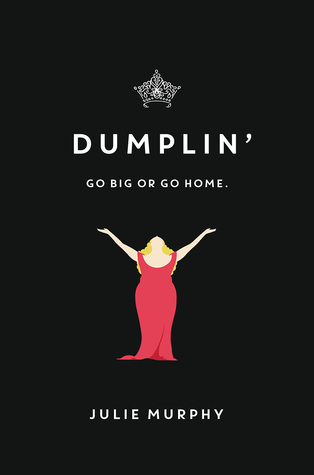
Dumplin' by Julie Murphy

★★★★

I saw this movie on Netflix, and I enjoyed it so much - it was fun and light and thoroughly entertaining - that I figured it was worth reading the book it was based on. I ended up picturing every character just as they were cast in the movie - Ellen with brown hair despite her being blond in the book - though I had to continually make mental corrections for Hannah's teeth. I'm a little irked that an Asian character in the book was swapped out to be black for the movie, but it's not exactly surprising given the lack of Asian representation in movies in general.

Both the movie and the book have uplifting, feel-good, body-positive messages about loving yourself and not limiting yourself to what others expect from you. As usual, the movie was a simplified version of the book.

Like many other YA books, Getting the Guy was a theme. But here we had a twist: Willowdean basically got the guy at the beginning of the book, only she realized that having him wasn't the answer; in fact, he introduced a whole new set of problems. Turns out, before she could allow herself to love or be loved, she first had to love herself.

It's typical for a YA book to emphasize the "chemistry" in a relationship, but still I felt for Mitch. I think it's possible for a person to win over someone's heart over time, and maybe that could have been the case in an alternate universe.

I was kind of disappointed in the rather abrupt ending. I was hoping for more closure regarding Willowdean's relationships with her mother, Mitch, Ellen, and Bo. I wanted to see more progress towards mutual love and understanding between Willowdean and her mom, and I wanted to see how Willowdean and Mitch would interact in class after everything that happened. How would Willowdean handle being best friends with Ellen while also giving her space to grow, separate from her? And how would she feel finally stepping out at school as Bo's girlfriend?

I am relatively new to the YA genre, and I'm such a prude that any time there's swearing or sex - which is pretty common - it's something that stands out to me. This book actually balanced out the "mature content" with some bits about church, which I liked, but I think it's unusual in YA books, at least from what I've seen so far.

Sunday, February 24, 2019

The Sun is Also a Star by Nicola Yoon

★★★★★

I saw a trailer for the upcoming movie, and though I'm not a huge fan of romance movies, I love Yara Shahidi, and I LOVE that the story is about a mixed race couple with an Asian male lead! As soon as I realized the movie was based on a book, I wanted to make sure I read the book before seeing the movie.

The Sun is Also a Star is a love story in one day à la Before Sunrise, but set in New York City against a backdrop of immigration. Natasha is Jamaican, an undocumented immigrant on the verge of being deported, and Daniel is Korean-American, with first-generation immigrant parents. Their lives and experiences as an immigrant and a child of immigrants very much shape who they are and how they think.

I am the first to roll my eyes at cliché love-at-first-sight romance, but the author meets the challenge head-on: Natasha herself is an intelligent, practical, science-oriented person who doesn't much believe in love, let alone "instalove". Daniel, on the other hand, is a romantic, a perfect foil for Natasha's skepticism. As they get to know each other, they banter back and forth about science and philosophy in a way that is thoughtful, not shallow or pretentious, which is how such conversations frequently come across. I like, too, how each person is confident in their own beliefs, yet willing to listen to the other person's ideas.

It's a quick read, with very short chapters that mostly alternate between Daniel and Natasha narrating the story from first-person perspectives. I particularly enjoyed the storytelling angle that involved additional chapters written with a third-person omniscient point of view. As the events between Daniel and Natasha unfolded, sometimes a brief chapter of explanation would pop up; for example, if the story touched upon Natasha's afro, we might get a quick history of black hair, to give more context to the situation. I know it sounds weird, or didactic, but really I found these interludes light and informative and relevant to the story.

Also, sometimes there were chapters thrown in to give a glimpse of the life of a person Natasha or Daniel interacted with, even if tangentially. These chapters I found kind of intriguing. First, they are used in a way to push the idea of fate. Are coincidences really just coincidences, or is the universe contriving to make something happen? Does fate ensure that if you have a missed opportunity at one point, then another opportunity will present itself later? Second, they seem to illustrate a commonly held idea that "everyone has a secret struggle that you don't know about." Personally, while I think that's true for a lot of people - maybe even most people - surely there must be some people out there who are content and not internally conflicted on any given day? But almost all the chapters about other people described complex personal situations that were overall sad and depressing, like, yes, every person does have something difficult to deal with. Taken together, it was like the book was saying that even though I wished for a happy ending for Natasha and Daniel, there really is no "happily ever after" because you don't know how things might change later.

I enjoyed this book a lot, and was surprised by its balance between being a romantic jaunt in young people's lives and its ability to put forth thoughtful ideas. I am a little suspicious that the movie will drop most of the secondary characters to focus on Natasha and Daniel, and I understand why they would do that, but I think a lot will be lost, and I expect I will end up thinking the book is better than the movie (as usual).

Thursday, February 21, 2019

We Are Displaced: My Journey and Stories from Refugee Girls Around the World by Malala Yousafzai

★★★★

Malala Yousafzai is not a refugee, but she knows what it's like to be forced to leave everything behind in your home country, and to start a new life in a foreign country. She writes, "Truth be told, I don't want to keep telling my story...but...if by telling my story I can take the light people shine on me and reflect it onto others, well, that is what I will do." (p. 47)

The first part of this book is a memoir in which Malala describes being an internally displaced person (IDP) in Pakistan, and how her family relocated to the UK after she was shot by the Taliban at age 15. If you've read her autobiography (original or young readers edition), you'll already be familiar with these events, which she relates in broad strokes.

In the second part of this book, we meet nine girls/women who are refugees. (There is also a chapter written by an American woman whose family served as a volunteer host family for refugees.) Each story is prefaced with a brief introduction in which Malala tells us how she came to meet this person. Each refugee then narrates her own story, taking us from her life in her home country, through the events that led to having to flee, and in most cases, ending in how she came to re-settle in her new home.

The only reason I gave this book fewer than 5 stars is because I frequently found myself wanting to read more about each narrator. I can imagine how difficult it must have been for each contributor to tell the world their personal stories, and I appreciate their openness, bravery, and generosity in sharing their experiences. Yet, many of the stories left me with even more questions, and ended just as the person reached a point of relative stability; I wanted to know more about what happened next, and how they felt adjusting to new surroundings. Understandably, their lives are still unfolding, and we do get a glimpse of how each person is doing in a section at the back of the book titled "About the Contributors".

If you follow the news at all, you've probably heard about refugees from one place or another. This book provides a solid breadth of stories from major refugee crises in recent times. Sadly, there are many. These stories are important reminders that when we hear about "refugees" on the news, they aren't criminals, they aren't animals, they are human beings, individuals who are seeking safety first, and opportunity second.

The following is a list of contributors and a brief description of their paths. Not all stories are told to the same extent; the most in-depth stories came from Zaynab and Marie Claire, both of whose stories were supplemented by another person's perspective.
  1. Zaynab: From Yemen. Fled to Egypt to escape the violence of the Yemeni Revolution. Arrived in Minnesota at age 18 on a valid U.S. visa.

  2. Sabreen: Zaynab's sister. Fled to Egypt with Zaynab, but inexplicably did not get approved for a U.S. visa. At age 16, she paid to go to Italy, not understanding how dangerous the trip was. She spent time in a refugee camp in Holland, and ended up in Belgium.

  3. Muzoon: From Syria. At age 13, fled to Jordan with her family, living in refugee camps, to escape the violence of the Syrian Civil War.

  4. Najla: A member of the religious minority Yazidi population in Iraq, targeted for genocide by ISIS. Forced to flee as an internally displaced person.

  5. María: At age 4, violence from the Colombian conflict (now on-going for more than 50 years) forced her family to flee their original home and live as internally displaced people in Colombia.

  6. Analisa: From Guatemala. At age 15, she was living with an oppressive half-brother and a step-mother who was unable to care for her. Another half-brother, living in the U.S., offered to take her in. She made the journey through Mexico alone, but with other migrants and refugees. In Texas, she was held by immigration officials until her half-brother was able to secure her release.

  7. Marie Claire: From the Congo. Spent the first four years of life living on the run from the violence of civil war. Fled to Zambia, where her family was attacked for being refugees. After an application process that spanned years, her family was approved to re-locate as refugees in Pennsylvania.

  8. Ajida: A member of the minority Muslim Rohingya population in Myanmar, persecuted by the Burmese military, who have been accused of ethnic cleansing and genocide. Fled to Bangladesh, where she lives in a refugee camp with her husband and children.

  9. Farah: Born in Uganda, but ethnically Indian. At age 2, Ugandan citizenship was revoked from Asian Ugandans, and her family was forced to leave the country. She grew up in Canada, and as an adult, decided to explore her Ugandan roots.

Sunday, February 17, 2019

White Fragility: Why It's So Hard for White People to Talk About Racism by Robin DiAngelo

★★★★

If your idea of talking about race involves statements like:
  • "I don't see color, I see people." (p. 39)

  • "I have lots of friends of color." (p. 43)

  • "I judge people by the content of their character, not the color of their skin." (p. 43)
...then this book is for you. But also, if you are a white person who already sees how the above statements are problematic, then this book is still for you.

The author herself is white, and she explains early on that when she says "we", she means "white people". The book is very much geared towards white people, and she challenges her readers to truly do the really hard work of closely examining both the role of white people in society and institutions in general, and also how being white has shaped the reader's personal individual identity, even if sub-consciously.

DiAngelo pulls no punches. It's easy to see how a white reader might frequently feel uncomfortable, defensive, or even insulted. In her analysis of white fragility, she scrutinizes concepts such as white supremacy, white privilege, and white solidarity. She drops a lot of truths:
  • "The simplistic idea that racism is limited to individual intentional acts committed by unkind people is at the root of virtually all white defensiveness on this topic. To move beyond defensiveness, we have to let go of this common belief." (p. 73)

  • "If you believe that you are being told that you are a bad person, all your energy is likely to go toward denying this possibility and invalidating the messenger rather than trying to understand why what you've said or done is hurtful." (p. 76)

  • "[White people] often organize our identity around a denial of our racially based privileges that reinforce racist disadvantages for others. What is particularly problematic about this contradiction is that white people's moral objection to racism increases their resistance to acknowledging their complicity with it." (p. 108)

  • "White equilibrium is a cocoon of racial comfort, centrality, superiority, entitlement, racial apathy, and obviousness, all rooted in an identity of being good people free of racism." (p. 112)
The goal is for the reader to understand that "[w]hen we move beyond the good/bad binary [of racism], we can become eager to identify our racist patterns because interrupting those patterns becomes more important than managing how we think we look to others." (p. 129)

This book is full of eye-opening perspectives, but I rated it short of 5 stars because it might not be universally accessible. A reader must first and foremost be open to the ideas expressed in these pages. Beyond that, some of the content is more academic than conversational, and I personally found the information most approachable and relatable when DiAngelo illustrated ideas using actual examples from her personal life, experiences she witnessed in her workshops and classes, and current events.

If any of the above quotes make you feel uneasy - if you are already feeling a bit of white fragility! - then perhaps it's best to ease yourself into the study of whiteness by starting with an introduction to white fragility by reading an article about Robin DiAngelo coining the phrase:

https://atlantablackstar.com/2015/03/18/in-these-times-of-racial-strife-a-white-professor-explores-the-prevalence-of-white-fragility/

...and then watching a video of her speaking in an actual workshop:

https://youtu.be/Dv-pkNXcKsw

...and then picking up this book to get the full in-depth exploration.

As a person of color, I found this book useful as a way to help me better understand the patterned behaviors of many white people, which will hopefully allow me to have more productive conversations about race. I appreciated DiAngelo's statement that it "is white people's responsibility to be less fragile; people of color don't need to twist themselves into knots trying to navigate us as painlessly as possible." (p. 152) Moreover, for those of us who choose to engage in discussions about race, it may be helpful to "let go of changing the other person. If someone gains insight from what I share, that is wonderful... In the end, my actions are driven by my own need for integrity, not a need to correct or change someone else." (p. 151)