Showing posts with label book: 5 stars. Show all posts

Saturday, November 8, 2025

Here Comes the Sun: A Last Chance for the Climate and a Fresh Chance for Civilization by Bill McKibben

★★★★★

Wow! As advertised, this book gave me HOPE! Serious, grounded hope. The worst possible outcomes of the climate crisis really can be averted, as long as we stay focused on solving the problem. 

Bill McKibben's writing is straightforward and concise, geared towards a wide audience of laypeople and perhaps as lighthearted as you can get while talking about a heavy subject. In fact, if anything, as someone with a background in science and engineering, I sometimes wished for more technical explanations.

In this very approachable book, McKibben brought the receipts for the argument Tom Steyer made in Cheaper, Faster, Better: How We'll Win the Climate War - that clean energy can save us from climate catastrophe. Specifically, solar and wind energy are right now already cheaper than energy from fossil fuels, and the use of renewable energy is growing exponentially. At this point, switching to green energy is just plain saving money, and saving the planet happens to be a nice fringe benefit. (p. 94)

There's an obligatory, sobering chapter describing what climate disaster currently looks like (e.g., heat waves and wildfires and record-breaking storms causing death, destruction, and human migration), how we got here, and why we need to take immediate action on a ginormous scale. 

The rest of the book describes various clean energy sources and technologies - e.g., solar cells, wind turbines, hydropower, batteries, heat pumps, electric vehicles, induction cooktops, etc. - their benefits, why it's taken them so long to catch on, the active opposition they've faced (p. 67-68) and are still facing (p. 73, 138-139), how they've improved significantly in recent years and are still improving and will continue to improve (p. 74, 130), why they are now so cheap, how they are already being used, how quickly they are growing, and what we need to do to enable even faster growth. 

In an overall sanguine book - he thinks we can achieve net-zero carbon emissions by 2050 (p. 56) and even the energy demands of AI can be accommodated (p. 39) - McKibben points out that though the transition to affordable renewable energy is already underway, an essential point is the speed at which it must be done. We've already crossed the 1.5 degree Celsius threshold in global temperature rise, and physical planetary systems like jet streams have already been altered (p. 6); to stop the total destruction of the earth, the pace of transition must be urgent and sustained. (p. 76-77)

Of course, Big Oil isn't about to just give up their oil and gas reserves that are worth "tens of trillions of dollars" (p. 34), and they've retained power partly by actively spreading misinformation about renewable energy. (p. 139) Even in liberal U.S. states, communities object to wind and solar farms solely on the basis of aesthetics. (p. 140) Fortunately, attitudes are changing - Rockford, IL is proud of their union-built solar farms (p. 147) - and the fight against climate change is global; in some parts of Asia and Africa, the reality of cheap and reliable electricity means individuals and corporations are installing solar panels on their own, independent of the government and their nation's electric grid. (p. 104-109) 

Mostly what's needed to enable more widespread implementation of green energy systems is money; there's certainly enough capital tied up by billionaires to fund the entire transition, and "the reallocation and redistribution of that money" - via a 2% wealth tax or a modest tax on luxury goods or the elimination of subsidies to the fossil fuel industry - "is now an existential necessity." (p. 112-113) Additionally, we need to support government policies and programs at all levels that will promote and make it easier for people and organizations to install and switch to green energy. (p. 169-172) Indeed, McKibben writes, "If fascism scares you...figuring out how to break the centralized power of the fossil fuel industry is a key form of resistance." (p. 5)

More than "just" allowing us to cut greenhouse emissions - which is immensely significant in itself - clean energy can help bring about more equitable and humane geopolitics; sun and wind are available for free everywhere, the sun being even more reliable near the equator, and they can't be hoarded like oil and gas. Already, renewable energy is "growing twice as fast in the developing world of the Global South as in the developed world of the Global North." (p. 5) 

Importantly, McKibben identifies the bulk of green energy growth as happening in China, where "seven Chinese companies... were by 2024 producing more energy than the Seven Sisters of the oil industry." (p. 57) Instead of connecting cars with Detroit, "increasingly we should be thinking Changchun" in China. (p. 58) Meanwhile, the Trump administration is intentionally propping up fossil fuels and choking any progress in support of green energy - he's put the breaks on the momentum of Biden's Inflation Reduction Act (p. 117-118) - and China is happy to benefit. With the U.S. sidelined, China is poised to "become the dominant player in international climate politics" (p. 118) and, unless the U.S. gets back on track, "it's entirely possible that the US could slide into a kind of global irrelevance." (p. 119)

But it's complicated. China's climate leadership is achieved in part by building solar farms on land where the indigenous Uyghur Muslims, Tibetan Buddhists, and Mongolians are oppressed. (p. 132-133) In the U.S., too, new mines for materials needed to build green energy equipment are often on indigenous land. (p. 133) "There's real harm that will come to real places and real people as we build out this new energy future." (p. 135) Ideally, responsible growth accounting for morality would include indigenous peoples as decision-makers on issues related to their land, or at least allow them to "extract some serious concessions from the government... But we don't live in a fair world" (p. 135) and, sadly, those in power are unlikely to start developing a conscience now.

Interestingly, McKibben weighs in on degrowth. (p. 50-53) He disagrees with the most extreme notion that even renewable energy can't sufficiently meet the future energy needs of the planet. He likes the "softer and smarter" idea to stop chasing after ever-growing GDP and instead "reorient ourselves around measures like 'gross national happiness' that attempt to balance lots of different goals," but not as a solution in itself. (p. 50) He is worried about too much attention being given to efforts to live more modestly to reduce energy demand, because though it's reasonable and desirable to try to reign in consumerism and increase sustainability, it's just not at all likely for all of humanity to make drastic, self-sacrificing lifestyle changes, especially not in the short time frame we have to head off the worst-case outcomes of the climate crisis. (p. 53) The hope is that "a clean energy transition will buy us some time to do these things." (p. 132)

Truly, if you want to feel hopeful about solving the climate crisis, read this book! 

Thursday, September 25, 2025

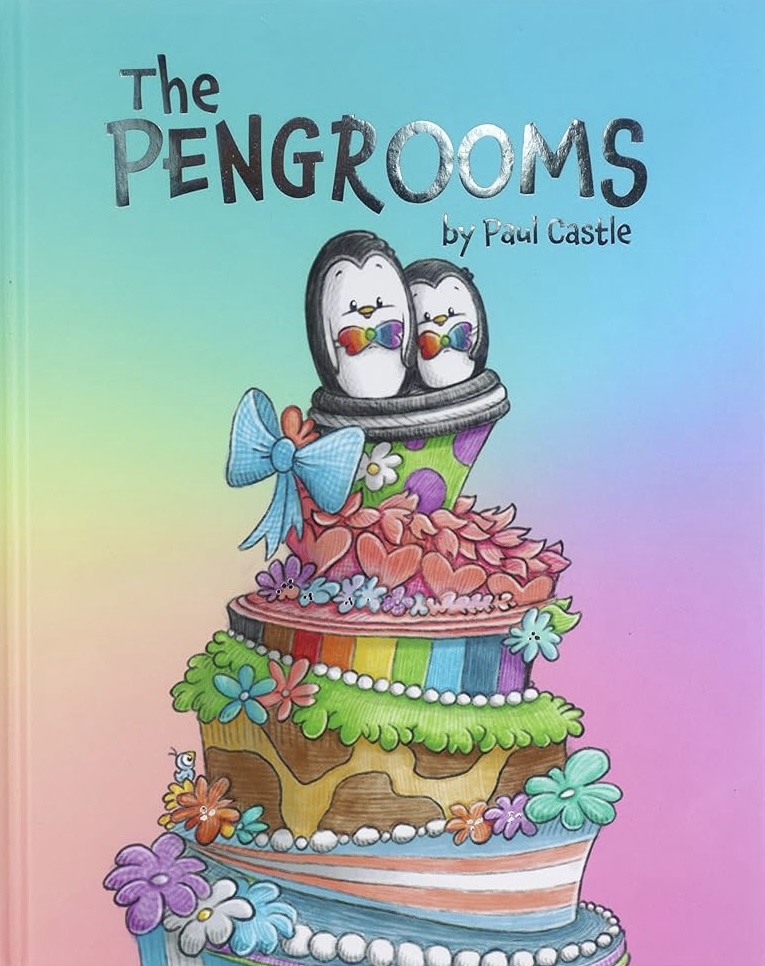
The Pengrooms by Paul Castle

★★★★★

I love the inclusivity of an LGBTQIA+ children's book, especially one that doesn't feel heavy-handed. This book is just a cute story about a pair of penguins - presumably both male based on the title - who make and deliver custom wedding cakes to other animal couples, culminating in the penguins' own wedding.

Some of the couples just happen to be same-gender: the flamingos are both grooms, the giraffes are both brides, and the genders of the mice are not specified. (I think the blue-haired mouse looks female and the pink-haired mouse looks male, which makes for a fun flipping of the "pink for girls, blue for boys" societal norm.)

The illustrations are ADORABLE. Absolutely adorable. If my kids were still little, I think I would really enjoy reading this to them and poring over the pictures, picking out my favorite details.

Just to note, I already knew about male-male penguin couples, and a bit of online research turned up references to male-male flamingo pairings and female-female giraffe pairings (though rare), so I appreciate that the animal couples are scientifically feasible.

Wednesday, September 24, 2025

To the Stars by George Takei

★★★★★

I LOVE George Takei!

I actually first read this book back in college for a Japanese culture class. In fact, George Takei was a guest speaker! Anyway, I recently read George Takei's latest graphic novel, It Rhymes with Takei, and realized that the graphic novel borrows a lot from this book - so much so that I was inspired to re-read it (again). I wanted to piece together a fuller picture of his life, pulling together events from both books into a single timeline.

This memoir focuses first on his family growing up, then chronicles his acting career, as well as his political and civic activism. Even when I read this book 30 years ago, I remember noting that it never mentioned romantic relationships at all. Little did I know, back then, that the "journalist Brad Altman" whom he thanked in his acknowledgements, and who once visited him on location during a film shoot, was actually his significant other!

George Takei's writing is descriptive and engaging. The first part is invaluable in its telling of an American childhood spent inside the barbed-wire fences of Japanese American concentration camps. The strength and comfort George Takei drew from his parents - from Daddy and Mama - made my heart swell. Throughout the book, he periodically returned to his Japanese American roots as he recounted events from his life as an actor or as an activist. Sometimes, the two identities overlapped, as when he tirelessly advocated for Sulu's promotion, a fictional development that not only benefited his character, but also illustrated the "virile meritocracy" (p. 398) that was missing in real life as Asian Americans ran into "glass ceilings" that halted their professional advancement (now specifically termed "bamboo ceilings"). Inspired in part by his father's example, George Takei came to be extensively involved with progressive politics and civil rights activism. He has a life-long commitment to the ideals of "an American culture, strengthened by its diversity instead of balkanized by it" (p. 210), perfectly represented in Gene Roddenberry's vision for Star Trek: "infinite diversity in infinite combinations." (p. 405-406)

I wasn't even a fan of Star Trek when I read this book in college, but I'm a big fan now, and it was great fun reading all his behind-the-scenes stories about the TV series, the films, his friendships with his co-stars, and even his thoughts on the "new" The Next Generation series.

Wednesday, March 12, 2025

Still Just a Geek: An Annotated Memoir by Wil Wheaton

★★★★★

I'm late to the party as a Wil Wheaton fan, but I'm here now! I loved him on The Big Bang Theory, and I'm also a late-in-life fan of Star Trek, mostly TNG, DS9, Voyager, and Picard. Now, he's one of only a handful of celebrities who helps to normalize masking by posting masked selfies on social media, and as a covid-aware person, I love him for that.

You have to go into this book with the appropriate expectations: It's not a typical memoir; it's a collection of blog posts first published in book form in 2004, with a lot of footnotes written in 2021. Reading this book means constantly jumping back and forth between different time periods. I found myself inadvertently applying 2021 Wil's perspective to the entire text by default, which was confusing, and had to consciously remind myself to use 2004 Wil's mindset when reading content from the original book, and to switch again to Even Younger Wil's frame of mind when reading blog posts written even earlier. Some of the annotations were just injections of humor, but others provided a lot more context and were really interesting, particularly when he noted that something that was supremely consequential for Younger Wil turned out to be just a blip in the trajectory of his life.

Wil Wheaton tells of how he grew into his own skin in his 20s, and then continued to grow personally and professionally in his 30s and 40s. He tells his story well, even when presented in this sort of choppy manner of blog posts and annotations. I like his sense of humor, and as a fellow Gen X-er, I enjoyed his references to 80s and 90s pop culture. He is thoughtful and relatable (at least he was to me, a fellow geek), and I appreciated all he shared about Star Trek, from his personal relationship with his character Wesley Crusher (whom he came to embrace, after a bit of a rocky road) to his interactions with other people from the series. In case it matters to you in a knowing-what-to-expect kind of way, he swears liberally.

Wil Wheaton makes abundantly clear, multiple times in the book, that some of what was published in 2004 was "gross" and "hateful". (p. xix) That he was willing to revisit and examine his previous writings that are now considered shameful (due to misogyny, ableism, etc.), and engage in a public exercise of self-reflection and accountability, shows just how much he (and society in general) has grown and learned in the intervening years. I was truly impressed by his honesty and vulnerability. And it's just good to see a cishet white male put into practice Maya Angelou's quote, "Do the best you can until you know better. Then when you know better, do better."

I also give Wil Wheaton a lot of credit for the way he openly talked about his depression and anxiety, and the abuse he suffered at the hands of his parents. He modeled self-respect and acceptance, and in doing so, he helps to lessen some of the stigma surrounding mental illness, as well as give strength to others who may be victims of abuse.

I'll admit that my 5-star rating may seem generous in light of the somewhat fragmented reading experience, but mostly I just really enjoyed the content. It was fun!

Saturday, December 14, 2024

The Message by Ta-Nehisi Coates

★★★★★

For me, Ta-Nehisi Coates is not easy to read. I'm generally a slow reader to begin with, and the less conversational the writing, the longer it takes me to read it. Ta-Nehisi Coates writes with a kind of lyricism; he is succinct, but not exactly straightforward.

This book is a reflection on writing. Coates believes that "this tradition of writing, of drawing out a common humanity, is indispensable to our future, if only because what must be cultivated and cared for must first be seen." (p. 16) Through writing, "we are charged with examining the stories we have been told, and how they undergird the politics we have accepted, and then telling new stories ourselves." (p. 19) He addresses the book to his students, tasking young writers with "nothing less than doing their part to save the world." (p. 20)

The Message is a must-read for its ability to open a reader's eyes to the ways in which our beliefs, our perspectives, our very understanding of the world around us, are shaped not only by our own thoughts and the facts at our disposal, but also by the carefully curated narratives we see and hear in the news and other cultural mediums all around us. The job of a writer is to tell people's stories, and it's up to us as readers to seek out what is not automatically presented to us - and to question why some accounts are readily available and others are not.

Much of the book reads like a memoir, with Coates sharing personal experiences and meditations, and other parts like a travelogue, as Coates recounts his visits to Senegal, South Carolina, and Palestine.

Describing his time in Dakar, Senegal, Coates writes about the deep poignancy of traveling to Africa for the first time, how he had "come back" (p. 44) to the home of his enslaved ancestors. He thinks of his "exponential grandmothers taken from this side of the world and... their frustrated dreams of getting back home... [and] the home they tried to make on the other side, despite it all." (p. 44) He reflects that only by traveling and experiencing "the unique interaction between that world and your consciousness" (p. 44) are one's own fears and doubts revealed.

In Chapin, South Carolina, Coates visits a high school English teacher forced to defend her curriculum and job against students and parents who want to ban his book, Between the World and Me. In getting to know Mary Wood, and while attending a local school board meeting in her support, he twice "heard of a reading group... as the epicenter of political disruption." (p. 98) To affect change, one must first be able to "imagine that new policies are possible. And now... some people... had, through the work of Black writers, begun that work of imagining." (p. 99)

While touring Palestine, Coates witnesses the "separate and unequal nature of Israeli rule [that] is both intense and omnipresent" (p. 127), "where rule by the ballot for some and the bullet for others was policy." (p. 135) At first he drew connections to Jim Crow segregation, then felt compelled "to describe... [Palestine], not as a satellite of [his] old world but as a world in and of itself." (p. 146) He calls out the journalists who claim to disinterestedly present "both sides" but who "are playing god - it is the journalists who decide which sides are legitimate and which are not... And this power is an extension of the power of other curators of the culture - network execs, producers, publishers - whose core job is deciding which stories get told and which do not." (p. 148) He calls for Palestinian voices, insisting that "[i]f Palestinians are to be truly seen, it will be through stories woven by their own hands." (p. 232)

This book offers many profound and thought-provoking ideas, but one quote sticks with me. At the school board meeting in South Carolina, a man speaking against the book ban called attention to the optics a ban would create, feeding into negative stereotypes of Southern whiteness. Coates notes, "This may seem self-interested, a stance taken more to avoid a stigma than to break an arrangement of power. Given the kind of loud virtue signaling that followed 2020, I understand the question. But virtues should be signaled, and the signalers should act to make their virtues manifest." (p. 102)

Monday, November 25, 2024

Less is More: How Degrowth Will Save the World by Jason Hickel

★★★★★

In the introduction, Jason Hickel sets the stage. Warning readers new to the climate crisis to "brace yourself" (p. 4), Hickel describes how human activity has disrupted the ecosystem, leading to mass extinction and food shortages, which - combined with extreme weather making some parts of the world unliveable - will lead to world destabilizing human migration. He quotes a UN scientist: "We are eroding the very foundations of our economies, livelihoods, food security, health and quality of life worldwide." (p. 8)

Despite knowing exactly what is causing the climate breakdown, "[t]he past half-century is littered with milestones of inaction." (p. 17) Once you're completely freaked out, Hickel jumps into how, fundamentally, we got to this point because of capitalism, the purpose of which is "not primarily to meet specific human needs, or to improve social outcomes. Rather, the purpose is to extract and accumulate an ever-rising quantity of profit." (p. 19) To ensure ever-increasing global GDP (gross domestic product), "production increases, the global economy churns through more energy, resources and waste... overshooting what scientists have defined as safe planetary boundaries." (p. 19-20)

The whole first half of the book is dedicated to describing all the evils of capitalism since its inception and how they came to be, including artificial scarcity and how poverty is a feature, not a bug, that ensures the existence of a labor class. These chapters were particularly eye-opening for me because the author tied together many political issues that seem unrelated but aren't, e.g., it's capitalism from which we need to protect the environment, it's only under capitalism that the unpaid labor of women goes unrecognized, it's because of capitalism that we have to fight against a for-profit healthcare industry and the privatization of public education. 

"[A]re we really content to accept an economy where nearly a quarter of total output goes into the pockets of millionaires?... [We have a choice] between living in a more equitable society, on the one hand, and risking ecological catastrophe on the other." (p. 198) The climate emergency is ultimately about inequality, as it is "being driven almost entirely by excess growth in high-income countries, and in particular by excess accumulation among the very rich, while the consequences hurt the global South, and the poor, disproportionately." (p. 20) "Most global South countries will need to increase resource use in order to meet human needs, while high-income countries will need to dramatically reduce resource use to get back within sustainable levels." (p. 110) 

Meanwhile, extreme weather events in the U.S. and Europe rightfully make headlines, but "they pale in comparison to... the storms that have decimated so much of the Caribbean and Southeast Asia, and the droughts in Central America, East Africa and the Middle East that have pushed people into hunger and forced them to flee their homes." (p. 116) In 2010, "around 400,000 people died... due to crises related to climate breakdown - mostly hunger and communicable diseases. No fewer than 98% of these deaths occurred in the [global] South." (p. 117) Yet, "the global North (which represents only 19% of the global population) have contributed 92% of overshoot emissions" that caused that climate breakdown. (p. 115)

In chapter 3, Hickel pushes back hard on the "climate capitalism" philosophy described in Tom Steyer's Cheaper, Faster, Better by making clear that a "growth-obsessed economy powered by clean energy will still tip us into ecological disaster." (p. 21) "[O]n a global scale, growth in energy demand is swamping growth in renewable capacity. All that new clean energy isn't replacing dirty energies, it's being added on top of them." (p. 106)

What's needed, then is degrowth, which Hickel defines as "a planned reduction of excess energy and resource use to bring the economy back into balance with the living world in a safe, just and equitable way... while at the same time ending poverty, improving human well-being, and ensuring good lives for all." (p. 29) As it turns out, a high GDP is not necessary for a nation's people to have long and happy lives; studies show "exactly what works: reduce inequality, invest in universal public goods [like healthcare and education], and distribute income and opportunity more fairly" (p. 185), all of which line up with degrowth.

Contrary to the word itself, "degrowth" means deciding which industries need to continue to grow (e.g., clean energy, public healthcare, regenerative agriculture), and which sectors need to be significantly reduced (basically anything directly related to fossil fuels, like airlines, and also those that use a lot of resources, like fast fashion). It's not a recession, which is "what happens when a growth-dependent economy stops growing... It is about shifting to a different kind of economy altogether - an economy that doesn't need growth in the first place." (p. 207) Relatedly, degrowth involves a change in collective mindset, like doing away with "advertising strategies intended to manipulate our emotions and make us feel that what we have is inadequate." (p. 29) Ultimately, "[w]e need to change the way we see the world, and our place within it." (p. 34)

So, what would degrowth look like?
  • Government policies would incentivize targeted investment in green energy innovation.
  • The transition to clean energy could be funded by redirecting trillions of dollars from fossil fuel subsidies to solar panels, batteries and wind turbines. (p. 200)
  • Instead of GDP, new holistic measures of progress would account for "housing, jobs, education, health and happiness." (p. 203)
  • To reduce consumption, "right to repair" laws and legislation requiring companies to honor mandatory extended warranties could end the practice of planned obsolescence (when products are purposely created to need replacement after a relatively short period of time). 
  • A wealth tax would reign in the disproportionately large ecological damage caused by luxury lifestyles while at the same time reducing inequality, which in itself "reduces competitive consumption across the rest of society." (p. 229)  
  • We could further reduce consumption by moving away from ownership, e.g., by promoting public transportation instead of cars and having repositories of shared items (like libraries of things) instead of everyone owning their own seldom-used items. 
  • We could reduce the ecological impact of the agriculture industry by reducing food waste and beef consumption.
  • Governments would need to carefully manage the shift in labor; work weeks can be shortened, living wages can be instated, and workers in shrinking industries can be trained to work in growing industries.
  • Even debt cancellation would be a "vital step towards a more sustainable economy." (p. 238) 
Apparently, as a politically progressive person, I am already on board with all the initiatives described; I just didn't realize they all fall under the umbrella of "degrowth". (Frankly, I'm surprised the book doesn't mention Universal Basic Income.) Of course, such changes could only happen on a large enough scale if government policies and programs support them. Since "the interests of economic elites in the US almost always prevail in government policy decisions even when the vast majority of citizens disagree with them" (p. 247), at the very core of degrowth, it is essential to have a robust democracy in which corporations and wealthy individuals do not have undue influence over elections and politics. The struggle to expand and strengthen democracy includes even more progressive ideas including "radical media reform; strict campaign finance laws... dismantling monopolies... democratising institutions of global governance" (p. 249) like the World Bank, the IMF, and the WTO.

I now see the green energy growth part of Tom Steyer's position as an immediate need, but not a final solution and only a stepping stone to degrowth. I do, however, still agree with Tom Steyer that climate activism needs better marketing. I fear that just the word "degrowth" will trigger people to think of "recession", turning them off from learning more and likely causing them to misunderstand the whole movement. Hickel hints at an alternative name when he says, "Degrowth calls for abundance in order to render growth unnecessary." (p. 236) Might re-branding degrowth as something like "an abundance economy" win over more believers?

In the last chapter, Hickel turns his attention to hope. Studies show that "across ecosystems... it takes an average of only sixty-six years for a forest to recover 90% of its old-growth biomass, completely naturally." (p. 253) If we take immediate action towards degrowth, we could see the living world recover in our lifetimes. He reminds us that our human ancestors lived sustainably, integrated with - not separate from - nature, and that many Indigenous peoples still do. From them, we can "learn to see ourselves once again as part of a broader community of living beings" (p. 273), no longer in a position to exploit the ecosystem, but to enrich it. (p. 263)

Wednesday, October 16, 2024

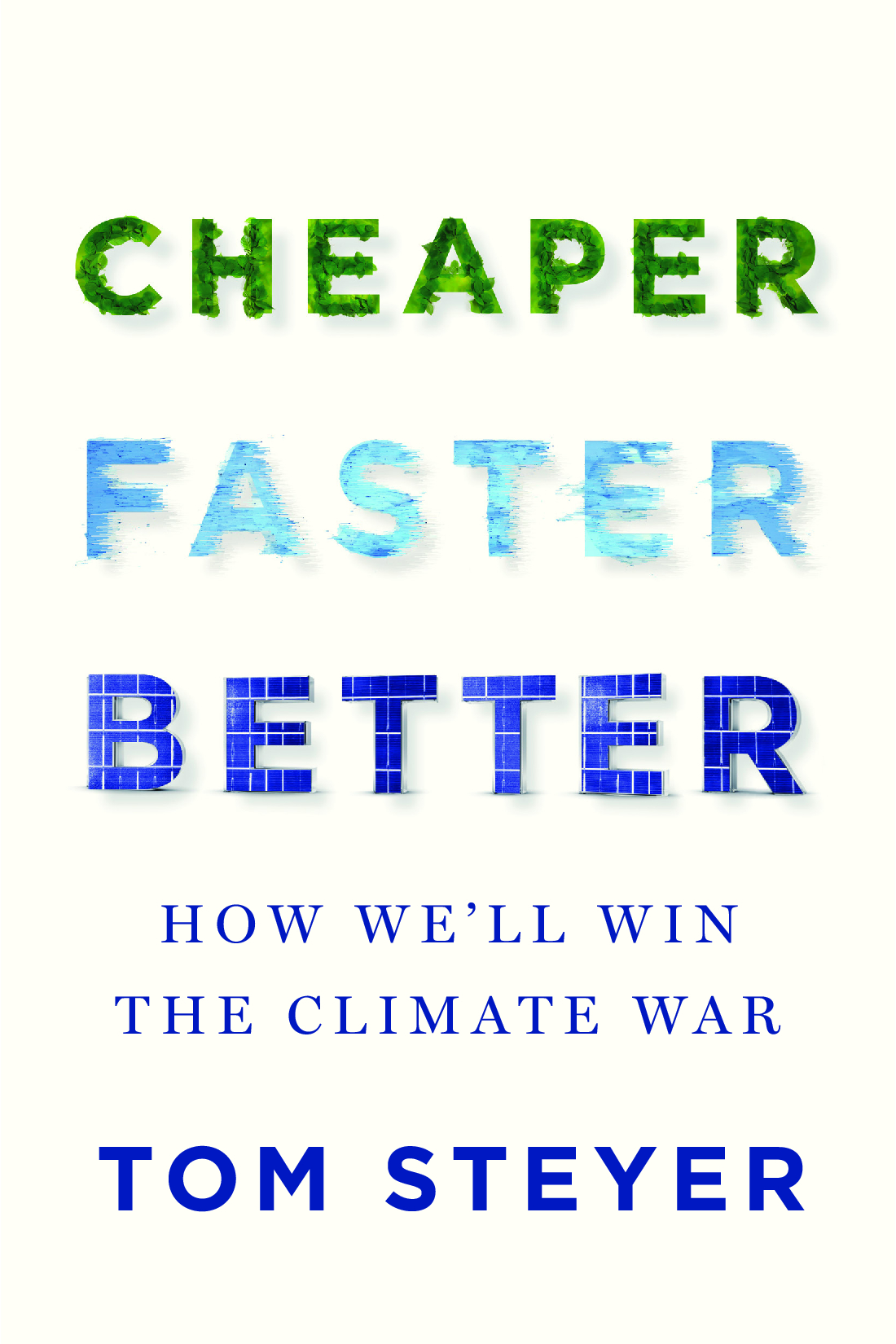
Cheaper, Faster, Better: How We'll Win the Climate War by Tom Steyer

★★★★★

Tom Steyer really did give me hope!!

Picking up this book, all I knew about Tom Steyer was that he was the billionaire climate candidate in the Democratic primaries of the 2020 presidential election. 

After reading The Climate Book by Greta Thunberg, it became clear to me that saving the climate is at odds with capitalism, and we will never sufficiently address the climate crisis while fossil fuels are profitable and consumerism abounds. Moreover, we are now at a point where we need to implement sustainable practices even when there is no financial gain and when it's a less convenient option. But realistically, degrowth doesn't seem likely, so what are we going to do?

This book's title, then, got my attention. Can we really fix this climate emergency in the context of our capitalistic economy, on the basis of sustainability being cheaper and better? Indeed, Tom Steyer makes exactly that argument, even going so far as to say that clean energy is already a more profitable investment. 

The introduction immediately drew me in. Tom Steyer's optimism is infectious. He described what motivates him: "Protecting humanity from climate change is the fight of our lifetime. Am I doing my part?" (p. 4) The question each of us should be asking ourselves, each other, and our leaders is, "What are you doing to fight climate change?" (p. 4) Our first goal is to reach net zero (when global greenhouse emissions are entirely balanced out by the amount being removed from the atmosphere), and Steyer insists that clean-energy technology will get us there, and beyond. Not only that, he boldly claims, "if you care about getting rich, being part of the revolution taking place in energy is a pretty good way to do it." (p. 10) Like authors featured in The Climate Book, Steyer believes that "the climate movement is no longer about conservation... It's about making the world better than it's ever been before." (p. 11) And he wants you to know that it really is possible.

This book is a very approachable introduction to the climate crisis, how the oil and gas industry have so far misleadingly defined the narrative, and what we need to do in response. Every chapter includes a section highlighting specific climate people who are already doing important work to move us forward, including climate activists, researchers, and entrepreneurs in clean energy and other technologies that help reduce CO2 levels. 

I appreciate that Tom Steyer acknowledges that many "[y]oung people are furious - and rightly so - at older generations for leaving them a huge mess" (p. 84), making them particularly susceptible to despondency and a "climate doomer" mentality. Again, his optimism is unequivocal as he points out that "we're barely scratching the surface of what we can do. Our incomplete effort [at addressing the climate emergency] is already reshaping the way we create and use energy, revolutionizing transportation, making us rethink agriculture... Imagine what would happen if more people [got on board]." (p. 85)

At times, it felt like the book was intended for a moderately wealthy and privileged audience, which, arguably, is the demographic most responsible for carbon pollution and therefore the very people who could make the most difference. Yes, now is truly the time to invest in climate-conscious companies, install solar panels, make the switch to electric vehicles, even take a job in the climate sector; there is value in individual actions as testaments to personal commitment and as examples to others to help spur wider change, but, of course, not everyone is in a position to do those things. Thankfully, Steyer makes clear that "[t]urning a collective problem into a matter of individual responsibility is... exactly what the fossil fuel industry is trying to do... We need systemic change, not perfect people." (p. 133) He encourages everyone to be locally engaged and politically active, and he specifically discussed the power of state ballot measures as conduits of collective action for large-scale change.

While I really want to share Tom Steyer's sanguinity, it's hard to feel confident about the path we are on when even he admits that, generally speaking, most people won't act in the greater interest because "human beings are, let's face it, often driven by our own self-interests." (p. 160) But contrary to my thoughts on capitalism noted earlier, Steyer believes capitalism is exactly what will get people to act. He argues for a "climate capitalism" based on "better tech, better ideas, better rules, and better metrics" that will "shift the incentives so that even the most self-interested people make choices that help stabilize our planet and prevent human catastrophe." (p. 165) I know very little about economics or finance, so whether capitalism will ultimately be our undoing or our savior, what do I know!? All I can say is, it feels like a good thing, that there are climate people working on both sides of that debate, so there are solutions both within and outside of the existing system.

The bottom line is that we need forward-thinking leaders who will take immediate and bold action to enact policies, programs, and laws that will support clean energy and reduce dependence on fossil fuels, thereby incentivizing companies to make climate-friendly innovations and normalizing sustainable practices. We also need more of the general population to become climate-conscious, and Steyer offered up a number of suggestions for how best to meet others where they are, including focusing on the potential damage to people rather than nature or the weather and being aware of how specific word choices can make topics more accessible.

After reading this book, I am heartened, if not entirely convinced, that humanity can take action with enough urgency to possibly stave off the very worst of climate disaster, which is already underway. It's actually a relief to know that the technologies needed to address the climate crisis do, in fact, already exist or are being developed. What we need now is for all people to become "climate people" so that change can happen quickly and at scale.

Edited to add: I still think this book is worth reading, but urge anyone who reads it to also read Less is More: How Degrowth Will Save the World by Jason Hickel.

Saturday, September 21, 2024

Making It So by Patrick Stewart

★★★★★

I picked up this book because I'm a big fan of Jean-Luc Picard and Star Trek: The Next Generation.

For me, reading memoirs always means imagining the author speaking the words themselves, which was especially easy to do with Patrick Stewart's characteristic voice and accent.

It was remarkable getting to know the whole trajectory of how Patrick Stewart came from such humble beginnings - "hardscrabble" truly describes his youth - and became a Hollywood TV and film star.

I most enjoyed reading about his life before he became famous. I particularly liked his account of being starstruck by Vivien Leigh and how wonderfully kind and gracious she was. It makes sense that a young, up-and-coming actor would cross paths with other aspiring actors, and it was neat when he name-dropped other famous and yet-to-be famous people he worked with, though admittedly I had to look up some names because I'm not so familiar with British actors. Patrick Stewart clearly worked hard at his craft and did not take his successes for granted.

At times it felt like kind of a revelation to be reminded that Patrick Stewart is just a person, too, susceptible to insecurities, faults, and embarrassing situations. Stewart was capable of laughing at himself in hindsight, and seemed willing to reckon with his shortcomings.

The story of how Stewart came to be cast as Jean-Luc Picard is wild, going to show that you never know what significance any one event in your life might hold. Even before this book came out, I had recently re-watched the entire TNG series, so it was fun having the show fresh in my mind as Stewart recounted behind-the-scenes stories and offered his insights on specific episodes.

A very entertaining read.

Tuesday, July 2, 2024

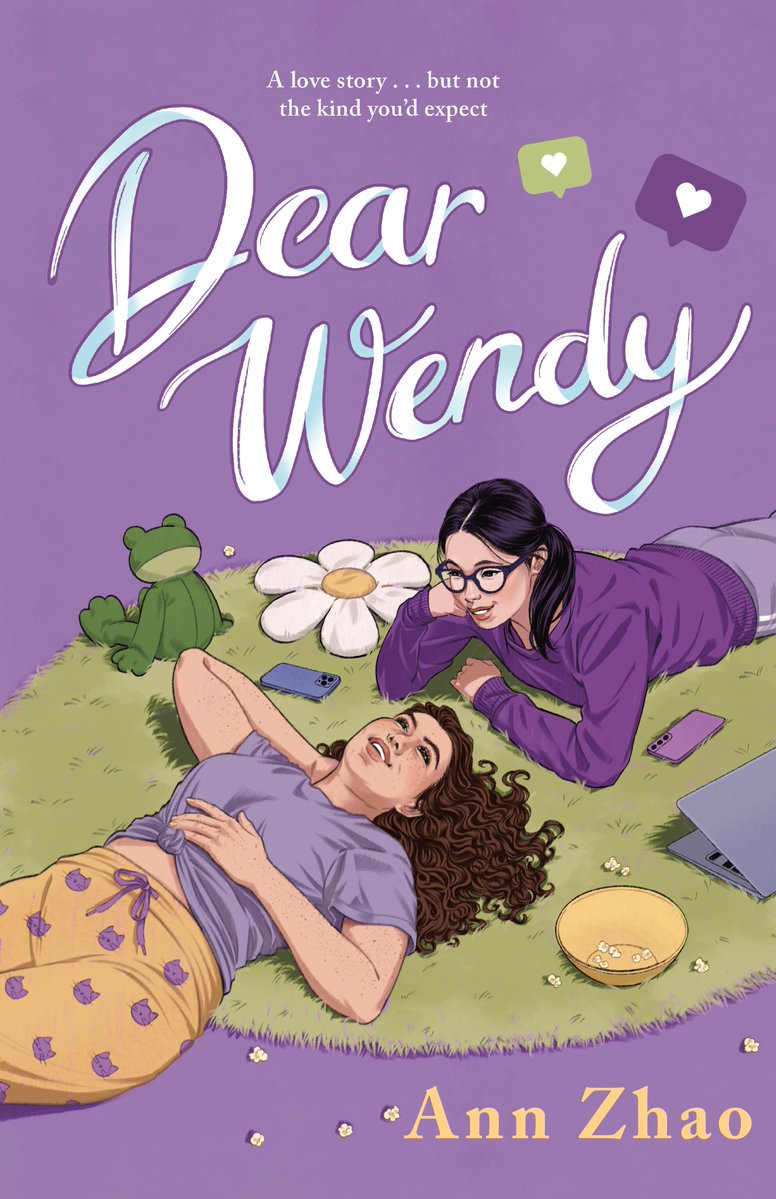
Dear Wendy by Ann Zhao

★★★★★

I love everything about this book, including the dust jacket art that features an Asian main character on the front and the iconic Wellesley bell tower on the back.

I'm not an alum of Wellesley College, but I have a soft spot for it due to a number of personal connections. I wonder if Wellesley students and alum think the portrayal of Wellesley life is authentic? I hope so. I once read a YA book set at my alma mater and was disappointed because the setting was almost irrelevant to the storyline, unlike this book, in which the Wellesley culture and campus were integral.

Representation and intersectionality are the cornerstones of this book. The "Dear Wendy" Instagram account is actually Sophie, who, in addition to being aromantic and asexual, is Chinese with immigrant parents. Her roommate is gay and Indian, with an immigrant dad and a mom who died (not actually a topic in the book). Jo, who is behind the "Sincerely, Wanda" account, is also aromantic and asexual, uses she/they pronouns, and has 2 lesbian moms. One of her roommates is white and bisexual and the other is Black and gay. Introductions with pronouns are modeled as being the norm.

It's perhaps stating the obvious, but one of the best things about this book is its mere existence, its ability to serve as a mirror for aro-ace readers and a window for those who may know nothing about it.

Chapters are written from the first-person perspective of either Sophie or Jo, which is always a fun format to read. Interspersed are Dear Wendy and Sincerely, Wanda relationship questions and responses, which actually amount to pretty good relationship advice for young readers. The fact that texting and social media are fundamental modes of communication for this generation is also reflected in even more fun formatting.

I really enjoyed the portrayal of how a budding friendship can be uncertain in the same ways as a potential romance, e.g., Does the other person even like me? Should I ask them to hang out? What kind of activity should I suggest? What if they say no? There's also a great message that aro-ace or not, a person isn't defined by a romantic relationship, and a close platonic friendship can be just as fulfilling and supportive.

As a Chinese person myself, I appreciated the Chinese dialogue from Sophie's parents, written in accented pinyin. But even though there were plenty of context clues, each line was not directly translated, which is kind of a pet peeve of mine when foreign languages pop up because if I didn't know Chinese, I'd still want to know exactly what was being said in the other language. And maybe that makes me a total Wendy, which I admit and fully accept!

Sunday, February 18, 2024

The Climate Book by Greta Thunberg

★★★★★

If you don't already see how climate change is an emergency and causing an existential crisis, literally threatening human life as we know it and thus requiring substantial and immediate action from every possible direction, this book is for you. 

If you're already aware and over the age of 30, this book can still open your eyes to the extent of the danger and the negligence of world leaders over the course of your lifetime. For example, in essay 4.22 "The Myth of Recycling", Nina Schrank describes how Coca-Cola was part of a lobbying group that re-framed the problems posed by single-use plastics as a personal rather than corporate or government responsibility, making recycling "the greatest example of greenwashing on the planet" (p. 296); though in principle recycling is good for the environment, this lobby used the idea of recycling to justify corporations maintaining the status quo of using plastic instead of committing to more sustainable packaging practices. Perhaps understanding what opportunities have already been lost will enrage you and fuel you to redouble your efforts in climate activism, as it did for me. 

If you're already in a state of panic about the looming climate catastrophe, and particularly if you're a young person who has known no other world, reading the first half of this book might send you into a spiral of despair. As the book progresses, though, essays do become more hopeful, and you begin to see some encouraging pieces, such as essay 3.9 "Life at 1.1°C" by Saleemul Huq about successful climate leadership in some communities from which we can all learn. There are also some practical pieces, like essay 4.19 "The Cost of Consumerism" by Annie Lowrey about how it's worth it for us to individually curb our materialism and consumerism because even though "it will take governmental and corporate action to help heal the planet" (p. 281), "household action is a crucial predicate for broader action." (p. 283) Essay 5.3 "Towards 1.5°C Lifestyles" by Kate Raworth goes even further, offering concrete suggestions on what a "1.5°C lifestyle" would look like, both publicly and privately, to put us on a better track to stay within 1.5°C of global heating. Overall, the book starts by laying out the alarming facts and daunting reality of climate change and ends with solutions, ultimately leaving us with a sense of purpose that's found in Indigenous philosophy, "dreaming of a time when we are propelled not by fear of what is coming towards us, fearsome as it is, but by love for a beautiful vision of a world whole and healed." (p. 420) We are invited to imagine that we "can live in such a way that the Earth will be grateful for us." (p. 420)

Okay, I'm getting ahead of myself. First, a couple notes on the physical book, which I found disappointing but did not factor into my rating. There are many graphs, charts, maps - all kinds of fantastic infographics - but they are all printed in black-and-white, some with shades of grey that are hard to distinguish. Interspersed among the essays, there are powerful photos from around the world, also printed in black-and-white. A full-color printing would have been much more expensive, but I really think all the images would have been vastly more effective in color. (Does a full color edition of this book exist?) Also, I'm sure my aging eyesight was a factor, but the parts written by Greta Thunberg were black text printed on gray paper, a combination I found difficult to read in anything less than full light.

Now, the content. Being fully aware of the extent of the climate emergency and eager to have a sense of agency, I followed a tip from another reviewer and started by reading the very last section first, essay 5.22 "Hope is something you have to earn", and also the "What Next?" piece about what can and must be done. Thus armed with a modicum of hope, I went back and started the book from the beginning. For a stronger buttress of hope, you could read all of part 5 "What We Must Do Now" first.

Most essays are just a few pages, very accessible, written succinctly while still being chock full of straightforward facts, data, and revelations. The content is essentially a mile wide and an inch deep. Individually and together, they explain climate science, describe the changing climate's effect on human life and other species, and explore the history and current state of climate action and inaction. Though each essay is written by a different expert, the information is carefully scaffolded; one article may introduce a concept and define specific terminology, which is then used in a later piece that explains a part of that issue in greater detail. As a science-based book, it's clear words are chosen carefully; instead of simply saying "climate change", which has been twisted by some to mean "naturally occurring climate change", many authors purposely refer to "anthropogenic climate change" to make clear that the climate is being changed by human activity.

This book covers a huge range of topics just enough to illustrate how the climate crisis isn't just one thing, but many, many interconnected issues. CO2 emissions are a big piece of the puzzle, but other pieces include methane emissions, aerosol emissions, microplastic pollutants, and deforestation. And the consequences of global warming isn't just about warmer temperatures, it's also about altered atmospheric circulation, extreme weather events, ocean acidification, and changing ocean currents, and all of that leading to wildfires, poor air quality, possible extinction of insects and animals that would cause dysfunction in our ecosystems, food and water shortages, increased spread of diseases, increased likelihood of human conflicts and violence, and globally destabilizing climate migration. And that's just a sampling of topics covered. In short, climate change is "deteriorating the conditions for life on our planet." (p. 115)

Many of the essays follow a similar pattern: information is presented, the magnitude and gravity of the situation are made clear, and then we're given a final remaining shred of hope in the concluding paragraph(s). We are not doomed, our planet and species can still survive, if only we commit ourselves to making the necessary changes. Of course, that is a collective "we", though the bulk of the responsibility lies with the richest 10% who cause 50% of the world's CO2 emissions. (p. 132) The countries of the Global North are "most responsible for this crisis" (p. 154) while the most affected people in the most affected areas "are overwhelmingly poor people of colour, even in rich countries." (p. 159) This means "wealthy nations must eliminate their use of fossil fuels by around 2030 for a likely chance of [not exceeding] 1.5°C" of global average temperature rise (p. 206), and, in doing so, "make space for the poorest 50 per cent of people in the world to realize their essential consumption needs." (p. 331) In replacing fossil fuels with renewable energy, governments must, at the same time, "protect and help those who are collateral damage in the energy transition." (p. 227) 

The climate crisis is, at its core, a worldwide equity issue. Heat-related health issues are more likely to affect vulnerable populations such as "the elderly, pregnant women, children and people with chronic conditions" (p. 138), and vector-borne diseases (such as malaria and dengue, whose prevalence depends in part on the climate) "are disproportionately linked to poverty." (p. 143) "The fact that 3 billion people use less energy, on an annual per capita basis, than a standard American refrigerator gives you an idea of how far away from global equity and climate justice we currently are. " (p. 154) As Nicki Becker writes in essay 5.17 "What Does Equity Mean to You?", "Climate justice is not only about preventing climate catastrophe, it is about building a world that is just and equal. We do not want to 'conserve' the world as it is now but to create a fairer one." (p. 396)

So why are we still not treating the climate as the emergency that it is? Thunberg writes, "We have solid unequivocal scientific evidence of the need for change. The problem is, all that evidence puts the current best available science on a collision course with our current economic system." (p. 21) She quotes a WHO executive director who said that "economic growth... [is] becoming a malignancy... driving unsustainable practices." (p. 133) "The key is to scale down less necessary forms of production and organize the economy around human well-being rather than capital accumulation. This is known as degrowth." (p. 312) We need to immediately prioritize people over profits and implement climate-saving solutions even when there is no money to be made, with one author urging that "climate change must be averted at any price because its ultimate cost can be neither imagined nor calculated." (p. 193) We need to be implementing solutions like "rapidly expanding public transport, developing a massive programme of electrification, changing town planning, rolling out e-bikes in cities" (p. 209), regardless of any lack of financial gain.

So how do we make these changes happen? According to Thunberg, "the most effective way for us to get out of this mess is to educate ourselves and others... [T]he moment we do go into full crisis mode we will consider every possible individual detail... [W]e as individuals should use our voices, and whatever platforms we have, to become activists and communicate the urgency of the situation to those around us... and hold the people in power accountable for their actions, and their inactions." (p. 326-327) Thunberg's writing is direct and unapologetic, and she doesn't mince words. To media and TV producers who have the power to inform and shape public perceptions, she says straight up, "unless the reason you became whatever you are today was to silently support the destruction of the living planet, then I suggest you start doing your job." (p. 435)

I appreciate that this book makes clear that yes, our individual lifestyle choices do matter. In essay 5.2 "Individual Action, Social Transformation", Stuart Capstick and Lorraine Whitmarsh write: "There is a troubling mismatch between the enormity of climate change and the smallness of the response asked of individuals... If this is a disheartening viewpoint, the good news is that it also represents a false dichotomy. Focusing attention at the two extremes - the individual versus the systemic - overlooks the vast territory in between... One way in which our actions matter... is through providing cues and examples to others... Many studies have shown that the extent to which people make environmentally friendly choices is affected by their assessment of what others are doing... Personal action... has the ability to spark wider transformations of the contexts that underpin our everyday choices, including by influencing business activity and shifting the sense of what represents a normal or desirable way of life... [I]ndividual action... is the vital building block from which social transformation is made possible." (p. 328-330) 

One final point I found enlightening. After graduating college, I had a career-oriented job for a while, then ultimately decided to stay home after having kids. When my kids were little, I spent an inordinate amount of time feeling guilty and conflicted for not having a "real job". In essay 5.16 "A Just Transition", Naomi Klein writes that "teaching and caring for kids doesn't burn a lot of carbon... In a just transition, we would recognize this labour as green and prioritize it because it makes our lives better." (p. 392) The principle is called "care work is climate work" and indeed, looking back, it is easy to see how the things I considered a financial wash (the savings I brought to the household were balanced out by not having an income) were also compatible with that "1.5°C lifestyle", e.g., I didn't have a daily commute and I didn't need to maintain a work wardrobe. Anyway, it's all good and fine for me to find peace with my decisions, but the point is, this overhaul to make our societies more sustainable is an opportunity to "invest in more care-sector jobs and... ensure that women's labour is fully recognized and appreciated in the next economy." (p. 392)

Wednesday, September 27, 2023

The World of Yesterday by Stefan Zweig

★★★★★

A nostalgic, heartfelt tribute to a bygone era, made all the more poignant knowing that the author apparently mailed the final manuscript to his publisher the day before he and his wife died by suicide.

I think it's remarkable how much this book illustrated Mark Twain's quote: "History doesn’t repeat itself, but it often rhymes." In the Foreword, Zweig wrote that his generation, which lived through two world wars, carried "a heavier burden of fate than almost any other in the course of history." (p. xi) I certainly don't mean to take anything away from the Lost Generation, but I can't help but wonder if maybe Generation Z might have a similarly heavy burden, as young people today are facing the climate crisis, backsliding democracy, a resurgence of white nationalism, gun violence, loss of bodily autonomy for women, etc. The author seems to tap right into the fears and worries of Gen Z when he writes, "Only those who could look forward with confidence to the future enjoyed the present with an easy mind." (p. 24) I wouldn't be surprised if Gen Z-ers find this book surprisingly relatable.

It's heartbreaking that Zweig didn't live to see his beloved Europe, and especially Austria, rise from their war-torn ashes and thrive again. Still, the book gave me hope; as desperate and impossible as things may be, humanity has faced down potential ruin and survived before, so maybe it can do so again.

For the rest of this "review", I'm just going to highlight my favorite parts and quotes that I found especially meaningful, insightful, or just plain fascinating.

Early in the book, Zweig thanked his father for instilling in him his "one secure possession: [his] sense of inner freedom." (p. 31) It wasn't until the end of the book, however, after I learned of all that the author had lost through two world wars, that I understood the full weight of that statement.

The way the author compared pre-WWI Austria to WWII times felt very much like something Americans might say today: "Hatred between... the occupants of one table and those of another, did not yet leap to the eye daily from the newspaper, it did not divide human beings from other human beings... The herd instinct of the mob was not yet as offensively powerful in public life as it is today; freedom in what you did or did not do in private life was something taken for granted - which is hardly imaginable now." (p. 46)

It was really interesting how something published in 1942 about a politician from around 1900 (Dr. Karl Lueger) could just as easily apply to modern populist politics (Trumpism) and the scapegoating of immigrants and people of color as a distraction from wealth inequity: "A clever and popular leader... exploited this discontent and anxiety and... united the discontented lower middle class, whose envy of those more prosperous than themselves was considerably lesser than their fear of sinking from bourgeois status into the proletariat... [He used] anti-Semitic slogans, thus showing the disgruntled lower middle classes a visible enemy and at the same time imperceptibly diverting their hatred from the great landowners and feudal wealth." (p. 83) 

Seeing the similarities between students then and now was entertaining, though the object of students' interests have changed quite a bit. In Stefan Zweig's day, disinterested students surreptitiously read off-curriculum poetry in class and competed to be the most knowledgeable about theater and literature. "Discovering and being right up to date with the very latest, most recent, most extravagant and unusual subject... was our passion." (p. 62) It's almost refreshing to know that youth today are the same as they have always been, except pop culture now centers around YouTube, memes, and video games instead of newspapers, journals, and books.

Stefan Zweig was a true intellectual, and he lived in a time when being an intellectual was not only a thing, but an admired thing. He "couldn't swim, dance or play tennis... and in [his] general knowledge of sport any ten-year-old puts [him] to shame" (p. 79), yet he never regretted his "passion for the things of the mind" because he believed "the mind can be trained only in those crucial years of development to rise to its full powers of comprehension, and only someone who has learnt to spread his intellectual wings early will be able to form an idea of the world as a whole later." (p. 80) In his later years, he felt that "even in the darkest days [of WWII] a conversation with an intellectual man of the highest moral standards can bring immeasurable comfort and strength to the mind." (p. 445)

I was intrigued by the author's account of his peers in Paris with "discreet sinecures for poets and writers who did not earn large sums from their work... What these writers wanted from their modest posts, sought without professional ambition, was only a modicum of security in everyday life that would guarantee them independence in their true work." (p. 157-158) I had to look up the definition of "sinecures", and I was struck by how attitudes have changed so that it's more common today to see people trying to monetize their "true work", making it their actual work with all sorts of professional ambitions.

Just a few pages later, times again seemed not so different after all when he wrote of "our new way of life, which chases people out of their own peace of mind like animals running from a forest fire... ours, of all times, is one that allows no quiet moments even to the purest and most private minds, none of the stillness to help them wait, mature, meditate and collect their thoughts." (p. 162-163)

Without giving away any spoilers, I'll say I was floored at the bizarre series of events related on pages 190-199, about Zweig's first foray into dramatic playwrighting. As it turned out, Stefan Zweig would have a surprising role in, or at least a connection to, a number of publicly significant events. There was a great deal of name-dropping - of writers and politicians and various public figures - and I will sheepishly admit that I am not much of a student of European history or literature, so even with the helpful footnotes, oftentimes it wasn't until after I researched someone that I realized how impressive the dropped name was.

In fact, it wasn't just names, but whole swaths of European history that I didn't know much about. I kept putting the book down to do online research to better understand the bigger context of the book's narrative. I definitely learned a lot.

I appreciated the author's candor - which I read with a touch of humor - describing his predicament when World War I broke out: "All the committees examining men for military service had declared me unfit for it... My own nature, as I am not ashamed to confess frankly, is unheroic. My natural reaction to all dangerous situations has been to keep well out of their way... it was unthinkable for a relatively young man to wait until he was unearthed from his hiding place and sent to some place unsuited to him. So I looked around for something I could do without being involved in any violent activity." (p. 251)

At one point, when Zweig described being the only anti-war person even among his friends, his words felt oddly relevant to being a lone covid-aware person in a covid-minimizing world. He wrote that his isolation "made me doubt whether I myself was mad among all these clever heads, or perhaps was the only person to be shockingly sober amidst their intoxication". (p. 275) He goes on to meet a fellow believer in peace through reconciliation, whom he quotes: "We have suffered over a million dead. We have done and sacrificed enough! Not one more human life, not a single one, should be thrown away in the cause of German world-domination!" (p. 284) Again, to me, by replacing "German world-domination" with "saving the economy" or "returning to perceived normalcy", the words could just as well apply to the ongoing covid pandemic. In perhaps a related "history rhyming" vein, it's noteworthy that the book did not mention in any way whatsoever the 1918–1920 flu pandemic.

There's a lot more I could mention but I've gone on long enough!

Tuesday, June 6, 2023

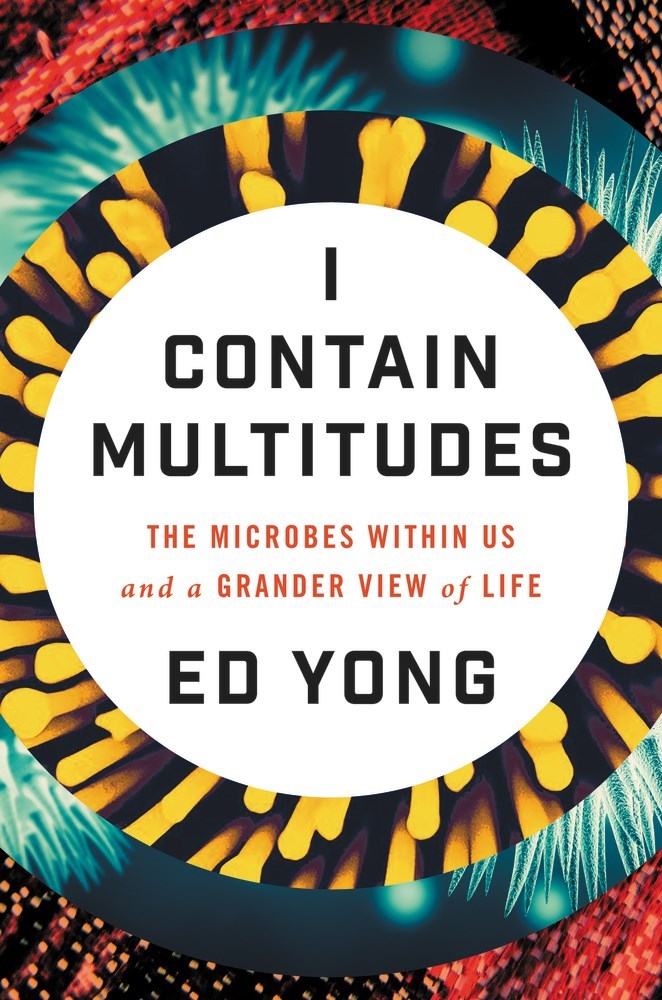
I Contain Multitudes: The Microbes Within Us and a Grander View of Life by Ed Yong

★★★★★

I'm a big fan of Ed Yong (for his reporting on COVID-19, for which he won the Pulitzer Prize for explanatory reporting), and I picked up this book just to read more of his work.

The topic is fascinating. I have heard of probiotics and the gut bacteria that may be linked to everything from food allergies to Parkinson's Disease. I feel like every person who pushes probiotics should have to read this book. It presents a sweeping history of microbes and discusses both the bacteria that live in and on other animals as well as human microbiomes and the vast universe of microbes that live symbiotically all over and inside our bodies.

In accordance with the book's subtitle, I certainly did gain a much grander view of life. For me, the rest of the title seemed like a bit of a misdirection because I was expecting to read mostly about the bacteria inside of humans, but actually, a lot of the book covers all kinds of bacteria out in the world and in other animals. The way the information was presented made sense - Yong described the history of microbial discoveries and explained all the very many characteristics of bacteria as seen in other animals, and then applied that knowledge to better understand the research on bacteria that affect humans - but I have to admit, the book had a bit of a slow start for me; it was mostly when the subject turned to human microbiomes that I became hooked.

The footnotes were inconveniently located at the back of the book, instead of on the bottom of the page on which they are referenced, which made for a lot of flipping back and forth. While some footnotes simply listed a source, others provided additional context, or a "behind the scenes" anecdote, or just a fascinating or entertaining tidbit; I think it's worth the minor trouble of using a second bookmark to keep your place in the Notes section. (Incidentally, the footnotes in Chapter 3 in my edition were messed up, which made for a bit of confusion.)

I enjoyed the photos included towards the end of the book, but they were not printed in the order of reference in the book's text, which made for a less than ideal experience trying to match up photos with their corresponding section in the text.

Saturday, April 8, 2023

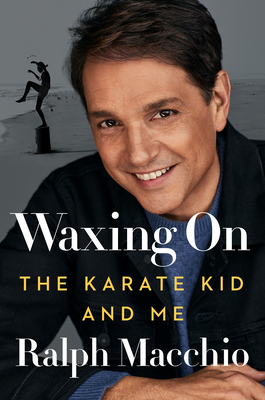
Waxing On: The Karate Kid and Me by Ralph Macchio

★★★★★

Like many others who grew up in the 1980s, I consider The Karate Kid to be representative of my generation. Any time I happen to see the movie playing on TV, I have to stop and watch a few minutes; it doesn't even matter which minutes, it evokes warm feelings of nostalgia every time. Add to that, I am a huge fan of Cobra Kai on Netflix. I LOVE THAT SHOW! It's just so much FUN!! I love seeing all the old characters again, it's like getting together with old friends.

So, I guess you could say I was predisposed to like this book. I was practically giddy when I finally picked it up, and I swear I read the introduction with a smile on my face. The whole book feels like a love letter to the best of the 1980s. It gets 5 stars simply because it was a joy to read.

The writing itself is very conversational, like Ralph Macchio is just talking to you. It's an easy, breezy, enjoyable read filled with fun behind-the-scenes stories from both the original movie franchise and the Cobra Kai series. Ralph Macchio talks about his role as a timestamp in other people's lives and how he came to fully embrace being synonymous with Daniel LaRusso. He is intensely protective of both his own character and the legacy of Mr. Miyagi, and it's clear how gracious he has been in sharing this part of him with the world.

I included the "Asian" tag to highlight the iconic Asian American character of Mr. Miyagi, played by the equally iconic Pat Morita.

Pro Tip: Have the internet close by when reading this book. Ralph Macchio frequently references specific scenes from the movies and Cobra Kai, plus other projects and clips of auditions or cut scenes, many of which are available on YouTube. It was super fun looking up these videos as soon as they were mentioned in the book.

Monday, March 20, 2023

An Immense World: How Animal Senses Reveal the Hidden Realms Around Us by Ed Yong

★★★★★

Even before reading this book, I was an Ed Yong fan. He's my go-to journalist for pandemic-related articles, for which he won a Pulitzer Prize in explanatory reporting. I appreciated his writing so much that I picked up this book simply because I wanted to read more of his work.

I am not particularly fond of animals (I have no pets and have never found zoos especially interesting), and yet, Ed Yong not only motivated me to read a book about animals, but he totally blew me away with every fascinating detail. This book is filled with astonishing, awe-inspiring revelations about animals and their senses. Yong has a unique gift for science writing; he distills complex ideas into approachable reading while also conveying beauty and wonder. It was truly humbling to realize that the world as we experience it - as humans with our limited 5 senses - is exclusive to us, and that other animals experience the world in their own particular, and sometimes very special, ways. 

Ed Yong's writing flows naturally - he is a master of segues - and he keeps the tone light. Reading this book, and learning all it had to impart, was an effortless delight. I also really enjoyed his footnotes, which sometimes shed an entertaining light on his research in a behind-the-scenes kind of way.

The final chapter poignantly discusses man-made lights and noises and their deleterious effects on animals and insects. Yong refers to quiet and darkness as "endangered sensory environments" and calls on all of us to "save the quiet, and preserve the dark." (p. 338) He encouragingly lists a number of ways humans could reduce light and noise pollution - if only we were sufficiently moved to do so.

Monday, July 11, 2022

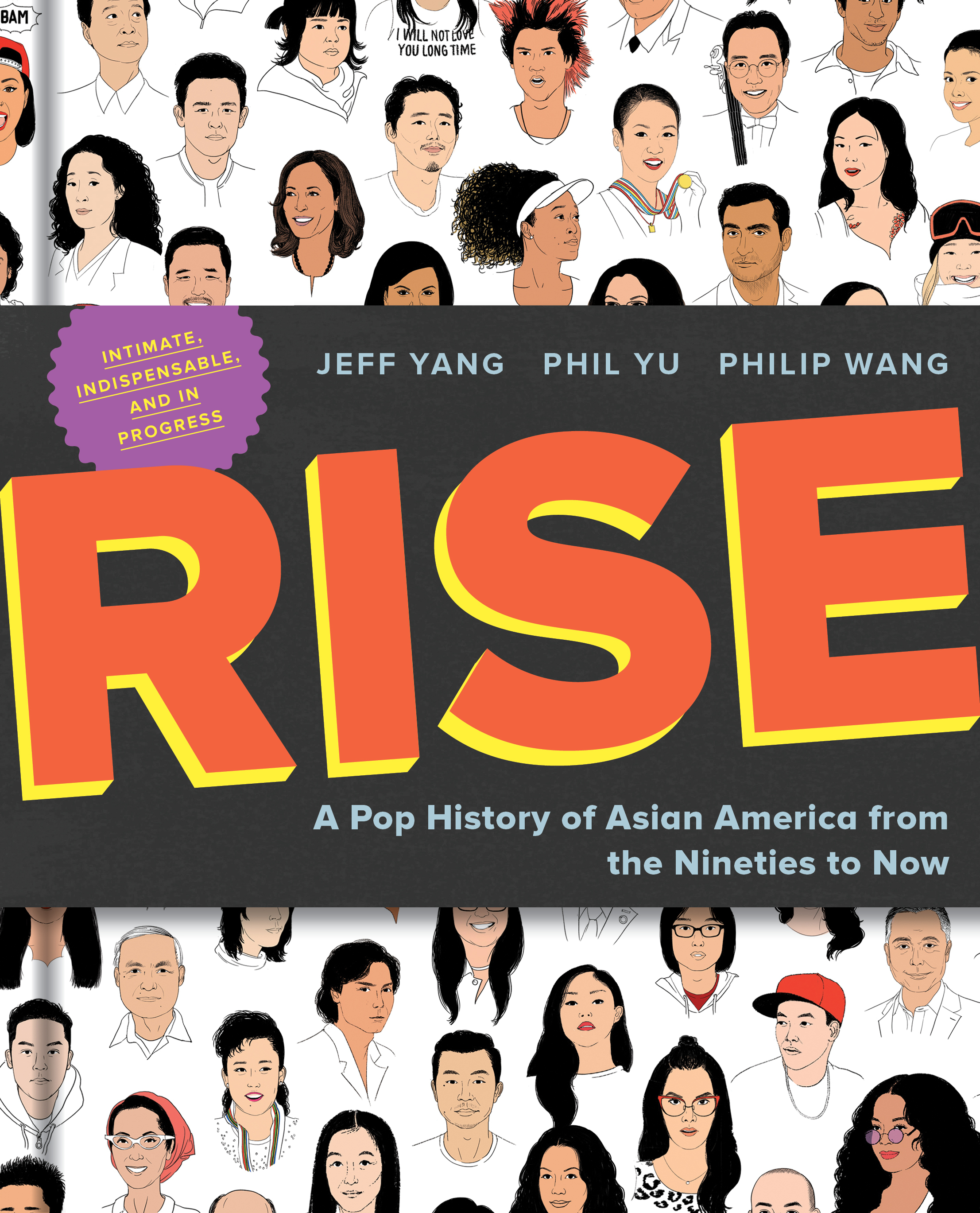
Rise: A Pop History of Asian America from the Nineties to Now by Jeff Yang, Phil Yu, and Philip Wang

★★★★★

As fun as it is informative!

This book is about the rise of Asian America, a self-defined community (separate from the idea of "Asians in America") that broke through stereotypes and bamboo ceilings. The growth of Asian America's visibility was spurred by the coming of age of kids born to a wave of Asian immigrants who first arrived in the U.S. when exclusionary immigration laws were lifted in the late 1960s. 

I am one of those kids! This book, more than any other, resonated with me in an unprecedented way. It absolutely made me feel seen. Everything, literally everything, down to the list of songs in "Original Synth: The Anthems of Young Asian America" (p. 26-27) rang true for me. In "Finding Our Religion" (p. 279), I actually burst out laughing at #27: "People singing hymns in an Asian language and English at the same time, creating cacophony" (p. 281) - a hilarious truth I witnessed in my youth and had totally forgotten.

Rise is a collection of essays, illustrations, graphic novel content, photos, timelines, lists, infographics, quotes, commentary - all of it raising up Asian American people, culture, accomplishments, and issues. The three authors - whose work I've followed online for years! - wrote most of the content, but plenty of other prominent Asian Americans have bylines or were interviewed. (If you aren't familiar with a particular contributor, there's a handy list with biographical blurbs at the back of the book.) It's very much a coffee table book - printed on heavy,  photo quality paper with content organized in colorful, eye-catching, easy-to-digest chunks - but I read it from start to finish, cover-to-cover, every word, every caption. I just could not get enough of it.

The vast majority of the book upliftingly covers "the good", e.g., Asian American representation in entertainment, sports, arts, politics, etc. Sufficient space is also given to "the bad", e.g., yellowface and cultural appropriation, and "the ugly", e.g., controversial topics like tiger parenting.

Though the book's subtitle focuses attention on the 1990s and later, there's actually a very enlightening "Before" section that presents a brief but thorough overview of Asian American history through the 1980s. I was in high school and college during the 1990s, so that section felt personally nostalgic for me. And with much of the 2010s still fresh in my mind, I really enjoyed getting a behind-the-scenes look at Fresh Off the Boat, Crazy Rich Asians, Linsanity, and #StarringJohnCho.

Sunday, June 19, 2022

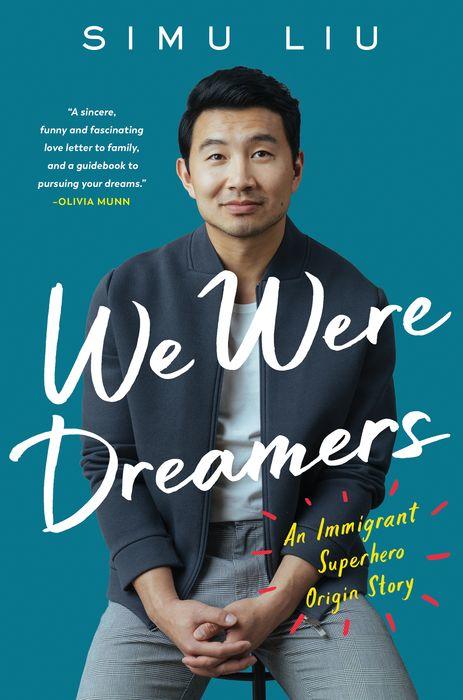
We Were Dreamers: An Immigrant Superhero Origin Story by Simu Liu

★★★★★

A beautiful memoir.

Simu Liu names his parents' treatment of him as abuse (p. 123), and he spent much of his teenage and young adult years being an attention-seeking tryhard. But, oh, he was genuine. He just so earnestly wanted to feel accepted. His path to self-discovery and reconciliation with his parents was nothing short of remarkable. He writes engagingly and comes across as embodying both a bold self-confidence that fuels his pursuit of acting dreams and a realistic sense of humility that ensures he fully appreciates his successes.

Right off the bat, in the prologue, I knew this book would not let me down. Being a superhero in a Marvel movie could not be farther from my own experiences, but Simu Liu's account of his parents' reaction to his landing the role of Shang-Chi resonated with me. I am also a child of Chinese immigrants, and while Simu's family history is vastly different from mine, the culture was familiar, his personal story reminiscent of the many stories within my own community growing up. Yes, representation really does matter, and I especially appreciated his discussion towards the end of the book about how Asian Americans in the entertainment industry rallied around him and helped him to lean into his Asianness.

I think this book would be a great read for teens who may feel lost, oppressed by their parents, or who otherwise feel a sense of not being worthy. Simu Liu is obviously an exception case in that he has a rare gift for performance - not everyone can grow up to be a superhero, after all - but still, this book shows how meaningful it is to feel seen, how important it is to be true to yourself, and that there is always hope for a better existence, for a healthier relationship with your parents.

All that said, I have to say, I found it fascinating how, early in the book, Simu Liu took pains to not make any political commentary, presumably to avoid any repercussions from the long arm of the Chinese government. He makes it clear that his family in China was "unencumbered by any political aspirations whatsoever." (p. 9) I found it jaw-dropping how he matter-of-factly wrote about the Cultural Revolution with absolutely no judgment, for example, when he described how his paternal grandfather lived in a "self-imposed house arrest" to hide from the "Red Guard, a militia of radicalized Chinese youth that harassed, beat, and sometimes killed [intellectuals] in the name of the revolution." (p. 23). I mean, what?! When his father was a child, the Chinese government "required millions of Chinese families to send their children away from home to work in mountainous areas or farming villages to learn the value of hard labor... [and his father's sister], at age fifteen, volunteered to be the one to leave." (p. 24) Seriously, WHAT?!? He even used the euphemism "cadre school" (p. 36) to describe the labor camp to which his maternal grandfather was sent. If any reader is unfamiliar with Communist China's Cultural Revolution, Red Guard, and labor camps, this book provides a shockingly inadequate introduction. I have to assume the downplayed content was an explicit decision to avoid conflict with China, since Shang-Chi and the Legend of the Ten Rings is controversial in China, and Simu Liu has already gotten into hot water for some past comments.

Sunday, May 1, 2022

Troublemaker by John Cho with Sarah Suk

★★★★★

It wasn't intentional, but my library just happened to fill my hold request so that I read this book over April 29, the 30th anniversary of the LA riots.

The 1992 riots in Los Angeles serve as the backdrop for this story, which unfolds at the intersection of immigration, child-of-immigrant identity, racial injustice, and gun violence. On top of all that, the main character Jordan is trying to navigate strained relationships with both his father and his friend. Jordan's life is complicated, as many children's lives are. In that way, it reminded me of the book Blended, which also has themes of race and gun violence, and also openly addresses the many issues children face in real life. I appreciate these books for providing a framework for kids to process complex issues in age-appropriate ways.

I'm not Korean, but I'm an American-born child of Asian immigrants, and the Park family dynamics were familiar; the portrayal of Korean American experiences felt authentic.

Some parents might like to know that though the title may allude to John Lewis's quote about getting into "good trouble", there is quite a lot of actual "troublemaking" in this book, from cheating in school to stealing from family to hitchhiking with strangers! Every such action is presented with clear disapproval, and it's obvious that the decisions to engage in these activities were poor and reckless. I think the right vs. wrong morality is evident, so kids aren't likely to want to emulate Jordan and Mike. In fact, I actually think it's solid representation to show that yes, sometimes kids make bad decisions. Sometimes those decision come from a place of weakness or curiosity, sometimes they come from a place of desperation or wanting to do good, but no matter the motivation, bad decisions do not make for a "bad kid", and I think that's an important message for all kids to understand.

While Jordan is trying to unpack a lot of big and meaningful questions, the events of the book actually take him on an exciting adventure, making for an engaging and entertaining read even if you're not particularly interested in the social justice issues.

There is no Korean glossary, but there is an Author's Note at the back of the book. I think I might even recommend reading that first, to help frame and set the context for the book.

Friday, April 8, 2022

The Turtle of Michigan by Naomi Shihab Nye

★★★★★

Having read The Turtle of Oman, I set my expectations accordingly for this book, and I think that helped me to better appreciate it. I really loved it. Some might call the writing "slow", but I'd describe it as gentle, steady, and deliberate, with poetic interludes. Occasionally, the narration transitioned between third and second person. I really enjoyed the way the writing channelled the perspective and narrative voice of a child.

Aref is 8 years old. He's inquisitive, friendly, and not shy, a good model for young readers, particularly those who may feel nervous about moving to some place new. It's very clear how Aref benefited from a very diverse neighborhood and school, both in his old home of Muscat, Oman and in his new home of Ann Arbor, Michigan. Such diversity may not be the reality in many places, which means this book could serve as a good "window" for young readers who have less personal experience with different cultures.

It's been a while since I read The Turtle of Oman, so I can't remember for sure, but I think this book picks up right where that book left off. From the very beginning, we see Aref discovering a powerful truth: oftentimes, the anticipation of something is more anxiety-producing than actually experiencing the thing itself. The Turtle of Oman was about Aref feeling sad and scared about moving to America, but once he boarded the plane, he felt relief and excitement and was open to adventure.

Aref and his family are Arabs from Oman. There are occasional references to the Arabic language and Omani culture, which set the background and help to describe the main characters, but they are not central plot points. Oman is predominantly Muslim, but it's not clear if Aref's family is Muslim. There is a chapter about learning to celebrate Christmas in America, and other cultural and religious holidays are mentioned, but Aref's family's usual holidays are never identified. It seems like the author made a very conscious decision to not mention religion at all, since it wasn't even touched upon in the Christmas chapter.

Tuesday, February 22, 2022

Go Back to Where You Came From: And Other Helpful Recommendations on How to Become American by Wajahat Ali

★★★★★

Immigrant and child-of-immigrant memoirs are quickly becoming one of my favorite genres.

I started following Wajahat Ali on Twitter based on his posts about his daughter's medical situation, Legos, and Star Wars. I didn't even know he was a politics and race commentator until later.

Right off the bat, this book opened with the author's irreverent responses to hate mail he's received. I imagine this introduction might be an eye-opener for white readers who never realized the kind of abuse commonly faced by people of color in the public eye.

In the beginning, it felt like the author was channeling a comedian. The humor in his writing struck me as similar to Dave Barry's, even when he hit on heavy topics like racism and mental health. While entertaining, the humor also felt like it was being wielded as a shield, like, "I have to make a joke now, because if I don't laugh, I might just break down and cry." As the book progressed, the author shared the lows, and even lower lows, of his life, and the writing carried more gravitas. Gradually, by the end, the writing felt sincerely earnest.

Being a memoir, this book is very approachable and easy to read, which actually makes it a good Trojan horse for its sharp discussions of race. Ali's personal narrative is interspersed with lots of social commentary and edifying tidbits about Muslims in history and culture. At times, the content felt more like a collection of essays than a straight chronological narrative. Unlike other immigrant memoirs I've read, Ali's story was atypical in that it took many unexpected turns involving near-death experiences and the criminal justice system.

I enjoyed Ali's writing style, which was full of pithy truths like, "[Accents were a] telltale sign that, despite all their successes, their investment and time spent in this country, they were still foreigners and immigrants, a punching bag and a punchline," (p. 40) and, "The playground is where you first learn your rank in the American hierarchy [of race]." (p. 42)

One thing (of many) that I found remarkable about Ali's life was just how much he was supported by the elders in his community. In America, I think much of the spotlight is on peer relationships, and not enough credit is given to how valuable our aunties and uncles and those in our grandparents' generation can be in our lives.

I appreciated the book ending on a very hopeful note, with Ali quoting the Prophet Muhammad: "If the Hour [the day of Resurrection] is about to be established and one of you was holding a palm shoot, let him take advantage of even one second before the Hour is established to plant it." (p. 221)

I also liked that non-English words were translated in-line, so there was no need to flip back and forth to a glossary at the back of the book.

Now, I've got to see if I can get my hands on a copy of Wajahat Ali's play, The Domestic Crusaders...

Wednesday, September 15, 2021

Anne Frank: The Diary of a Young Girl

★★★★★

It seems inappropriate to review a person's diary, so I'm treating this review more like a book report.

Eleanor Roosevelt wrote the introduction in the edition I read, saying this about the book: "Reading it is a rich and rewarding experience." (p. x) And that's just it. This book enriches the life of the person who reads it.

Early on, it was almost prescient the way Anne laid out a simple biography of herself, and wondered who would be interested in what she wrote. From her light-hearted reports of her active social life at age 13, before going into hiding, to her thoughtful introspection from inside "the Secret Annex" at age 15, the diary could not have been better written if its future relevance was known and planned.

Anne Frank was clearly an exceptional teenager. She had more insight and self-awareness than most adults. She explicitly identified her ideals and worked on self-improvement. She understood and articulated the value of hard work and the importance of strength of character. She formulated her own perspectives and philosophies on intelligence, nature, and religion.

I see Anne's diary as an example of humanity in its purest form. Even in hiding, knowing her life was in danger, her day-to-day concerns included typical mother/daughter conflict and musings on boys. She wrote about concentration camps and the Gestapo, too, but she knew that constant focus on the war and the suffering of Jews would break her spirit. She was wise beyond her years in writing, "I don't think then of all the misery, but of the beauty that still remains." (p. 154)

We see the statistic that 6 million Jewish people died during World War II, but in reading Anne's diary, we can better understand that it was 6 million individuals, 6 million persons each with potential and value - like Anne - who were lost to the world.

Too frequently I finish a book only to find that there are appendices that I would have appreciated reading sooner, so I'll mention that the edition I have has a 3-part afterword that I'm glad I read in between reading diary entries. Part I was a brief historical summary, providing relevant context for the diary. (Notably, it was truly remarkable how the description of Hitler's rise, written decades ago, was disturbingly similar to Trump's rise.) Part II explained what happened to Anne and the others after the diary ends. Part III described how the book came to be published, how Anne's story has continued to be spread, and how her life has continued to be meaningful, even after her death.