Showing posts with label young adult. Show all posts

Friday, September 5, 2025

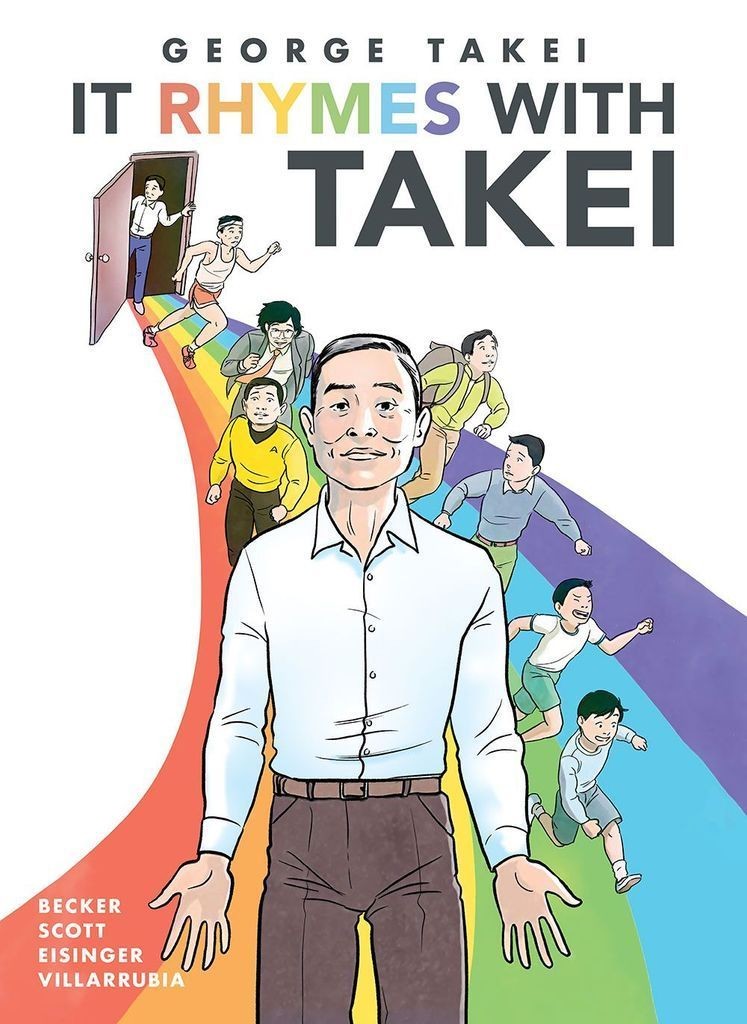
It Rhymes with Takei by George Takei

★★★★

Another great graphic memoir by George Takei. While I am a huge fan of George Takei, I'm not accustomed to reading graphic novels, so I admit this style of storytelling always takes some getting used to for me.

There are certainly LGBTQIA+ books for kids, but I would categorize this one as YA. There's nothing explicit, but the graphic novel medium was pretty effective at suggesting more extensive meaning behind a few chosen words, particularly when sexual activity was involved. Also, gay slurs do appear in the dialog.

George Takei didn't publicly come out as gay until he was 68 years old, and this graphic memoir explains why. Being gay was a constant source of fear and anxiety for him. He lived a tortured life, always in dread of being exposed, afraid that his sexuality becoming public would destroy his acting career. It may even have held him back from political aspirations. Sadly, some of his concerns were validated when a private coming out caused a distressing rift in his family.

It was comforting to read how George Takei's Buddhist upbringing helped him to accept himself and avoid the common pitfall of self-hatred. (p. 30-31) And I absolutely loved reading about how he met his husband Brad and how their relationship grew. 

In addition to chronicling George Takei's personal relationship with his own sexuality and his activism for the LGBTQIA+ community, the book also touched upon other issues such as immigration, politics, racial equity, and police brutality. In one poignant observation illustrating a common thread throughout history and current events, George Takei realized that "even my fellow Japanese Americans who had been exploited themselves, were nonetheless capable of exploiting others." (p. 37)

Bits and pieces reminded me of his 1994 autobiography To the Stars, which I read decades ago and can't remember too well anymore. I pulled out the book for a quick comparison and had fun discovering that some lines in the graphic memoir were taken from the autobiography almost verbatim! But even when telling of the same event, the perspectives presented sometimes differed between the books. For example, when recounting a college production called Portraits in Greasepaint, both books described it as a stepping stone on his career path because a casting director saw him in that performance and ended up casting him in a film; however, the graphic memoir also mentioned a romantic relationship with a fellow male cast member (p. 96), additional context that was not included in the 1994 book, which did not discuss his sexuality at all. I just might re-read To the Stars, to piece together the narratives from both books and mentally integrate them into a more complete picture. 

While overall a very inspiring book, I was a little conflicted about the ending. Much was made of how Biden defeated Trump in 2020, how the "worst policies of Trump's grievance government" were "repudiated", and how we, as a nation, "regained our deepest sense of [decency]." (p. 325) But then, the following pages acknowledged that now, in 2025, "once again, it is a heady time and a fraught time." (p. 328) The book is a timely reminder that progress is possible, and that "the strength of our nation is in its abundant diversity" (p. 333), yet there was no reckoning of what Trump's 2024 re-election says about America. 

Apropos nothing, it was surprisingly jarring to see some of the illustrations depicting the norms of an earlier time, e.g. George Takei riding a motorcycle without a helmet in 1964 (p. 128) and George Takei holding his infant nephew in his arms in the back seat of a car - no car seat! - in 1966. (p. 166)

Tuesday, July 2, 2024

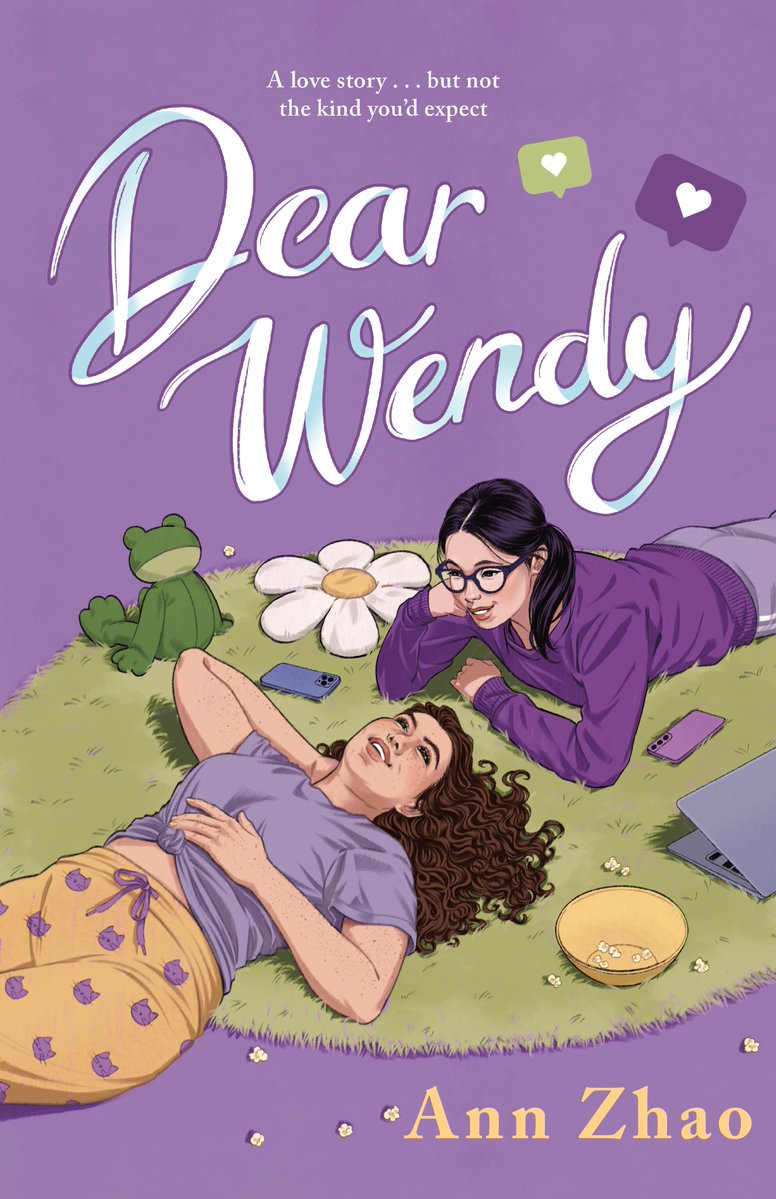
Dear Wendy by Ann Zhao

★★★★★

I love everything about this book, including the dust jacket art that features an Asian main character on the front and the iconic Wellesley bell tower on the back.

I'm not an alum of Wellesley College, but I have a soft spot for it due to a number of personal connections. I wonder if Wellesley students and alum think the portrayal of Wellesley life is authentic? I hope so. I once read a YA book set at my alma mater and was disappointed because the setting was almost irrelevant to the storyline, unlike this book, in which the Wellesley culture and campus were integral.

Representation and intersectionality are the cornerstones of this book. The "Dear Wendy" Instagram account is actually Sophie, who, in addition to being aromantic and asexual, is Chinese with immigrant parents. Her roommate is gay and Indian, with an immigrant dad and a mom who died (not actually a topic in the book). Jo, who is behind the "Sincerely, Wanda" account, is also aromantic and asexual, uses she/they pronouns, and has 2 lesbian moms. One of her roommates is white and bisexual and the other is Black and gay. Introductions with pronouns are modeled as being the norm.

It's perhaps stating the obvious, but one of the best things about this book is its mere existence, its ability to serve as a mirror for aro-ace readers and a window for those who may know nothing about it.

Chapters are written from the first-person perspective of either Sophie or Jo, which is always a fun format to read. Interspersed are Dear Wendy and Sincerely, Wanda relationship questions and responses, which actually amount to pretty good relationship advice for young readers. The fact that texting and social media are fundamental modes of communication for this generation is also reflected in even more fun formatting.

I really enjoyed the portrayal of how a budding friendship can be uncertain in the same ways as a potential romance, e.g., Does the other person even like me? Should I ask them to hang out? What kind of activity should I suggest? What if they say no? There's also a great message that aro-ace or not, a person isn't defined by a romantic relationship, and a close platonic friendship can be just as fulfilling and supportive.

As a Chinese person myself, I appreciated the Chinese dialogue from Sophie's parents, written in accented pinyin. But even though there were plenty of context clues, each line was not directly translated, which is kind of a pet peeve of mine when foreign languages pop up because if I didn't know Chinese, I'd still want to know exactly what was being said in the other language. And maybe that makes me a total Wendy, which I admit and fully accept!

Thursday, September 8, 2022

Symptoms of Being Human by Jeff Garvin

★★★★

*** Warning: This review contains spoilers!! ***

CW/TW: assault, sexual assault

For those who might appreciate a heads-up, this book does include the slurs "dyke" and "faggot" directed at the main character.

What Loveless did in terms of helping me to understand aromanticism and asexuality, this book did in regards to gender fluidity. I can't speak to how authentic the portrayal of gender dysphoria is, but I'd definitely recommend both these books for adults and parents who want to better understand these concepts.

Interestingly, the author purposely withheld the main character Riley's assigned gender at birth. Admittedly, I was curious at first, especially because I figured even Riley's new classmates could find the answer, since whether Congressman Cavanaugh had a son or a daughter would be public information. But the lack of disclosure really drove home the point that it doesn't matter. Riley is a person, end of story. The book is written in the first person, so we never even see Riley's preferred pronouns; for this review, I'll use "they".

Unlike any other book I've ever read, this book offers some valuable mental health representation. Riley has a therapist, uses techniques taught to them by their therapist to cope with stress and anxiety throughout the day, and takes antidepressant and anti-anxiety medication.

I liked that more than once, the book presented one point of view, and then later on presented an opposing point of view. These differing perspectives showed how complex gender issues can be. For example, we know, of course, that Riley is frustrated when others try to put them into a "girl" box or "boy" box. Yet, when Riley starts at a new school, every new person they meet is identified as a "girl" or "boy". It seemed kind of hypocritical! Eventually, Riley acknowledges their own tendency to put people into gender boxes, and they even feel a sense of shame for having misjudged other people's gender identity. (p. 154)

I also really appreciated that the bullies in this book are not entirely one-dimensional. We don't get to know their motivations explicitly, but it's made clear that they aren't just evil, they have complex home lives, too, and other contributing factors that influence their thinking and behavior.

As much as I got out of this book, I can't help but feel it was lacking in two specific ways. When I think about gender identity, the first two things that come to mind are bathrooms and pronouns. Yet, this book did not address either of these issues. It just seemed to me that figuring out which bathroom to use, and thinking about how certain pronouns make them feel, would be a significant part of Riley's experience as a gender fluid person, and I wonder if not discussing these matters was a missed opportunity.

The ending was satisfying, yet it also felt like there were too many loose ends. Solo said the entire football team had Riley's back, but how did that come to be, when they had always deferred to Vickers as their leader? What kind of consequences do Vickers and Sierra have to face, and how are they viewed by their peers if/when their actions become public knowledge? What happens with Erik and his hopes of joining the football team?

Finally, there was one minor detail that just didn't sit right with me. At one point, while spiraling out of control, Riley destroyed someone else's belongings, and didn't apologize. (p. 290) I get that Riley was destructive in a kind of unconscious or subconscious way - they're not willfully causing damage with any specific purpose - and we know that they've damaged their own property before, too. But taking anger out on someone else's things feels like it crosses a very specific boundary. The items weren't important, and in the same scene, Riley did apologize for saying hurtful things and the friendship is intact, but I would have liked to see an apology for their actions, as well as their words.

Friday, July 29, 2022

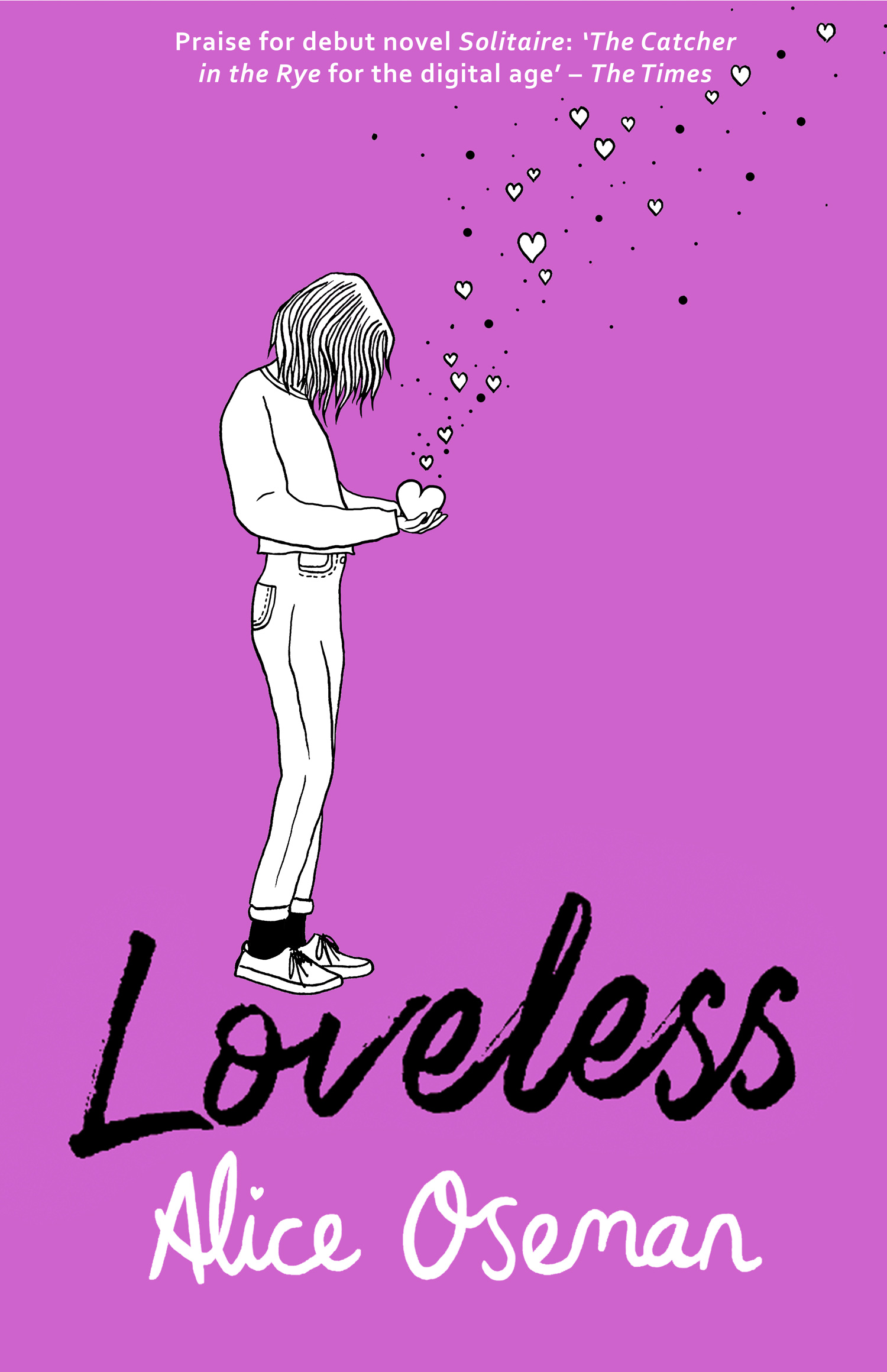
Loveless by Alice Oseman

★★★★

A truly important - and funny! - book that goes a long way in normalizing the exploration and discussion of sexuality. There is plenty of drama to move the story along, but really the primary plot is Georgia coming to terms with being aromantic and asexual.

In the beginning, I was put off by how Georgia, an 18-year-old student starting university, centered sex and romance, believing that everybody is supposed to have a romantic partner. She saw herself as the weird one for not having kissed anyone yet, let alone not having had sex. But as it turned out, one of the key points of the book was Georgia realizing that there are no rules about how you "should" behave or what you "ought" to do when it comes to relationships. You do what feels right to you, as long as you're not hurting anyone. You do you. A very healthy, empowering message.

Perhaps this message was best summed up by Georgia's roommate, when she said to Georgia, "I think it's pretty amazing that you haven't felt peer-pressured into doing anything [sexually] by now. You haven't made yourself do anything you didn't want to do. You haven't kissed anyone just because you're scared of missing out. I think that's one of the most mature things I've ever heard, actually." (p. 118)

There's also a meaningful point about friendships, how they can be just as valuable as romances. I really enjoyed Georgia's friendships, both the comfort and familiarity she shared with her old friends and the exciting novelty of getting to know her new friends.

This book is very modern, with lots of teenage slang, including very casual use of the f-word. I even had to Google some of the lingo, e.g., apparently "AU" means "alternative universe" in fan fiction.

More notably, though, potential readers might appreciate a heads up in knowing that this book is very frank and open about sex, sexuality, masturbation, attraction, social norms, and identity. ("Hand jobs" and "getting fingered" are explicitly mentioned.) The book lays bare a few variations of difficult and awkward conversations, which is actually great, in a way, because if you have similar questions yourself, you can just read this book and spare yourself those conversations in real life!

On a lighter note, it was fun reading a book that was set in the UK. Georgia didn't go to college, she went to "uni", which apparently is usually a 3-year endeavor, not 4 like in the U.S, and typically does not require sharing your dorm room with a roommate. Georgia and her friends drank a lot, but since the drinking age is 18 in the UK, presumably it was all legal. At times it felt like Georgia's uni experience revolved a bit too much around drinking culture, but I admit it was realistic, so it's probably a good thing for teenage readers to be exposed to that kind of party lifestyle safely in a book, giving them a chance to think about how they might handle certain situations.

The only other thing I wanted to mention is that I found the part about Georgia explaining aro-ace identity to her cousin a bit convenient plot-wise, like, just as soon as Georgia figured it out herself, she's in a position to support someone else in the exact same struggle? But I admit it was a useful scene because it showed how older people, who didn't grow up with the open-mindedness and terminology of today, might be moving through life, doing the best they can, without having the wherewithal to fully understand their own identity. 

Overall, a good read for mature teenagers - and their parents! - to better understand the range of sexual identities out there. It also provides a lot of good modeling on how to talk about such matters.

Saturday, January 29, 2022

Son (The Giver #4) by Lois Lowry

★★★★

*** Warning: This review contains spoilers!! ***

This story is divided into three sections. Book I, in which we go back to the events of The Giver and see the timeline from Claire's perspective, made for a slow start for me. Since I knew what would happen, I was anxious to move forward and get to the events after Jonas took Gabe from the community. 

I found Book II much more engaging. I appreciated the author's creativity in inventing yet another isolated community, unique in its own way. I also enjoyed the way Clair discovered mundane things and found them enchanting because she had never known them before. Still no answers were given, however, regarding how this world came to be, and I was left wondering why Claire's original home was so technologically advanced while all other communities were so primitive.

Book II as a whole made me think of how it is that our lives are made out of distinct phases that come and go. We are who we are because of the experiences we've had and the people we meet - this is where Claire witnessed how loving parents treat their children, and where she learned about romantic love - and sometimes, though there may be nothing wrong with where we are, we still need to move forward. 

The entire series came to a satisfying conclusion in Book III, and I was pleased to see some of my questions from Messenger answered. It was gratifying to finally understand Trademaster, who in this book was more clearly the Devil, at times even being described like a snake. (p. 264) I was especially happy to at last read the scene, in which Claire confides in Jonas, that I had been waiting the whole book to read. (p. 311)

In the end, there seemed to be a message of how, if you put good intentions out into the world, that good is reflected and given back to you. Just as evil feeds off of hate, goodness is made stronger by love.

This being the last book of the series, I knew the world had a supernatural component. But as with The Giver, a large chunk of the book passed without any reference to any magical powers or beings, and I was lulled into thinking of Claire's world as merely characterized by the communities in which she lived. The sudden appearance, more than halfway through the book, of something supernatural felt jarring.

As much as I enjoyed Claire's story, there were two things that irked me.

First, I wish the author had included a scene showing Claire and Alys saying goodbye. I had eagerly anticipated this scene, feeling sure it would be emotional and meaningful, and was surprised and disappointed when I realized it was omitted. Here Claire was the daughter Alys had never had, and Alys was the loving mother Claire had never had, surely their parting was significant.

Second, why wouldn't Claire - upon finding Gabe in the village and realizing that Jonas was there, too - go to Jonas, tell him her whole story, and figure out a plan for meeting Gabe earlier?! I can't understand how she waited SEVEN YEARS, until she was practically on her death bed, to make a move. It pained me to think of all those years lost and wasted.

One final note from a parental perspective. Though I categorized the first 3 books of this series as children's books, this one I think borders on young adult, mainly because of one line in which Einar described the abuses he suffered from his father and implied sexual assault. (p. 207) Still, younger readers might just gloss over the oblique reference and not even realize they've missed anything. 

Monday, November 22, 2021

Displacement by Kiku Hughes

★★★★½

I don't generally read a lot of graphic novels, but I really appreciate it as a medium for making certain topics, like Japanese internment camps, accessible to young readers. 

Kiku Hughes is 16 years old, half Japanese, and lives in 2016 Seattle. She doesn't know much about her Japanese American ancestry when she's suddenly and inexplicably transported to 1942 and finds herself in a Japanese internment camp, where she learns about Japanese American history by experiencing it first-hand.

I liked that the author actually used the term "incarceration camp" instead of "internment camp", a decision explained in the back of the book. I've always thought of "internment camp" as a euphemism that doesn't sufficiently convey the inhumanity of the camps.

I also really appreciated seeing a mixed-raced protagonist, which is still pretty rare in books, I think. It's hard enough trying to understand your identity as a 4th generation Asian American, and being half white just adds a whole other layer of complexity. 

And speaking of identity. Through illustrations, we know that Kiku and a friend were members of the LGBTQ community, but it wasn't mentioned in the text explicitly. 

This book explores generational and community trauma, then shows how that legacy can be used to help advance justice for other marginalized groups. The "current time" part of the book takes place during and after the 2016 presidential election. Clear parallels are drawn between the U.S. treatment of Japanese Americans during World War II and the Trump administration's anti-Muslim and anti-Latinx immigration policies. 

My only complaint is that we never learn anything at all about Kiku's grandfather or her white father. Her grandmother was apparently a single mother, and she later re-married, but I couldn't help but wonder what happened to the father of her children. Along the same lines, we also don't know anything about Kiku's white father. I understand that there's not much reason to include him for most of the book, but at the end, it would have been a nice showing of support to see him learning about Japanese American history and going to protests alongside his wife and daughter.  

Tuesday, October 26, 2021

Quiet Power: The Secret Strengths of Introverts by Susan Cain

★★★★

I bought this book as soon as it came out, since both my kids have introverted tendencies. But since the book is geared towards middle and high schoolers, and my kids were still in elementary school at the time, the content just didn't feel too relevant yet. Now that my kids are both teenagers, I'm glad I remembered to give this book another go; actually, I wish I had read it just a few years earlier, as I think this book can be helpful as soon as kids are in middle school and/or in their tween years.

Kids are the intended audience for this book, but I read it as a parent. I appreciated the insight into teen perspectives, and there were plenty of illustrative examples validating the experiences and feelings of introverted kids. The book also offered many concrete suggestions on how to "stretch" yourself as needed for various situations, and I came away with specific things I can do to help support my kids as they navigate school, friendships, and life at home.

The book is divided into four parts - school, socializing, hobbies, and home - each focused on how to leverage or manage your introverted nature in that particular arena. Every chapter ends with a clear, concise summary of key takeaway points, a convenient go-to section in case you have a reluctant reader or you're short on time.

Much of the content consists of stories of other introverts who achieved some level of success in some area, generally not in spite of their introversion but because of it. Sometimes a motivational story about a famous person made me think, "Great, but that person is clearly exceptional in their field, how does this help me, an ordinary person?" Stories about specific teenagers at first made me feel like, "Who is this random person?!" but in the end they did inspire a sense of, "Well, if they can do it, then so can I!"

I especially appreciated the afterword for teachers, describing how introverts can be better accommodated in schools, where the extroverted student ideal tends to be more frequently rewarded.

Saturday, August 21, 2021

You Should See Me in a Crown by Leah Johnson

★★★★½

Liz is a poor, Black, queer teenager in a wealthy, predominantly white Indiana suburb that is obsessed with prom. She is an unlikely candidate for prom queen, but enters the competition in hopes of winning the college scholarship that goes with the crown. Over the course of the campaign, we see Liz gain confidence as she asserts herself as worthy of the title and learns that, despite usually being on the margins of her high school's social scene, she, too, can feel like she belongs. Along the way, she has to navigate complex friendships, serious and emotional family matters, and a budding romance.

Published and set in a pandemic-free 2020, the book feels modern and relevant, with characters matter-of-factly acknowledging the importance of consent for both casual physical contact and romantic overtures. There are plenty of pop culture references, the pages sprinkled with passing mentions of celebrities like Simone Biles and Timothée Chalamet, and shows like Hamilton and Stranger Things. Entertaining and funny, the book is light and easy-to-read, though it also addresses some heavy issues like the loss of a parent and life-threatening illness.

Liz's first romantic relationship is a typical teenage romance, the object of her affection just happens to be a girl. Her sexuality is not a central focus of the book, though it does realistically come into play as a factor in her electability as prom queen. Similarly, Liz's race is not a primary focus of the book, but her being one of the few Black students in school does come up. In fact, I had a little chuckle when Liz's narrative referenced one of my favorite memes: "I try to channel the confidence of a mediocre white man in a boardroom: untouchable." (p. 255)

I'm giving this book just half a star shy of 5 stars because I didn't think it was believable that Liz wasn't disciplined after her very public use of the F-word in school. (For those who might want to know, the F-word is only explicitly written out once; after that, "eff" is used instead.) Also, I get that Rachel was supposed to be an unsympathetic character, but in a book full of well-fleshed-out characters, she just felt too one-dimensional to me.

Tuesday, June 22, 2021

From a Whisper to a Rallying Cry: The Killing of Vincent Chin and the Trial that Galvanized the Asian American Movement by Paula Yoo

★★★★★

This book is an incredible read.

With this book, specifically written for teenage readers, there is now a readily accessible way for all American students, Asian or not, to learn about this critically important piece of American civil rights and Asian American history. Chapters are short, concise, and very approachable. But even though it's YA, it does not pull any punches; every detail of the murder and trial is laid bare. Parents should know that this book uses the word "motherfucker" explicitly, as well as racial slurs like Chink, Nip, and Jap, but only because they are part of direct quotes related to the case. There's also a passing mention of prostitution.

I think the author choosing to tell the story interspersed with the experiences of Jarod Lew was brilliant. I didn't know about Vincent Chin until well after college, and the fact that Jarod didn't know about Vincent Chin until he was 25 was not only believable to me, but actually representative of my generation of Asian Americans.

Having read Asian American Dreams by Helen Zia, who played a major role in the activism surrounding the Vincent Chin case, I thought I had a pretty good understanding of what happened. Still, this book presented a deluge of information that was new to me, including heartwarming and heartbreaking anecdotes about Vincent, his mother, his friends, and the activists demanding justice. As a mother myself, I bawled every time Lily Chin's part of the story was told; I could feel the weight of the enormity of what she suffered and how much she fought.

Given the target audience, I liked the occasional reminder of how events occurred before social media and even before personal computers were prevalent, e.g., the way flyers and press releases had to be typewritten, cut and pasted, and frequently hand-delivered to recipients. (p. 93-94, 130) I also appreciated how the author connected the behaviors of people involved in the case to relevant terminology that is used today but which was not yet coined in the 1980s, like "white privilege" (p. 239) and "toxic masculinity" (p. 241).

It's clear the author did an immense amount of research, getting perspectives from basically every person remotely involved in the case, on both sides. Paula Yoo impressively managed to walk the fine line of humanizing the killers without excusing their actions or defending their light sentences.   

Notably, the book is physically heavy. Each page is printed on glossy photo paper, which allows pictures to be displayed throughout the book according to their relevance to the text. I actually love this formatting because when photos are grouped together in the middle of a book, I always feel a little annoyed having to flip back and forth between text and related photos. I also liked that any time images with text were included, they were printed with enough clarity to actually be read.

Incidentally, there's an episode of the They Call Us Bruce podcast with the author, Paula Yoo, which I also highly recommend. It's an excellent conversation with even more behind-the-scenes tidbits.  

Wednesday, March 24, 2021

The House on Mango Street by Sandra Cisneros

★★★★★

This book is frequently described as "a series of vignettes", but reading it in 2021, it strikes me how similar the format is to modern blogs. Combined with the lack of quotation marks (which is explained in the Introduction of my edition), the short chapters felt like diary entries to me.

I don't read a lot of poetry, but this book felt like poetry posing as prose. The narrator, Esperanza, writes about her family and her neighborhood, weaving together a tapestry of life with a backdrop of poverty and immigrant experiences. While certainly readable for middle schoolers, The House on Mango Street may be better suited for older, teenaged readers; the writing is deeply emotional and touches upon topics of domestic violence and sexual assault and themes of feminism and self-determination. I followed Esperanza's transition from childhood to adolescence with a sense of both sorrow and hope.

Published in 1984, this book has a bit of outdated language (e.g., "Eskimo", "Oriental") that was widely acceptable in the 1980s but which would be considered inappropriate today. I don't hold these references against the book, in fact, I think it makes this book a good example of how society and sensibilities evolve. Having grown up in the 1980s, I even felt a bit of nostalgia at the mention of photo negatives, and I wonder if some young readers today might not know what they are?

The edition I read included a wonderful Introduction written by the author in 2008 that described the context of who Sandra Cisneros was as a person when she wrote the book, and how the stories and characters came to be. 

Tuesday, March 16, 2021

Stamped: Racism, Antiracism, and You by Jason Reynolds and Ibram X. Kendi

★★★★

I picked up this book because I am already a fan of Ibram X. Kendi and Jason Reynolds. I was probably biased to like it even before I read it.

It's clear that this book was written for middle and high schoolers. The tone was casual and conversational, and the text at times flowed better if I imagined Jason Reynolds was speaking the words in front of me. The fact that I think of this book as using "hip lingo" just shows how I am old and not the target audience. 

Though the back cover loudly proclaims, "This is NOT a history book," actually, it is, just not in the traditional sense. The history presented in this book makes clear how anti-Black racism has always been and continues to be used to oppress and divide those without power so that those with power can stay in power or achieve even more political or financial gain. Much of the analysis is presented in terms of segregationism, assimilationism, and antiracism, big ideas that Reynolds makes easily accessible. This book provides the foundation one needs to better understand how racism is not just a problem with people individually, but a systemic problem rooted in policies, and how those policies have come about.

This book calls itself a "remix" of Ibram X. Kendi's book Stamped from the Beginning, which I am now inspired to read. There is so much information, mostly presented in broad strokes, that I am interested in reading the original book, which I assume fleshes out more of the details.  

This book would be a valuable read for any student because it lays bare how the typical history presented in most classrooms is whitewashed, omitting many harsh truths. I wondered, however, if some ideas weren't getting explained well enough for the intended audience of young readers. For example, the book mentioned affirmative action (p. 223, 230), but didn't define it. The reader is assumed to understand that affirmative action should be supported, but for those who haven't thought much about it, or who might not even know what it is, I think some further commentary would have helped to shed light on why affirmative action is considered controversial. 

Sunday, August 25, 2019

Part Asian, 100% Hapa by Kip Fulbeck

★★★★★

I LOOOOOVE that this book exists.

My children are Hapa, and I want them to feel like they belong, that they have "their people", their tribe. We are lucky to live in an area with plenty of other part-Asian kids, but seeing a world of Hapas outside our own community, of all ages and ethnicities, is even more empowering.

Each 2-page spread features a photo of a person, their self-identified ethnicities (to demystify their race so you can't be distracted by the mystery), and their own handwritten responses to the age-old question faced by anyone who is not white: "What are you?"

The answers are amazing. They are thoughtful and irreverent, earnest and frivolous. The wide range of responses just can't be summarized. Every page is worth reading, every story deserves to be heard.

This book reminded me of a Facebook post by The Love Life Of An Asian Guy. Only now do I realize that the post was inspired by one of the photos in this book! These are the words of LLAG:

Dear EVERYONE,

Stop invalidating folks who are multiracial. There are (at least) three different ways to identity as a multiracial POC:

1.) Who you are based on DNA percentages ("I'm 50% Filipino and 50% Black")
2.) Who you are based on your physical appearance ("I'm Filipino and Black but I look and experience life as a Black individual.")
3.) Who you are based on culture ("I'm Filipino and Black but I connect more with my Filipino heritage.")

We should let multiracial folks make that decision on their own instead of us trying to fit them into boxes that we prefer.

But, even better (IMO) is the belief that multiracial folks are 100% of everything. 100% Black. 100% Filipino. 100% them. We can still address colorism and privilege without striping them of their right to identify.

If they wanna self hate and neglect their POC side in favor of their whiteness, so be it. It's their loss.

Sunday, March 3, 2019

Dumplin' by Julie Murphy

★★★★

I saw this movie on Netflix, and I enjoyed it so much - it was fun and light and thoroughly entertaining - that I figured it was worth reading the book it was based on. I ended up picturing every character just as they were cast in the movie - Ellen with brown hair despite her being blond in the book - though I had to continually make mental corrections for Hannah's teeth. I'm a little irked that an Asian character in the book was swapped out to be black for the movie, but it's not exactly surprising given the lack of Asian representation in movies in general.

Both the movie and the book have uplifting, feel-good, body-positive messages about loving yourself and not limiting yourself to what others expect from you. As usual, the movie was a simplified version of the book.

Like many other YA books, Getting the Guy was a theme. But here we had a twist: Willowdean basically got the guy at the beginning of the book, only she realized that having him wasn't the answer; in fact, he introduced a whole new set of problems. Turns out, before she could allow herself to love or be loved, she first had to love herself.

It's typical for a YA book to emphasize the "chemistry" in a relationship, but still I felt for Mitch. I think it's possible for a person to win over someone's heart over time, and maybe that could have been the case in an alternate universe.

I was kind of disappointed in the rather abrupt ending. I was hoping for more closure regarding Willowdean's relationships with her mother, Mitch, Ellen, and Bo. I wanted to see more progress towards mutual love and understanding between Willowdean and her mom, and I wanted to see how Willowdean and Mitch would interact in class after everything that happened. How would Willowdean handle being best friends with Ellen while also giving her space to grow, separate from her? And how would she feel finally stepping out at school as Bo's girlfriend?

I am relatively new to the YA genre, and I'm such a prude that any time there's swearing or sex - which is pretty common - it's something that stands out to me. This book actually balanced out the "mature content" with some bits about church, which I liked, but I think it's unusual in YA books, at least from what I've seen so far.

Sunday, February 24, 2019

The Sun is Also a Star by Nicola Yoon

★★★★★

I saw a trailer for the upcoming movie, and though I'm not a huge fan of romance movies, I love Yara Shahidi, and I LOVE that the story is about a mixed race couple with an Asian male lead! As soon as I realized the movie was based on a book, I wanted to make sure I read the book before seeing the movie.

The Sun is Also a Star is a love story in one day à la Before Sunrise, but set in New York City against a backdrop of immigration. Natasha is Jamaican, an undocumented immigrant on the verge of being deported, and Daniel is Korean-American, with first-generation immigrant parents. Their lives and experiences as an immigrant and a child of immigrants very much shape who they are and how they think.

I am the first to roll my eyes at cliché love-at-first-sight romance, but the author meets the challenge head-on: Natasha herself is an intelligent, practical, science-oriented person who doesn't much believe in love, let alone "instalove". Daniel, on the other hand, is a romantic, a perfect foil for Natasha's skepticism. As they get to know each other, they banter back and forth about science and philosophy in a way that is thoughtful, not shallow or pretentious, which is how such conversations frequently come across. I like, too, how each person is confident in their own beliefs, yet willing to listen to the other person's ideas.

It's a quick read, with very short chapters that mostly alternate between Daniel and Natasha narrating the story from first-person perspectives. I particularly enjoyed the storytelling angle that involved additional chapters written with a third-person omniscient point of view. As the events between Daniel and Natasha unfolded, sometimes a brief chapter of explanation would pop up; for example, if the story touched upon Natasha's afro, we might get a quick history of black hair, to give more context to the situation. I know it sounds weird, or didactic, but really I found these interludes light and informative and relevant to the story.

Also, sometimes there were chapters thrown in to give a glimpse of the life of a person Natasha or Daniel interacted with, even if tangentially. These chapters I found kind of intriguing. First, they are used in a way to push the idea of fate. Are coincidences really just coincidences, or is the universe contriving to make something happen? Does fate ensure that if you have a missed opportunity at one point, then another opportunity will present itself later? Second, they seem to illustrate a commonly held idea that "everyone has a secret struggle that you don't know about." Personally, while I think that's true for a lot of people - maybe even most people - surely there must be some people out there who are content and not internally conflicted on any given day? But almost all the chapters about other people described complex personal situations that were overall sad and depressing, like, yes, every person does have something difficult to deal with. Taken together, it was like the book was saying that even though I wished for a happy ending for Natasha and Daniel, there really is no "happily ever after" because you don't know how things might change later.

I enjoyed this book a lot, and was surprised by its balance between being a romantic jaunt in young people's lives and its ability to put forth thoughtful ideas. I am a little suspicious that the movie will drop most of the secondary characters to focus on Natasha and Daniel, and I understand why they would do that, but I think a lot will be lost, and I expect I will end up thinking the book is better than the movie (as usual).

Thursday, February 21, 2019

We Are Displaced: My Journey and Stories from Refugee Girls Around the World by Malala Yousafzai

★★★★

Malala Yousafzai is not a refugee, but she knows what it's like to be forced to leave everything behind in your home country, and to start a new life in a foreign country. She writes, "Truth be told, I don't want to keep telling my story...but...if by telling my story I can take the light people shine on me and reflect it onto others, well, that is what I will do." (p. 47)

The first part of this book is a memoir in which Malala describes being an internally displaced person (IDP) in Pakistan, and how her family relocated to the UK after she was shot by the Taliban at age 15. If you've read her autobiography (original or young readers edition), you'll already be familiar with these events, which she relates in broad strokes.

In the second part of this book, we meet nine girls/women who are refugees. (There is also a chapter written by an American woman whose family served as a volunteer host family for refugees.) Each story is prefaced with a brief introduction in which Malala tells us how she came to meet this person. Each refugee then narrates her own story, taking us from her life in her home country, through the events that led to having to flee, and in most cases, ending in how she came to re-settle in her new home.

The only reason I gave this book fewer than 5 stars is because I frequently found myself wanting to read more about each narrator. I can imagine how difficult it must have been for each contributor to tell the world their personal stories, and I appreciate their openness, bravery, and generosity in sharing their experiences. Yet, many of the stories left me with even more questions, and ended just as the person reached a point of relative stability; I wanted to know more about what happened next, and how they felt adjusting to new surroundings. Understandably, their lives are still unfolding, and we do get a glimpse of how each person is doing in a section at the back of the book titled "About the Contributors".

If you follow the news at all, you've probably heard about refugees from one place or another. This book provides a solid breadth of stories from major refugee crises in recent times. Sadly, there are many. These stories are important reminders that when we hear about "refugees" on the news, they aren't criminals, they aren't animals, they are human beings, individuals who are seeking safety first, and opportunity second.

The following is a list of contributors and a brief description of their paths. Not all stories are told to the same extent; the most in-depth stories came from Zaynab and Marie Claire, both of whose stories were supplemented by another person's perspective.
  1. Zaynab: From Yemen. Fled to Egypt to escape the violence of the Yemeni Revolution. Arrived in Minnesota at age 18 on a valid U.S. visa.

  2. Sabreen: Zaynab's sister. Fled to Egypt with Zaynab, but inexplicably did not get approved for a U.S. visa. At age 16, she paid to go to Italy, not understanding how dangerous the trip was. She spent time in a refugee camp in Holland, and ended up in Belgium.

  3. Muzoon: From Syria. At age 13, fled to Jordan with her family, living in refugee camps, to escape the violence of the Syrian Civil War.

  4. Najla: A member of the religious minority Yazidi population in Iraq, targeted for genocide by ISIS. Forced to flee as an internally displaced person.

  5. María: At age 4, violence from the Colombian conflict (now on-going for more than 50 years) forced her family to flee their original home and live as internally displaced people in Colombia.

  6. Analisa: From Guatemala. At age 15, she was living with an oppressive half-brother and a step-mother who was unable to care for her. Another half-brother, living in the U.S., offered to take her in. She made the journey through Mexico alone, but with other migrants and refugees. In Texas, she was held by immigration officials until her half-brother was able to secure her release.

  7. Marie Claire: From the Congo. Spent the first four years of life living on the run from the violence of civil war. Fled to Zambia, where her family was attacked for being refugees. After an application process that spanned years, her family was approved to re-locate as refugees in Pennsylvania.

  8. Ajida: A member of the minority Muslim Rohingya population in Myanmar, persecuted by the Burmese military, who have been accused of ethnic cleansing and genocide. Fled to Bangladesh, where she lives in a refugee camp with her husband and children.

  9. Farah: Born in Uganda, but ethnically Indian. At age 2, Ugandan citizenship was revoked from Asian Ugandans, and her family was forced to leave the country. She grew up in Canada, and as an adult, decided to explore her Ugandan roots.

Tuesday, January 29, 2019

Black Enough: Stories of Being Young & Black in America edited by Ibi Zoboi

★★★★★

As the inside jacket states, "Black is urban and rural, wealthy and poor, mixed race, immigrants, and more - because there are countless ways to be Black enough." I hope young black Americans, whatever their background, find themselves reflected in these pages. Non-black Americans should read these stories as windows into communities they might not otherwise see.

This collection of 17 short stories reflects the diversity within the black community. A number of the stories feature LGBTQ characters. Issues span the spectrum from code switching to sexual identity to death and suicide; from family dynamics and mental health to friendships and relationships; from self-identity to the power of musical influence to sexual assault.

These stories resonate. They are honest and relevant, social media use and all. The voices are compelling, the dialogue authentic. Individually, my ratings for stories varied from 3 to 5 stars, and averaged to 4.3, but the book on the whole gets 5 stars for its range and importance.

Reading these stories as a Chinese-American, the more I read, the more I wished there was such an anthology for young Asian-Americans. I can only imagine how self-affirming it might have felt to read a book called "Asian Enough: Stories of Being Young & Asian in America" as a teenager.

Below I am listing each individual story, a brief summary, and my personal rating for each (sans explanation, because that would take too long).
  1. "Half a Moon" by Renee Watson (★★★★★): A teen counselor at a camp that encourages black city girls to appreciate nature finds herself unexpectedly dealing with unresolved family issues.

  2. "Black Enough" by Varian Johnson (★★★★★): A black boy from an affluent, predominantly white community learns something about himself when he spends time with his cousin and his friends in a predominantly black community in South Carolina.

  3. "Warning: Color May Fade" by Leah Henderson (★★★★): A talented black senior in an affluent, predominantly white private boarding school struggles with speaking her truth through art in the face of parental disapproval.

  4. "Black. Nerd. Problems." by Lamar Giles (★★★★★): An entertaining glimpse into the world of mall employment through the eyes of a black teenager who self-identifies as a sci-fi nerd.

  5. "Out of the Silence" by Kekla Magoon (★★★): A girl with a secret tries to come to terms with the unexpected death of a classmate, the only other person who knew her secret.

  6. "The Ingredients" by Jason Reynolds (★★★★★): Heartwarming banter among four buddies in Brooklyn walking home from the local pool on a hot summer day.

  7. "Oreo" by Brandy Colbert (★★★★★): An upper middle class black girl in a predominantly white suburb of Chicago gets accepted to a historically black college, visits her family in a rural, predominantly black community in Missouri, and wonders if attending an HBCU is the right decision for her.

  8. "Samson and the Delilahs" by Tochi Onyebuchi (★★★): Star of the debate team, the straitlaced son of a Nigerian immigrant meets his new neighbor, a black girl who introduces him to heavy metal music, unlocking a part of himself he didn't know was missing.

  9. "Stop Playing" by Liara Tamani (★★★★★): Houston-area teens at a church youth retreat navigate the complexities of relationship drama.

  10. "Wild Horses, Wild Hearts" by Jay Coles (★★★): In the rural South, a black farm boy gets to know the white farm boy next door, though their parents are in a feud and are narrow-minded in different ways.

  11. "Whoa!" by Rita Williams-Garcia (★★★★): A part-time model and fashion student sees, in his great-grandmother's water basin, a vision of an 1840s slave, with whom he has an improbable conversation.

  12. "Gravity" by Tracey Baptiste (★★★★★): A Trinidadian immigrant in Brooklyn is sexually assaulted.

  13. "The Trouble with Drowning" by Dhonielle Clayton (★★★★): In the DC area, a girl from a wealthy family, with emotionally detached parents, struggles in the aftermath of traumatic events.

  14. "Kissing Sarah Smart" by Justina Ireland (★★★★): A mixed race girl spends the summer between high school and college visiting her white grandmother in small-town Maryland and coming to terms with her sexual identity while her mother tends to her own mental health.

  15. "Hackathon Summers" by Coe Booth (★★★★★): Every summer in high school, a boy from Rochester attends a weekend hackathon at NYU, where he falls for a Muslim girl.

  16. "Into the Starlight" by Nic Stone (★★★★★): An upper middle-class girl from a well-to-do part of Atlanta gets to know a boy with a bad reputation from a less privileged, predominantly black part of town.

  17. "The (R)evolution of Nigeria Jones" by Ibi Zoboi (★★★): A girl raised in a cult-like community dedicated to black nationalism doesn't actually believe in the movement and wants to break free.

Monday, October 8, 2018

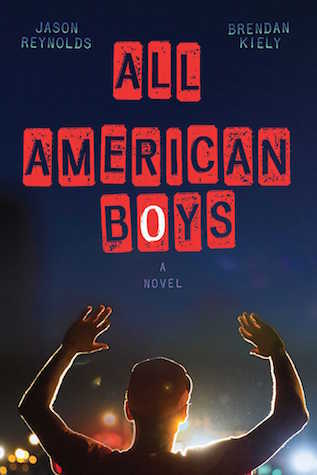
All American Boys by Jason Reynolds and Brendan Kiely

★★★★★

Quinn is a white teenaged boy who plays on the school's competitive basketball team. Rashad is a black teenaged boy who is a junior ROTC cadet, and whose best friends play on the same basketball team as Quinn. Chapters alternate between first-person narratives by Quinn and Rashad, and - unlike some other books that use this same storytelling method - the voices of the boys are distinct enough so you could probably figure out who is narrating without having to read the chapter title, thanks to Rashad's chapters being written by Jason Reynolds (a black author), and Quinn's chapters being written by Brendan Kiely (a white author).

One Friday night, as both boys have the same plans to go to a classmate's party, Rashad is racially profiled inside a corner store and becomes a victim of police brutality perpetrated by a white officer. Quinn witnesses the beating and, to his horror, recognizes the officer as his best friend's older brother Paul, a man who, in many ways, was a surrogate father figure to him after his own father died in Afghanistan. The book starts just before the incident, and spans the following week.

Having read this book on the heels of The Hate U Give, it's easy to compare the two and find similarities, though each does offer something different. The Hate U Give is written entirely from the perspective of a black girl who is the sole witness to a fatal shooting. She watches as her friend's name becomes a hashtag, and struggles as public attention turns to her as the only person who can testify about the shooting. All American Boys, on the other hand, offers the perspective of a black boy who survives a non-fatal attack and sees his own name become a hashtag. It also provides the viewpoint of a white boy who grapples with trying to make sense of what he saw, what it means about the world around him and who he is as a person. Since the incident was caught on video by other bystanders, his testimony probably isn't important to the investigation, but he still needs to make some hard choices to come to terms with what happened.

Rashad's story is compelling, and I imagine it would be especially so if you aren't already a supporter of Black Lives Matter. If you are, I expect you'll find your commitment to the movement reaffirmed, as I did.

For myself, I found Quinn's story to be more eye-opening and thought-provoking. I have to admit, as a liberal person of color who lives in a blue state, I frequently wonder, with no small amount of frustration, why more white people aren't more woke. Why can't they see the racism!? Or if they admit to seeing it, why won't they speak up and fight against it? This book doesn't make excuses for white people, but it does show how it can be difficult for individual white people to take a stand when it means losing life-long friends, challenging long-held beliefs, and actually risking opportunities for a better future (e.g., Quinn taking a stand could affect his place on the basketball team, which would affect his chances of earning a college scholarship). The stakes can be high. Given Quinn's previous relationship with Paul, we see how painful Quinn's position is; how is it that someone who he knew to be so generous and so good to him could actually be capable of such a frightening and unthinkable act? Through Quinn's struggle, we see how for many people, life would be so much easier if they just refuted the evidence and ignored the racism.

As might be expected in a book rated for teens, the boys' authentic teenaged dialogue does include swearing.

Thursday, October 4, 2018

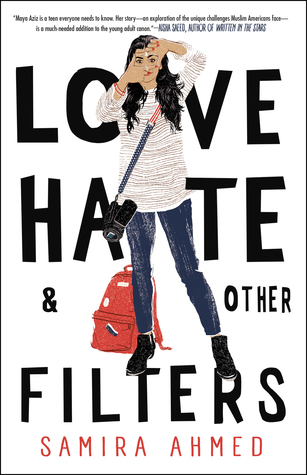
Love, Hate & Other Filters by Samira Ahmed

★★★

Maya is an Indian-Muslim-American high school senior. I think the book is well-summarized by this excerpt: "My parents' fears shrink my universe to the four walls of this house. The world outside paints us all as terrorists... And all I want is to make movies and kiss a boy." (p. 220) The book was an interesting combination of teen romance, multicultural identity searching, and spotlight on racism.

The first half of the book reads like a romantic comedy. Perpetually-blushing Maya unexpectedly finds herself in a love triangle, torn between Phil, who is white, beautiful, and captain of the football team, and Kareem, an Indian-Muslim-American student at Princeton. People who enjoy these Team Phil vs. Team Kareem type stories would probably find a lot to like in this book, but alas, I am not generally a fan. (Though that didn't stop me from picking Team Kareem.)

As an aspiring filmmaker, Maya dots her narrative and dialogue with film-related terminology and references to movies. At times, it's an effective tool for breaking the awkwardness in a scene or lightening the tension.

There were things I really loved about this book. Mostly, I enjoyed the writing, which was full of colorful metaphors. In reference to the conservatism of her immigrant community, Maya's first-person narrative observes, "some taboos cross oceans, packed tightly into the corners of immigrant baggage, tucked away with packets of masala and memories of home." (p. 9)

I was a little concerned that Maya's parents were too much of a stereotype of conservative immigrant Indian parents, but those worries were mitigated by the existence of Maya's cool aunt Hina, who served as a counter-example.

Admittedly, I felt misled by the quotes of praise from other authors (printed on the back cover) which referred to Maya as a Muslim and completely omitted her Indian identity. For pretty much the first half of the book, most of the diversity portrayed was that of her being Indian. There was a lot of Indian food, Indian clothes, and Indian culture strewn throughout. The fact that she and her family were also Muslim was mostly limited to statements of that fact and joking mentions of not eating pork. We didn't really see how being Muslim affected her day-to-day life.

It wasn't until about halfway through the book that Maya's Muslim-ness came into focus, in the wake of a terrorist attack. This is when the book finally started to get interesting, in my opinion, as Maya navigated her school with all eyes on her.

I appreciated the way the events surrounding the terrorist attack unfolded, alternating between snapshots of the perpetrator and the victims. However, I was bothered by a few passages that seemed contrived to elicit sympathy for the perpetrator. He was given a background story that some might interpret as excusing his actions; he was abused as a child, "troubled" and misunderstood as a teenager. I would have much preferred passages that instead or additionally showed how he might have fallen down a rabbit hole of hate and poor decisions.

I also was not too keen on one scene that I'm sure many readers would probably enjoy from a romance standpoint. Without giving too much away, there's a moment when Phil comes to Maya's rescue, and as romantic as that is, it just crept too much into "white savior" territory for me.

Overall, I think the book could have been better paced. The pure romance first half of the book could have been condensed, and the aftermath of the terrorist attacks could have been extended. Moreover, I felt the book ended much too abruptly after Maya took a stand for her future. There were just so many unanswered questions I had for the time that was glossed over by the epilogue, particularly in regards to Maya's relationship with her parents. So much conflict, so much tension, how did she and her parents deal with it?!

As is typical of multicultural books, foreign words are occasionally interspersed. I felt like I could understand non-English words from context, though I wasn't sure if specific words were Urdu or Hindi.

Finally, this book does include swearing and references to sex, not uncommon for a book rated for teens.

Monday, September 24, 2018

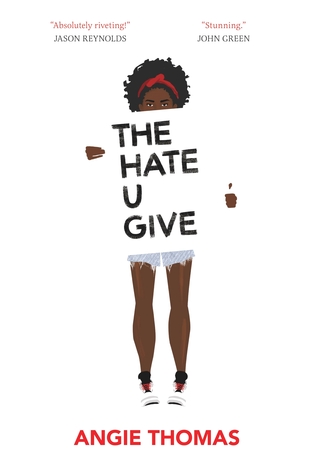
The Hate U Give by Angie Thomas

★★★★★

A powerful book that depicts the very real and personal stories that are likely behind every white-officer-kills-unarmed-black-person tragedy we hear about in the news.

I hope this book might be especially compelling for those who are sure they aren't racist, yet they can't quite bring themselves to fully support Black Lives Matter; maybe this book can give them a little more insight to help them better understand the movement. I think those who do support Black Lives Matter, and already follow black activists on Facebook or Twitter, will have their beliefs reaffirmed. And for those who live in the "Garden Heights" of America, I don't know how this book is being received, but I hope they feel they are understood, and that this book does them justice.

For all the ways this book is relevant to current events, I think it was smart to not actually reference "Black Lives Matter", which is a politically charged phrase. Instead, the author does a remarkable job just showing how every life really does having meaning, even in the "hood", and even when the media tries to make the victim look like a thug in an effort to justify their death.

Similarly, the book doesn't even mention "code switching", but it's clear that's what Starr is doing when she switches been "Garden Heights Starr" and "Williamson Starr".

The book touches upon a lot of different topics within racism, and we see characters who span the spectrum. There's Starr's white friend Hailey who suffers from "white fragility" (again, a phrase not actually used in the book) and believes herself to be so "beyond racism / color-blind" that she is unwilling to examine her own beliefs and actions. There's Starr's Chinese friend Maya, who is caught between Starr and Hailey, but who eventually represents the power of allyship among people of color (another phrase not actually used in the book). There's Starr's white boyfriend Chris who genuinely wants to know Starr, and their relationship goes to show that Starr isn't about hating all white people. Then there's Starr's Uncle Carlos, a good cop, who's there to let us know it's also not about hating all cops.

At times, the books is heavy-handed in its messages of social justice, but I think for a teen book, that's okay.

Above all, the book is well-written. Starr's narrative voice really sounds like a teenager's, and the swear-laden dialogue is honest and believable. The book marches forward at a good pace, and still I felt like I was frequently on the verge of tears, with a lump in my throat.

Besides a lot of cussing, the book also includes references to sex. It's definitely a "teen" book, and I think it's best read by mature readers who will think hard about racism and other questions of community, family, identity, and activism.

Friday, August 31, 2018

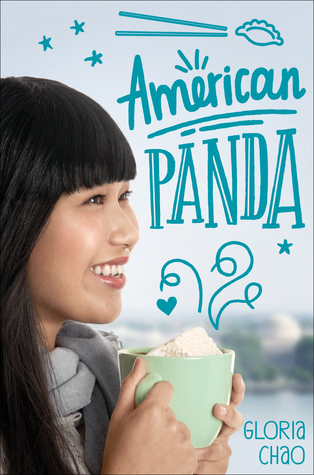
American Panda by Grace Chao

★★★

*** Warning!! This review contains spoilers!! ***

I have lots of mixed feelings about this book. I really, really, really wanted to love it. I'm a big fan of promoting diverse books, and I think narrative plenitude is super important. In that vein, I absolutely acknowledge that each individual book involving another culture can not be expected to represent the entire culture in a way that suits me, and the only way to escape that expectation is for more books, and a much wider variety of books, to be written. Maybe if we already had narrative plenitude for Asian-Americans, I wouldn't feel guilty about my rating, which I gave a little bump for its diversity factor.

From the outset, if ever there was a book that I should feel was written for me - the kind of book I would have wanted growing up - this book would be it. Like the main character Mei, I, too, am a child of immigrants whose families left China for Taiwan during the Communist Revolution. I, too, grew up in Massachusetts, went to Chinese School, danced in a traditional Chinese folk dance troupe, went to MIT, and lived in Burton Conner. In college, my mother occasionally brought me Chinese food, and I even dated a Japanese boy. So yes, I identified with Mei, and I appreciate that such a book exists that can speak to readers who are younger versions of myself.

I thought the author did a really wonderful job portraying how Mei's strict and overbearing parents were motivated by love and tradition, and how Mei's filial piety came from a place of appreciation and respect. On the whole, the book was a fantastic story about how an Asian-American teenager comes to terms with her identity while straddling two cultures. Yet, it bothered me that both Mei and her parents fit all the stereotypes, from the "tiger mom" parenting style to the model minority myth. Mei's mom was even a terrible driver, which added nothing to plot or character development. I found these characters to be believable, but I was weighed down by the propagated stereotypes.

Other characters, like Dr. Chang, were far less believable. She was a mousy, poor excuse for a doctor whose role as a plot device couldn't have been more contrived. Also, giving the mean girl Valerie an unflattering health condition seemed unnecessary.

Throughout the book, there were three things I found repeatedly distracting. The first was the frequent use of Chinese without a glossary for reference. I liked that the author used pinyin with accent marks - too frequently the crucial accents are left out of pinyin - but the Chinese was only sometimes translated. I know enough Chinese so I was able to understand all the references, but I know that when I read books with languages unknown to me, I always like to know what the non-English words mean, instead of having to guess and wonder if I guessed correctly. Sometimes, there was enough context to figure out the gist of the Chinese words' meaning, but not always.

Another distraction was the habitual references to MIT culture. The explanations about MIT lingo - most presented in a blatant "tell" rather than "show" manner - seemed more like name-dropping, giving me a sense of like, "Look, I really did go to MIT, I really am an insider, let me prove it to you." It's like the book was trying too hard to push the MIT connection.

Thirdly - and this might say more about me than the book - I was really taken aback by the occasional raunchiness. The cover art, the interior design, the personality of the main character - they all led me to believe that this would be a pretty straight arrow kind of book. But every now and then, I was thrown off by a sexually explicit joke, a sexually implicit use of a word like "horny" or "beaver", and casual use of the f-word. They all just seemed out of place for a "nice girl" character like Mei. The added vulgarity didn't add any authenticity or relevance, it was almost as if those references were thrown in to say, "Look, just so you know, Mei isn't a goody-two-shoes, and MIT students aren't all prudes." This book definitely falls in the "Young Adult" category, and I wouldn't recommend it for middle schoolers (which I might have done if I judged the book by its cover).

Finally, I was incredibly disappointed in the direction one of the conflicts took. Mei's brother Xing was disowned by their parents because he wanted to marry a woman who had a health condition that presumably prevented her from having children, thus depriving them of ever having grandchildren to carry on the family name. This was obviously a huge conflict, and any resolution would involve a major change in heart from one side or the other. Instead, the conflict was diluted when the woman got pregnant. It just seemed like a cop-out.

Overall, a good book about Asian-American identity, but not as well-executed as I would have liked.