Showing posts with label non-fiction. Show all posts

Saturday, November 8, 2025

Here Comes the Sun: A Last Chance for the Climate and a Fresh Chance for Civilization by Bill McKibben

★★★★★

Wow! As advertised, this book gave me HOPE! Serious, grounded hope. The worst possible outcomes of the climate crisis really can be averted, as long as we stay focused on solving the problem. 

Bill McKibben's writing is straightforward and concise, geared towards a wide audience of laypeople and perhaps as lighthearted as you can get while talking about a heavy subject. In fact, if anything, as someone with a background in science and engineering, I sometimes wished for more technical explanations.

In this very approachable book, McKibben brought the receipts for the argument Tom Steyer made in Cheaper, Faster, Better: How We'll Win the Climate War - that clean energy can save us from climate catastrophe. Specifically, solar and wind energy are right now already cheaper than energy from fossil fuels, and the use of renewable energy is growing exponentially. At this point, switching to green energy is just plain saving money, and saving the planet happens to be a nice fringe benefit. (p. 94)

There's an obligatory, sobering chapter describing what climate disaster currently looks like (e.g., heat waves and wildfires and record-breaking storms causing death, destruction, and human migration), how we got here, and why we need to take immediate action on a ginormous scale. 

The rest of the book describes various clean energy sources and technologies - e.g., solar cells, wind turbines, hydropower, batteries, heat pumps, electric vehicles, induction cooktops, etc. - their benefits, why it's taken them so long to catch on, the active opposition they've faced (p. 67-68) and are still facing (p. 73, 138-139), how they've improved significantly in recent years and are still improving and will continue to improve (p. 74, 130), why they are now so cheap, how they are already being used, how quickly they are growing, and what we need to do to enable even faster growth. 

In an overall sanguine book - he thinks we can achieve net-zero carbon emissions by 2050 (p. 56) and even the energy demands of AI can be accommodated (p. 39) - McKibben points out that though the transition to affordable renewable energy is already underway, an essential point is the speed at which it must be done. We've already crossed the 1.5 degree Celsius threshold in global temperature rise, and physical planetary systems like jet streams have already been altered (p. 6); to stop the total destruction of the earth, the pace of transition must be urgent and sustained. (p. 76-77)

Of course, Big Oil isn't about to just give up their oil and gas reserves that are worth "tens of trillions of dollars" (p. 34), and they've retained power partly by actively spreading misinformation about renewable energy. (p. 139) Even in liberal U.S. states, communities object to wind and solar farms solely on the basis of aesthetics. (p. 140) Fortunately, attitudes are changing - Rockford, IL is proud of their union-built solar farms (p. 147) - and the fight against climate change is global; in some parts of Asia and Africa, the reality of cheap and reliable electricity means individuals and corporations are installing solar panels on their own, independent of the government and their nation's electric grid. (p. 104-109) 

Mostly what's needed to enable more widespread implementation of green energy systems is money; there's certainly enough capital tied up by billionaires to fund the entire transition, and "the reallocation and redistribution of that money" - via a 2% wealth tax or a modest tax on luxury goods or the elimination of subsidies to the fossil fuel industry - "is now an existential necessity." (p. 112-113) Additionally, we need to support government policies and programs at all levels that will promote and make it easier for people and organizations to install and switch to green energy. (p. 169-172) Indeed, McKibben writes, "If fascism scares you...figuring out how to break the centralized power of the fossil fuel industry is a key form of resistance." (p. 5)

More than "just" allowing us to cut greenhouse emissions - which is immensely significant in itself - clean energy can help bring about more equitable and humane geopolitics; sun and wind are available for free everywhere, the sun being even more reliable near the equator, and they can't be hoarded like oil and gas. Already, renewable energy is "growing twice as fast in the developing world of the Global South as in the developed world of the Global North." (p. 5) 

Importantly, McKibben identifies the bulk of green energy growth as happening in China, where "seven Chinese companies... were by 2024 producing more energy than the Seven Sisters of the oil industry." (p. 57) Instead of connecting cars with Detroit, "increasingly we should be thinking Changchun" in China. (p. 58) Meanwhile, the Trump administration is intentionally propping up fossil fuels and choking any progress in support of green energy - he's put the breaks on the momentum of Biden's Inflation Reduction Act (p. 117-118) - and China is happy to benefit. With the U.S. sidelined, China is poised to "become the dominant player in international climate politics" (p. 118) and, unless the U.S. gets back on track, "it's entirely possible that the US could slide into a kind of global irrelevance." (p. 119)

But it's complicated. China's climate leadership is achieved in part by building solar farms on land where the indigenous Uyghur Muslims, Tibetan Buddhists, and Mongolians are oppressed. (p. 132-133) In the U.S., too, new mines for materials needed to build green energy equipment are often on indigenous land. (p. 133) "There's real harm that will come to real places and real people as we build out this new energy future." (p. 135) Ideally, responsible growth accounting for morality would include indigenous peoples as decision-makers on issues related to their land, or at least allow them to "extract some serious concessions from the government... But we don't live in a fair world" (p. 135) and, sadly, those in power are unlikely to start developing a conscience now.

Interestingly, McKibben weighs in on degrowth. (p. 50-53) He disagrees with the most extreme notion that even renewable energy can't sufficiently meet the future energy needs of the planet. He likes the "softer and smarter" idea to stop chasing after ever-growing GDP and instead "reorient ourselves around measures like 'gross national happiness' that attempt to balance lots of different goals," but not as a solution in itself. (p. 50) He is worried about too much attention being given to efforts to live more modestly to reduce energy demand, because though it's reasonable and desirable to try to reign in consumerism and increase sustainability, it's just not at all likely for all of humanity to make drastic, self-sacrificing lifestyle changes, especially not in the short time frame we have to head off the worst-case outcomes of the climate crisis. (p. 53) The hope is that "a clean energy transition will buy us some time to do these things." (p. 132)

Truly, if you want to feel hopeful about solving the climate crisis, read this book! 

Wednesday, September 24, 2025

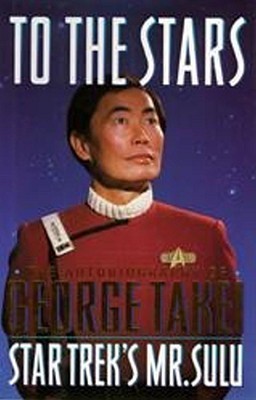
To the Stars by George Takei

★★★★★

I LOVE George Takei!

I actually first read this book back in college for a Japanese culture class. In fact, George Takei was a guest speaker! Anyway, I recently read George Takei's latest graphic novel, It Rhymes with Takei, and realized that the graphic novel borrows a lot from this book - so much so that I was inspired to re-read it (again). I wanted to piece together a fuller picture of his life, pulling together events from both books into a single timeline.

This memoir focuses first on his family growing up, then chronicles his acting career, as well as his political and civic activism. Even when I read this book 30 years ago, I remember noting that it never mentioned romantic relationships at all. Little did I know, back then, that the "journalist Brad Altman" whom he thanked in his acknowledgements, and who once visited him on location during a film shoot, was actually his significant other!

George Takei's writing is descriptive and engaging. The first part is invaluable in its telling of an American childhood spent inside the barbed-wire fences of Japanese American concentration camps. The strength and comfort George Takei drew from his parents - from Daddy and Mama - made my heart swell. Throughout the book, he periodically returned to his Japanese American roots as he recounted events from his life as an actor or as an activist. Sometimes, the two identities overlapped, as when he tirelessly advocated for Sulu's promotion, a fictional development that not only benefited his character, but also illustrated the "virile meritocracy" (p. 398) that was missing in real life as Asian Americans ran into "glass ceilings" that halted their professional advancement (now specifically termed "bamboo ceilings"). Inspired in part by his father's example, George Takei came to be extensively involved with progressive politics and civil rights activism. He has a life-long commitment to the ideals of "an American culture, strengthened by its diversity instead of balkanized by it" (p. 210), perfectly represented in Gene Roddenberry's vision for Star Trek: "infinite diversity in infinite combinations." (p. 405-406)

I wasn't even a fan of Star Trek when I read this book in college, but I'm a big fan now, and it was great fun reading all his behind-the-scenes stories about the TV series, the films, his friendships with his co-stars, and even his thoughts on the "new" The Next Generation series.

Friday, September 5, 2025

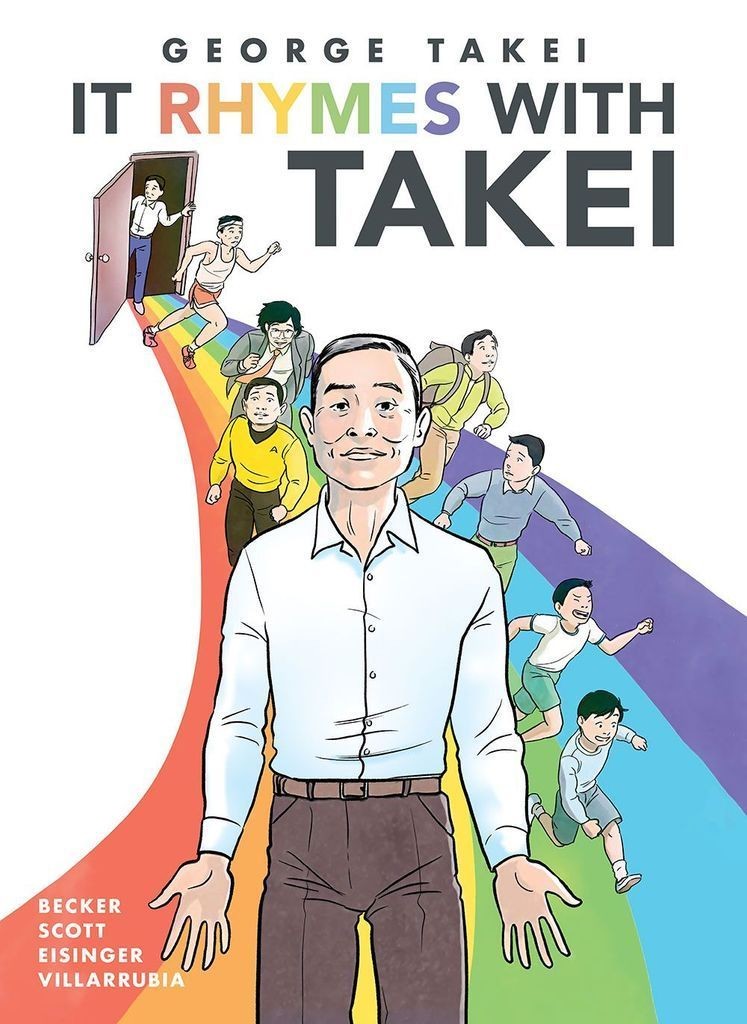
It Rhymes with Takei by George Takei

★★★★

Another great graphic memoir by George Takei. While I am a huge fan of George Takei, I'm not accustomed to reading graphic novels, so I admit this style of storytelling always takes some getting used to for me.

There are certainly LGBTQIA+ books for kids, but I would categorize this one as YA. There's nothing explicit, but the graphic novel medium was pretty effective at suggesting more extensive meaning behind a few chosen words, particularly when sexual activity was involved. Also, gay slurs do appear in the dialog.

George Takei didn't publicly come out as gay until he was 68 years old, and this graphic memoir explains why. Being gay was a constant source of fear and anxiety for him. He lived a tortured life, always in dread of being exposed, afraid that his sexuality becoming public would destroy his acting career. It may even have held him back from political aspirations. Sadly, some of his concerns were validated when a private coming out caused a distressing rift in his family.

It was comforting to read how George Takei's Buddhist upbringing helped him to accept himself and avoid the common pitfall of self-hatred. (p. 30-31) And I absolutely loved reading about how he met his husband Brad and how their relationship grew. 

In addition to chronicling George Takei's personal relationship with his own sexuality and his activism for the LGBTQIA+ community, the book also touched upon other issues such as immigration, politics, racial equity, and police brutality. In one poignant observation illustrating a common thread throughout history and current events, George Takei realized that "even my fellow Japanese Americans who had been exploited themselves, were nonetheless capable of exploiting others." (p. 37)

Bits and pieces reminded me of his 1994 autobiography To the Stars, which I read decades ago and can't remember too well anymore. I pulled out the book for a quick comparison and had fun discovering that some lines in the graphic memoir were taken from the autobiography almost verbatim! But even when telling of the same event, the perspectives presented sometimes differed between the books. For example, when recounting a college production called Portraits in Greasepaint, both books described it as a stepping stone on his career path because a casting director saw him in that performance and ended up casting him in a film; however, the graphic memoir also mentioned a romantic relationship with a fellow male cast member (p. 96), additional context that was not included in the 1994 book, which did not discuss his sexuality at all. I just might re-read To the Stars, to piece together the narratives from both books and mentally integrate them into a more complete picture. 

While overall a very inspiring book, I was a little conflicted about the ending. Much was made of how Biden defeated Trump in 2020, how the "worst policies of Trump's grievance government" were "repudiated", and how we, as a nation, "regained our deepest sense of [decency]." (p. 325) But then, the following pages acknowledged that now, in 2025, "once again, it is a heady time and a fraught time." (p. 328) The book is a timely reminder that progress is possible, and that "the strength of our nation is in its abundant diversity" (p. 333), yet there was no reckoning of what Trump's 2024 re-election says about America. 

Apropos nothing, it was surprisingly jarring to see some of the illustrations depicting the norms of an earlier time, e.g. George Takei riding a motorcycle without a helmet in 1964 (p. 128) and George Takei holding his infant nephew in his arms in the back seat of a car - no car seat! - in 1966. (p. 166)

Thursday, August 14, 2025

Wildland: The Making of America's Fury by Evan Osnos

★★★★½

If you're someone who looks around in utter disbelief at everything broken in America today - mass shootings, income inequality, inaction regarding the climate crisis, rising white nationalism and fascism, eroding democracy, etc., etc., etc. - and the fact that a lying, racist, xenophobic accused rapist and con man actually got elected - then re-elected despite felony convictions - and ask, "How did we get here?!?!!" then this book is for you. It tries to answer that question. More than anything else I've read, this book helped me to better understand Trump voters, even if I will never agree with them.

Evan Osnos provided a clear accounting of American politics spanning the terrorist attacks on September 11, 2001 - when people across the nation reaffirmed American ideals of diversity and the free exchange of ideas (p. 8) - to the insurrection at the Capitol 20 years later on January 6, 2021 - by which time "the country had spun so far out of balance that it had lost its center of gravity." (p. 13)

The author delved deep into the culture and mindset of 3 communities:

  • The money-centered elites with stratospheric wealth in Greenwich, CT who made money from money thanks to a lack of government regulations. (p. 30) Any discussion of the uber-wealthy naturally encompasses the seismic level of undue influence campaign mega-donors have on U.S. politics, and, by extension, the author detailed the damage done by the well-funded Mitch McConnell, "who operated on the plain belief that power mattered more than policy or principle." (p. 50)

  • Clarksburg, WV, where thriving local newspapers were once the cornerstone of democracy and community - until they were decimated by the growth of the internet, where news was scattered among entertainment and disinformation. (p. 67) Once the "Jewel of the Hills" (p. 56), Clarksburg fell victim to outside investors who bought political influence, allowing them to strip the land of valuable minerals, taking profits with them and leaving West Virginians to suffer the environmental harms. (p. 64-65)

  • The all-American city of Chicago, IL, which saw its African-American population grow to 33% after the Great Migration yet still endured racial segregation because of powerful discriminatory practices like redlining. (p. 78-79) Schools in Black neighborhoods were stunningly underfunded (p. 124), racial inequality was vast (p. 87), gang violence escalated (p. 118), and "nearly one third of Black men... entered the criminal justice system." (p. 131) Against this backdrop, we saw the beginning, and then the meteoric rise, of Barack Obama's political career.

  • Through intimate portraits of individuals in each community, Osnos illustrated how starkly different one's life can be depending on where you grow up, the color of your skin, and how much money you have. He drew a straight line from the Wall Street subprime mortgage schemes concocted by wealthy white Greenwich financiers to the dire economic plights of poor Black homeowners in Chicago (p. 134), and he compellingly weaved together the threads of a Clarksburg Marine with PTSD, the local community newspaper, and the opioid epidemic.

    On a national level, angry conservative commentators (p. 139) and changing demographics that predicted minorities eventually becoming the majority (p. 230-231) fueled racism and the right-wing, white nationalist politics of the Tea Party that gained traction during Obama's administration. (p. 142) White people began to fear for their privilege due to their perception that "white Americans faced imminent demise" (p. 235), which was unsubstantiated by actual statistics. (p. 237) (That these people settled on fighting to maintain social inequity to benefit themselves rather than fighting for social equity so that no one group was privileged over others is, IMHO, disgusting.)

    Osnos also discussed the uniquely American cult of "hyperindividualism" at the expense of community, evident in politics through declining influence of labor unions and increasingly regressive taxes. (p. 145) He wrote of how the U.S. was able to engage in 18 years of "the War on Terror" largely without accountability as there was no sense of collective sacrifice, the burden of casualties having fallen on less than 1% of the population (p. 147), and news reaching the others "too muddled by the peek-a-boo distractions of our time." (p. 148)

    In a book of eye-opening revelations, most shocking to me was "elite survivalism". The book described Silicon Valley billionaires who have private planes and underground bunkers for the specific purpose of having a safe haven not just for the impending doom of climate change, but also in case angry, unemployed masses break out the pitchforks for the people who brought forth the technological innovations (mostly fears around AI) that took away their jobs. (p. 285-287) (Again, that so many of the tech elite look to protect themselves instead of using their billions to address climate change or social safety nets or ethical use and the consequences of AI is, again, IMHO, obscene.)

    Osnos occasionally takes a step back and outlines how some of the factors stirring the pot of unrest began long before September 11, 2001. Capitalism amplified inequality (p. 99), and corporate PACs and lobbyists in the 1980s brought forth a wild swing towards pro-business, anti-consumer policies. (p. 170) Osnos connected the dots between libertarian Reagan Republicans and modern-day Trumpism, both built on "a coalition of conservative elites and the white working class." (p. 172) He further described how pure capitalism led to the growth of the gun industry: as hunting became less popular in the 1970s, among other marketing schemes, gun industry trade publications began targeting elementary school children in efforts to expand their customer base. (p. 263-266)

    By the time Osnos addressed the first Trump presidency directly, it was clear the administration's actions were not the result of incompetence but rather, the goal was to actively undermine and dismantle federal agencies that stood in the way of capitalism. (p. 292-293) Steve Bannon, Trump's campaign chief, called it the "deconstruction of the administrative state" (p. 287), but more than that, the Trump administration believed in "empowering it [the federal government] in the name of private interests." (p. 294)

    As depressing as the facts are, it was encouraging that Osnos was able to instill a sense of hope by highlighting progressive activists in all 3 locations of Greenwich, Clarksburg, and Chicago.

    To close, here are some poignant, insightful quotes that struck me:

  • Regarding the connection between income inequality and being disenfranchised: "Poverty can be as much about power as it is about possessions; they hadn't felt poor until someone came along and showed them how little power they really had." (p. 189)

  • A quote by Samuel Popkin, a political scientist, that succinctly explains the appeal of Trump: "The more complicated the problem, the simpler the demands become. When people get frustrated and irritated, they want to cut the Gordian knot." (p. 282)

  • A warning issued in 1992 by Francis Fukuyama, another political scientist: After the Cold War, people might "struggle for the sake of struggle... out of a certain boredom... And if the greater part of the world in which they live is characterized by peaceful and prosperous liberal democracy, then they will struggle against that peace and prosperity, and against democracy." (p. 316)

  • Chicago community organizer Jahmal Cole in the midst of George Floyd protests in 2020: "We wore a hoodie for Trayvon, we took a knee for Philando, we held our breath for Eric, we walked for Laquan, but we're done. Enough is enough... We're rightly pissed off." (p. 368)

  • Abraham Lincoln's secretary of state, William Seward, describing the Civil War: "There was always just enough virtue in this republic to save it; sometimes none to spare." (p. 406)

  • Oh, one last thing. My rating is just short of 5 stars because of a misleading line. Early in the book, there’s a passing reference to "a minor [constitutional] amendment in 1992, to raise congressional salaries." (p. 51) The wording made it sound like the purpose of the amendment was to raise congressional salaries, but what it actually did was require an election before any change in congressional salaries could take effect. It just made me wonder if maybe there might be other ambiguous wording - intentional or not - that I didn't catch.

    Wednesday, March 12, 2025

    Still Just a Geek: An Annotated Memoir by Wil Wheaton

    ★★★★★

    I'm late to the party as a Wil Wheaton fan, but I'm here now! I loved him on The Big Bang Theory, and I'm also a late-in-life fan of Star Trek, mostly TNG, DS9, Voyager, and Picard. Now, he's one of only a handful of celebrities who helps to normalize masking by posting masked selfies on social media, and as a covid-aware person, I love him for that.

    You have to go into this book with the appropriate expectations: It's not a typical memoir; it's a collection of blog posts first published in book form in 2004, with a lot of footnotes written in 2021. Reading this book means constantly jumping back and forth between different time periods. I found myself inadvertently applying 2021 Wil's perspective to the entire text by default, which was confusing, and had to consciously remind myself to use 2004 Wil's mindset when reading content from the original book, and to switch again to Even Younger Wil's frame of mind when reading blog posts written even earlier. Some of the annotations were just injections of humor, but others provided a lot more context and were really interesting, particularly when he noted that something that was supremely consequential for Younger Wil turned out to be just a blip in the trajectory of his life.

    Wil Wheaton tells of how he grew into his own skin in his 20s, and then continued to grow personally and professionally in his 30s and 40s. He tells his story well, even when presented in this sort of choppy manner of blog posts and annotations. I like his sense of humor, and as a fellow Gen X-er, I enjoyed his references to 80s and 90s pop culture. He is thoughtful and relatable (at least he was to me, a fellow geek), and I appreciated all he shared about Star Trek, from his personal relationship with his character Wesley Crusher (whom he came to embrace, after a bit of a rocky road) to his interactions with other people from the series. In case it matters to you in a knowing-what-to-expect kind of way, he swears liberally.

    Wil Wheaton makes abundantly clear, multiple times in the book, that some of what was published in 2004 was "gross" and "hateful". (p. xix) That he was willing to revisit and examine his previous writings that are now considered shameful (due to misogyny, ableism, etc.), and engage in a public exercise of self-reflection and accountability, shows just how much he (and society in general) has grown and learned in the intervening years. I was truly impressed by his honesty and vulnerability. And it's just good to see a cishet white male put into practice Maya Angelou's quote, "Do the best you can until you know better. Then when you know better, do better."

    I also give Wil Wheaton a lot of credit for the way he openly talked about his depression and anxiety, and the abuse he suffered at the hands of his parents. He modeled self-respect and acceptance, and in doing so, he helps to lessen some of the stigma surrounding mental illness, as well as give strength to others who may be victims of abuse.

    I'll admit that my 5-star rating may seem generous in light of the somewhat fragmented reading experience, but mostly I just really enjoyed the content. It was fun!

    Monday, January 27, 2025

    The Covid Safety Handbook: Staying Safe In An Unsafe World by Violet Blue

    ★★★½

    All quotes refer to page numbers in the digital PDF version that I read.

    The writing is very casual. At times, the word choice sounded like conversational banter. 

    This book was written by and for the covid-cautious community; if you're a member of this group, you will absolutely feel validated and reassured.

    If you're not already sympathetic to the concerns of this group, then much of the content will seem over-the-top. Before reading this book, I had hoped it could serve as a tool for helping to convince non-covid-cautious readers to take covid more seriously. The tone, however, is not one of detached science, nor of persuasive argument; rather, the need to take covid precautions is treated as a given. The book opens with a brief rundown of the many known covid-related health risks (there's a more in-depth discussion of long covid later in the book), but ultimately, The Covid Safety Handbook is geared towards people who are already covid-aware, who want to learn more about ways to better mitigate covid risks, and who welcome suggestions on how to maintain personal boundaries and navigate situations in which their covid-cautiousness conflicts with a society that minimizes or ignores covid.

    The Covid Safety Handbook is chock-full of solid information about mitigation measures and ideas for how to manage risk assessment and implement precautions in various scenarios. I consider myself well-informed on covid-related matters, and still I learned new things. I appreciate that the book conveys a sense of gradation; covid-caution is not "all or nothing", and some protection is better than none. I'll also mention that, despite being the most covid-cautious person among my own social circles, I have applied only a portion of the strategies described in this book.

    The text is peppered with footnotes; if inclined, readers can jump to the extensive References and Resources section and go directly to a respected source and learn more. (My digital copy even included hyperlinks for one-click access to articles.) That said, occasionally I wished for even more references; for example, there was no footnote when covid was referred to as a "neurotropic vasculitis with a minimum 10% chance of making you bed-bound potentially for life" (p. 41), which sounds exaggerated. Similarly, quotes from everyday covid-cautious people were encouraging to read, yet when attributed only to "A" or "LD" and "LC" (p. 27, 70, respectively, etc.), it made me wonder, Who are these people? If these quotes came from an online forum or social media post, a reference to the forum, or a screen shot of the comment, perhaps with a date stamp, would have added credibility.

    Though thorough in its scope, the book often felt "mile wide, inch deep", which is understandably consistent with its "handbook" designation; I suspect the author made a conscious decision to not delve too deeply into explanations of why or how things work in order to keep the content more high-level and accessible for the average reader. (Plus, as mentioned, further details are available by following reference links.) At times, though, I wished at least for more accurate wording, for example, I would have liked to see the words "rapid antigen test" to differentiate at-home tests from PCR lab tests in the bullet point, "You’re contagious if your test is still positive." (p. 29) I also noticed a number of editing mistakes.

    My rating of 3.5 stars is mainly due to the grievances mentioned; I felt I had to lower my otherwise 4-star rating, as reading this book was overall a positive, helpful experience for me. I especially appreciated the many valuable, up-to-date resources, and the latter chapters that addressed the emotional and psychological toll of being covid-cautious in a covid-minimizing world.

    Saturday, December 14, 2024

    The Message by Ta-Nehisi Coates

    ★★★★★

    For me, Ta-Nehisi Coates is not easy to read. I'm generally a slow reader to begin with, and the less conversational the writing, the longer it takes me to read it. Ta-Nehisi Coates writes with a kind of lyricism; he is succinct, but not exactly straightforward.

    This book is a reflection on writing. Coates believes that "this tradition of writing, of drawing out a common humanity, is indispensable to our future, if only because what must be cultivated and cared for must first be seen." (p. 16) Through writing, "we are charged with examining the stories we have been told, and how they undergird the politics we have accepted, and then telling new stories ourselves." (p. 19) He addresses the book to his students, tasking young writers with "nothing less than doing their part to save the world." (p. 20)

    The Message is a must-read for its ability to open a reader's eyes to the ways in which our beliefs, our perspectives, our very understanding of the world around us, are shaped not only by our own thoughts and the facts at our disposal, but also by the carefully curated narratives we see and hear in the news and other cultural mediums all around us. The job of a writer is to tell people's stories, and it's up to us as readers to seek out what is not automatically presented to us - and to question why some accounts are readily available and others are not.

    Much of the book reads like a memoir, with Coates sharing personal experiences and meditations, and other parts like a travelogue, as Coates recounts his visits to Senegal, South Carolina, and Palestine.

    Describing his time in Dakar, Senegal, Coates writes about the deep poignancy of traveling to Africa for the first time, how he had "come back" (p. 44) to the home of his enslaved ancestors. He thinks of his "exponential grandmothers taken from this side of the world and... their frustrated dreams of getting back home... [and] the home they tried to make on the other side, despite it all." (p. 44) He reflects that only by traveling and experiencing "the unique interaction between that world and your consciousness" (p. 44) are one's own fears and doubts revealed.

    In Chapin, South Carolina, Coates visits a high school English teacher forced to defend her curriculum and job against students and parents who want to ban his book, Between the World and Me. In getting to know Mary Wood, and while attending a local school board meeting in her support, he twice "heard of a reading group... as the epicenter of political disruption." (p. 98) To affect change, one must first be able to "imagine that new policies are possible. And now... some people... had, through the work of Black writers, begun that work of imagining." (p. 99)

    While touring Palestine, Coates witnesses the "separate and unequal nature of Israeli rule [that] is both intense and omnipresent" (p. 127), "where rule by the ballot for some and the bullet for others was policy." (p. 135) At first he drew connections to Jim Crow segregation, then felt compelled "to describe... [Palestine], not as a satellite of [his] old world but as a world in and of itself." (p. 146) He calls out the journalists who claim to disinterestedly present "both sides" but who "are playing god - it is the journalists who decide which sides are legitimate and which are not... And this power is an extension of the power of other curators of the culture - network execs, producers, publishers - whose core job is deciding which stories get told and which do not." (p. 148) He calls for Palestinian voices, insisting that "[i]f Palestinians are to be truly seen, it will be through stories woven by their own hands." (p. 232)

    This book offers many profound and thought-provoking ideas, but one quote sticks with me. At the school board meeting in South Carolina, a man speaking against the book ban called attention to the optics a ban would create, feeding into negative stereotypes of Southern whiteness. Coates notes, "This may seem self-interested, a stance taken more to avoid a stigma than to break an arrangement of power. Given the kind of loud virtue signaling that followed 2020, I understand the question. But virtues should be signaled, and the signalers should act to make their virtues manifest." (p. 102)

    Monday, November 25, 2024

    Less is More: How Degrowth Will Save the World by Jason Hickel

    ★★★★★

    In the introduction, Jason Hickel sets the stage. Warning readers new to the climate crisis to "brace yourself" (p. 4), Hickel describes how human activity has disrupted the ecosystem, leading to mass extinction and food shortages, which - combined with extreme weather making some parts of the world unliveable - will lead to world destabilizing human migration. He quotes a UN scientist: "We are eroding the very foundations of our economies, livelihoods, food security, health and quality of life worldwide." (p. 8)

    Despite knowing exactly what is causing the climate breakdown, "[t]he past half-century is littered with milestones of inaction." (p. 17) Once you're completely freaked out, Hickel jumps into how, fundamentally, we got to this point because of capitalism, the purpose of which is "not primarily to meet specific human needs, or to improve social outcomes. Rather, the purpose is to extract and accumulate an ever-rising quantity of profit." (p. 19) To ensure ever-increasing global GDP (gross domestic product), "production increases, the global economy churns through more energy, resources and waste... overshooting what scientists have defined as safe planetary boundaries." (p. 19-20)

    The whole first half of the book is dedicated to describing all the evils of capitalism since its inception and how they came to be, including artificial scarcity and how poverty is a feature, not a bug, that ensures the existence of a labor class. These chapters were particularly eye-opening for me because the author tied together many political issues that seem unrelated but aren't, e.g., it's capitalism from which we need to protect the environment, it's only under capitalism that the unpaid labor of women goes unrecognized, it's because of capitalism that we have to fight against a for-profit healthcare industry and the privatization of public education. 

    "[A]re we really content to accept an economy where nearly a quarter of total output goes into the pockets of millionaires?... [We have a choice] between living in a more equitable society, on the one hand, and risking ecological catastrophe on the other." (p. 198) The climate emergency is ultimately about inequality, as it is "being driven almost entirely by excess growth in high-income countries, and in particular by excess accumulation among the very rich, while the consequences hurt the global South, and the poor, disproportionately." (p. 20) "Most global South countries will need to increase resource use in order to meet human needs, while high-income countries will need to dramatically reduce resource use to get back within sustainable levels." (p. 110) 

    Meanwhile, extreme weather events in the U.S. and Europe rightfully make headlines, but "they pale in comparison to... the storms that have decimated so much of the Caribbean and Southeast Asia, and the droughts in Central America, East Africa and the Middle East that have pushed people into hunger and forced them to flee their homes." (p. 116) In 2010, "around 400,000 people died... due to crises related to climate breakdown - mostly hunger and communicable diseases. No fewer than 98% of these deaths occurred in the [global] South." (p. 117) Yet, "the global North (which represents only 19% of the global population) have contributed 92% of overshoot emissions" that caused that climate breakdown. (p. 115)

    In chapter 3, Hickel pushes back hard on the "climate capitalism" philosophy described in Tom Steyer's Cheaper, Faster, Better by making clear that a "growth-obsessed economy powered by clean energy will still tip us into ecological disaster." (p. 21) "[O]n a global scale, growth in energy demand is swamping growth in renewable capacity. All that new clean energy isn't replacing dirty energies, it's being added on top of them." (p. 106)

    What's needed, then is degrowth, which Hickel defines as "a planned reduction of excess energy and resource use to bring the economy back into balance with the living world in a safe, just and equitable way... while at the same time ending poverty, improving human well-being, and ensuring good lives for all." (p. 29) As it turns out, a high GDP is not necessary for a nation's people to have long and happy lives; studies show "exactly what works: reduce inequality, invest in universal public goods [like healthcare and education], and distribute income and opportunity more fairly" (p. 185), all of which line up with degrowth.

    Contrary to the word itself, "degrowth" means deciding which industries need to continue to grow (e.g., clean energy, public healthcare, regenerative agriculture), and which sectors need to be significantly reduced (basically anything directly related to fossil fuels, like airlines, and also those that use a lot of resources, like fast fashion). It's not a recession, which is "what happens when a growth-dependent economy stops growing... It is about shifting to a different kind of economy altogether - an economy that doesn't need growth in the first place." (p. 207) Relatedly, degrowth involves a change in collective mindset, like doing away with "advertising strategies intended to manipulate our emotions and make us feel that what we have is inadequate." (p. 29) Ultimately, "[w]e need to change the way we see the world, and our place within it." (p. 34)

    So, what would degrowth look like?
    • Government policies would incentivize targeted investment in green energy innovation.
    • The transition to clean energy could be funded by redirecting trillions of dollars from fossil fuel subsidies to solar panels, batteries and wind turbines. (p. 200)
    • Instead of GDP, new holistic measures of progress would account for "housing, jobs, education, health and happiness." (p. 203)
    • To reduce consumption, "right to repair" laws and legislation requiring companies to honor mandatory extended warranties could end the practice of planned obsolescence (when products are purposely created to need replacement after a relatively short period of time). 
    • A wealth tax would reign in the disproportionately large ecological damage caused by luxury lifestyles while at the same time reducing inequality, which in itself "reduces competitive consumption across the rest of society." (p. 229)  
    • We could further reduce consumption by moving away from ownership, e.g., by promoting public transportation instead of cars and having repositories of shared items (like libraries of things) instead of everyone owning their own seldom-used items. 
    • We could reduce the ecological impact of the agriculture industry by reducing food waste and beef consumption.
    • Governments would need to carefully manage the shift in labor; work weeks can be shortened, living wages can be instated, and workers in shrinking industries can be trained to work in growing industries.
    • Even debt cancellation would be a "vital step towards a more sustainable economy." (p. 238) 
    Apparently, as a politically progressive person, I am already on board with all the initiatives described; I just didn't realize they all fall under the umbrella of "degrowth". (Frankly, I'm surprised the book doesn't mention Universal Basic Income.) Of course, such changes could only happen on a large enough scale if government policies and programs support them. Since "the interests of economic elites in the US almost always prevail in government policy decisions even when the vast majority of citizens disagree with them" (p. 247), at the very core of degrowth, it is essential to have a robust democracy in which corporations and wealthy individuals do not have undue influence over elections and politics. The struggle to expand and strengthen democracy includes even more progressive ideas including "radical media reform; strict campaign finance laws... dismantling monopolies... democratising institutions of global governance" (p. 249) like the World Bank, the IMF, and the WTO.

    I now see the green energy growth part of Tom Steyer's position as an immediate need, but not a final solution and only a stepping stone to degrowth. I do, however, still agree with Tom Steyer that climate activism needs better marketing. I fear that just the word "degrowth" will trigger people to think of "recession", turning them off from learning more and likely causing them to misunderstand the whole movement. Hickel hints at an alternative name when he says, "Degrowth calls for abundance in order to render growth unnecessary." (p. 236) Might re-branding degrowth as something like "an abundance economy" win over more believers?

    In the last chapter, Hickel turns his attention to hope. Studies show that "across ecosystems... it takes an average of only sixty-six years for a forest to recover 90% of its old-growth biomass, completely naturally." (p. 253) If we take immediate action towards degrowth, we could see the living world recover in our lifetimes. He reminds us that our human ancestors lived sustainably, integrated with - not separate from - nature, and that many Indigenous peoples still do. From them, we can "learn to see ourselves once again as part of a broader community of living beings" (p. 273), no longer in a position to exploit the ecosystem, but to enrich it. (p. 263)

    Wednesday, October 16, 2024

    Cheaper, Faster, Better: How We'll Win the Climate War by Tom Steyer

    ★★★★★

    Tom Steyer really did give me hope!!

    Picking up this book, all I knew about Tom Steyer was that he was the billionaire climate candidate in the Democratic primaries of the 2020 presidential election. 

    After reading The Climate Book by Greta Thunberg, it became clear to me that saving the climate is at odds with capitalism, and we will never sufficiently address the climate crisis while fossil fuels are profitable and consumerism abounds. Moreover, we are now at a point where we need to implement sustainable practices even when there is no financial gain and when it's a less convenient option. But realistically, degrowth doesn't seem likely, so what are we going to do?

    This book's title, then, got my attention. Can we really fix this climate emergency in the context of our capitalistic economy, on the basis of sustainability being cheaper and better? Indeed, Tom Steyer makes exactly that argument, even going so far as to say that clean energy is already a more profitable investment. 

    The introduction immediately drew me in. Tom Steyer's optimism is infectious. He described what motivates him: "Protecting humanity from climate change is the fight of our lifetime. Am I doing my part?" (p. 4) The question each of us should be asking ourselves, each other, and our leaders is, "What are you doing to fight climate change?" (p. 4) Our first goal is to reach net zero (when global greenhouse emissions are entirely balanced out by the amount being removed from the atmosphere), and Steyer insists that clean-energy technology will get us there, and beyond. Not only that, he boldly claims, "if you care about getting rich, being part of the revolution taking place in energy is a pretty good way to do it." (p. 10) Like authors featured in The Climate Book, Steyer believes that "the climate movement is no longer about conservation... It's about making the world better than it's ever been before." (p. 11) And he wants you to know that it really is possible.

    This book is a very approachable introduction to the climate crisis, how the oil and gas industry have so far misleadingly defined the narrative, and what we need to do in response. Every chapter includes a section highlighting specific climate people who are already doing important work to move us forward, including climate activists, researchers, and entrepreneurs in clean energy and other technologies that help reduce CO2 levels. 

    I appreciate that Tom Steyer acknowledges that many "[y]oung people are furious - and rightly so - at older generations for leaving them a huge mess" (p. 84), making them particularly susceptible to despondency and a "climate doomer" mentality. Again, his optimism is unequivocal as he points out that "we're barely scratching the surface of what we can do. Our incomplete effort [at addressing the climate emergency] is already reshaping the way we create and use energy, revolutionizing transportation, making us rethink agriculture... Imagine what would happen if more people [got on board]." (p. 85)

    At times, it felt like the book was intended for a moderately wealthy and privileged audience, which, arguably, is the demographic most responsible for carbon pollution and therefore the very people who could make the most difference. Yes, now is truly the time to invest in climate-conscious companies, install solar panels, make the switch to electric vehicles, even take a job in the climate sector; there is value in individual actions as testaments to personal commitment and as examples to others to help spur wider change, but, of course, not everyone is in a position to do those things. Thankfully, Steyer makes clear that "[t]urning a collective problem into a matter of individual responsibility is... exactly what the fossil fuel industry is trying to do... We need systemic change, not perfect people." (p. 133) He encourages everyone to be locally engaged and politically active, and he specifically discussed the power of state ballot measures as conduits of collective action for large-scale change.

    While I really want to share Tom Steyer's sanguinity, it's hard to feel confident about the path we are on when even he admits that, generally speaking, most people won't act in the greater interest because "human beings are, let's face it, often driven by our own self-interests." (p. 160) But contrary to my thoughts on capitalism noted earlier, Steyer believes capitalism is exactly what will get people to act. He argues for a "climate capitalism" based on "better tech, better ideas, better rules, and better metrics" that will "shift the incentives so that even the most self-interested people make choices that help stabilize our planet and prevent human catastrophe." (p. 165) I know very little about economics or finance, so whether capitalism will ultimately be our undoing or our savior, what do I know!? All I can say is, it feels like a good thing, that there are climate people working on both sides of that debate, so there are solutions both within and outside of the existing system.

    The bottom line is that we need forward-thinking leaders who will take immediate and bold action to enact policies, programs, and laws that will support clean energy and reduce dependence on fossil fuels, thereby incentivizing companies to make climate-friendly innovations and normalizing sustainable practices. We also need more of the general population to become climate-conscious, and Steyer offered up a number of suggestions for how best to meet others where they are, including focusing on the potential damage to people rather than nature or the weather and being aware of how specific word choices can make topics more accessible.

    After reading this book, I am heartened, if not entirely convinced, that humanity can take action with enough urgency to possibly stave off the very worst of climate disaster, which is already underway. It's actually a relief to know that the technologies needed to address the climate crisis do, in fact, already exist or are being developed. What we need now is for all people to become "climate people" so that change can happen quickly and at scale.

    Edited to add: I still think this book is worth reading, but urge anyone who reads it to also read Less is More: How Degrowth Will Save the World by Jason Hickel.

    Saturday, September 21, 2024

    Making It So by Patrick Stewart

    ★★★★★

    I picked up this book because I'm a big fan of Jean-Luc Picard and Star Trek: The Next Generation.

    For me, reading memoirs always means imagining the author speaking the words themselves, which was especially easy to do with Patrick Stewart's characteristic voice and accent.

    It was remarkable getting to know the whole trajectory of how Patrick Stewart came from such humble beginnings - "hardscrabble" truly describes his youth - and became a Hollywood TV and film star.

    I most enjoyed reading about his life before he became famous. I particularly liked his account of being starstruck by Vivien Leigh and how wonderfully kind and gracious she was. It makes sense that a young, up-and-coming actor would cross paths with other aspiring actors, and it was neat when he name-dropped other famous and yet-to-be famous people he worked with, though admittedly I had to look up some names because I'm not so familiar with British actors. Patrick Stewart clearly worked hard at his craft and did not take his successes for granted.

    At times it felt like kind of a revelation to be reminded that Patrick Stewart is just a person, too, susceptible to insecurities, faults, and embarrassing situations. Stewart was capable of laughing at himself in hindsight, and seemed willing to reckon with his shortcomings.

    The story of how Stewart came to be cast as Jean-Luc Picard is wild, going to show that you never know what significance any one event in your life might hold. Even before this book came out, I had recently re-watched the entire TNG series, so it was fun having the show fresh in my mind as Stewart recounted behind-the-scenes stories and offered his insights on specific episodes.

    A very entertaining read.

    Wednesday, April 17, 2024

    Asian American Histories of the United States by Catherine Ceniza Choy

    ★★★★

    Throughout American history, Asians have been stereotyped as both "subhuman and superhuman threats." (p. x) "An Asian American woman is a lotus blossom, but also a dragon lady." (p. xi) Asian Americans are "whiz kids... who do not complain" (p. ix) but also "harbingers of disease and immorality." (p. x) How did we get here? The author addresses this question "by emphasizing three interconnected themes in Asian American histories of the United States: violence, erasure, and resistance." (p. xii)

    Notably, she immediately dispels the myth that Asian Americans are a monolith. She showcases the diversity within the demographic by purposely "writing this book... to narrate and to integrate less well-known stories about Asian Americans... such as Indian, Korean, Filipino, and Cambodian Americans, as well as mixed race and adopted Asian Americans, among others." (p. xvi)

    In the preface, the author explains how most Asian American history courses and books tend to cover topics chronologically, "ending approximately in the 1980s...with scant attention to more contemporary issues." (p. xvii) I have found this to be exactly the case in my experience, and I was intrigued by her decision to feature "multiple temporal origins of Asian American history, beginning in 2020, with subsequent chapters moving back in time... [to] illuminate connections among historical events hitherto unseen, such as... the continuity of historical alliances between Black and Asian Americans, from Frederick Douglass's 1869 speech advocating for Chinese immigration to Yuri Kochiyama and Malcolm X's friendship in the 1960s." (p. xvii)

    Truly, the author's unique approach made Asian American history feel less like static past events and more like modern-day issues. For example, the book started with the COVID-19 pandemic, highlighting the work of Stop AAPI Hate in documenting anti-Asian violence and discrimination, and tied the resurgence of racism at the start of the pandemic to the long history in America of "association of Asian bodies with disease" (p. 2) dating back to the first wave of Asian immigrants in the 1800s. It also provided context to how "COVD-19 was taking a disproportionate toll on Filipino American nurses" (p. 12) by fleshing out the decades-long history of Filipino nurses in the American healthcare workforce. She also connected the 2021 killings of 6 Asian American women in spas in north GA to America's history of sexualizing and objectifying Asian women, starting with the Page Act of 1875, which "created a system of enforcement that conflated Asian women's migration with prostitution." (p. 158)

    Other often overlooked Asian American histories that are discussed in this book: the arrival and contribution of refugees from Vietnam, Cambodia, and Laos, including the involvement of the U.S. in creating the situations from which they fled; the role of Asian Americans in U.S. farming, agricultural workers' rights, and the restaurant industry; the service and treatment of Asian Americans in the U.S. military; the effect of imperialism and the struggle for independence in their homelands on Korean, Filipino, and Indian immigrants.

    Overall, this book is a great survey-level introduction to parts of Asian American history that are somehow both commonly overlooked and also contemporarily relevant. It does not delve into any great detail, and is not academically dry. The author frequently presents anecdotal stories of diverse Asian American experiences that personalize the topics, including episodes from her own life, showing that Asian American history is not just a field of study, but a living history unfolding all around us, even within our own Asian American families.

    Incidentally, I have just one complaint: On page 46, the author refers to a "Lao Student Association" that promotes "Lao culture", and then on page 47, there's a "Laotian American Society" that supports the "Laotian community". What's the difference between "Lao" and "Laotian"? An explainer would have been helpful. I searched it up and found this article: "Is it 'Lao' or 'Laotian'? In Laos, There's a Big Difference".

    Sunday, February 18, 2024

    The Climate Book by Greta Thunberg

    ★★★★★

    If you don't already see how climate change is an emergency and causing an existential crisis, literally threatening human life as we know it and thus requiring substantial and immediate action from every possible direction, this book is for you. 

    If you're already aware and over the age of 30, this book can still open your eyes to the extent of the danger and the negligence of world leaders over the course of your lifetime. For example, in essay 4.22 "The Myth of Recycling", Nina Schrank describes how Coca-Cola was part of a lobbying group that re-framed the problems posed by single-use plastics as a personal rather than corporate or government responsibility, making recycling "the greatest example of greenwashing on the planet" (p. 296); though in principle recycling is good for the environment, this lobby used the idea of recycling to justify corporations maintaining the status quo of using plastic instead of committing to more sustainable packaging practices. Perhaps understanding what opportunities have already been lost will enrage you and fuel you to redouble your efforts in climate activism, as it did for me. 

    If you're already in a state of panic about the looming climate catastrophe, and particularly if you're a young person who has known no other world, reading the first half of this book might send you into a spiral of despair. As the book progresses, though, essays do become more hopeful, and you begin to see some encouraging pieces, such as essay 3.9 "Life at 1.1°C" by Saleemul Huq about successful climate leadership in some communities from which we can all learn. There are also some practical pieces, like essay 4.19 "The Cost of Consumerism" by Annie Lowrey about how it's worth it for us to individually curb our materialism and consumerism because even though "it will take governmental and corporate action to help heal the planet" (p. 281), "household action is a crucial predicate for broader action." (p. 283) Essay 5.3 "Towards 1.5°C Lifestyles" by Kate Raworth goes even further, offering concrete suggestions on what a "1.5°C lifestyle" would look like, both publicly and privately, to put us on a better track to stay within 1.5°C of global heating. Overall, the book starts by laying out the alarming facts and daunting reality of climate change and ends with solutions, ultimately leaving us with a sense of purpose that's found in Indigenous philosophy, "dreaming of a time when we are propelled not by fear of what is coming towards us, fearsome as it is, but by love for a beautiful vision of a world whole and healed." (p. 420) We are invited to imagine that we "can live in such a way that the Earth will be grateful for us." (p. 420)

    Okay, I'm getting ahead of myself. First, a couple notes on the physical book, which I found disappointing but did not factor into my rating. There are many graphs, charts, maps - all kinds of fantastic infographics - but they are all printed in black-and-white, some with shades of grey that are hard to distinguish. Interspersed among the essays, there are powerful photos from around the world, also printed in black-and-white. A full-color printing would have been much more expensive, but I really think all the images would have been vastly more effective in color. (Does a full color edition of this book exist?) Also, I'm sure my aging eyesight was a factor, but the parts written by Greta Thunberg were black text printed on gray paper, a combination I found difficult to read in anything less than full light.

    Now, the content. Being fully aware of the extent of the climate emergency and eager to have a sense of agency, I followed a tip from another reviewer and started by reading the very last section first, essay 5.22 "Hope is something you have to earn", and also the "What Next?" piece about what can and must be done. Thus armed with a modicum of hope, I went back and started the book from the beginning. For a stronger buttress of hope, you could read all of part 5 "What We Must Do Now" first.

    Most essays are just a few pages, very accessible, written succinctly while still being chock full of straightforward facts, data, and revelations. The content is essentially a mile wide and an inch deep. Individually and together, they explain climate science, describe the changing climate's effect on human life and other species, and explore the history and current state of climate action and inaction. Though each essay is written by a different expert, the information is carefully scaffolded; one article may introduce a concept and define specific terminology, which is then used in a later piece that explains a part of that issue in greater detail. As a science-based book, it's clear words are chosen carefully; instead of simply saying "climate change", which has been twisted by some to mean "naturally occurring climate change", many authors purposely refer to "anthropogenic climate change" to make clear that the climate is being changed by human activity.

    This book covers a huge range of topics just enough to illustrate how the climate crisis isn't just one thing, but many, many interconnected issues. CO2 emissions are a big piece of the puzzle, but other pieces include methane emissions, aerosol emissions, microplastic pollutants, and deforestation. And the consequences of global warming isn't just about warmer temperatures, it's also about altered atmospheric circulation, extreme weather events, ocean acidification, and changing ocean currents, and all of that leading to wildfires, poor air quality, possible extinction of insects and animals that would cause dysfunction in our ecosystems, food and water shortages, increased spread of diseases, increased likelihood of human conflicts and violence, and globally destabilizing climate migration. And that's just a sampling of topics covered. In short, climate change is "deteriorating the conditions for life on our planet." (p. 115)

    Many of the essays follow a similar pattern: information is presented, the magnitude and gravity of the situation are made clear, and then we're given a final remaining shred of hope in the concluding paragraph(s). We are not doomed, our planet and species can still survive, if only we commit ourselves to making the necessary changes. Of course, that is a collective "we", though the bulk of the responsibility lies with the richest 10% who cause 50% of the world's CO2 emissions. (p. 132) The countries of the Global North are "most responsible for this crisis" (p. 154) while the most affected people in the most affected areas "are overwhelmingly poor people of colour, even in rich countries." (p. 159) This means "wealthy nations must eliminate their use of fossil fuels by around 2030 for a likely chance of [not exceeding] 1.5°C" of global average temperature rise (p. 206), and, in doing so, "make space for the poorest 50 per cent of people in the world to realize their essential consumption needs." (p. 331) In replacing fossil fuels with renewable energy, governments must, at the same time, "protect and help those who are collateral damage in the energy transition." (p. 227) 

    The climate crisis is, at its core, a worldwide equity issue. Heat-related health issues are more likely to affect vulnerable populations such as "the elderly, pregnant women, children and people with chronic conditions" (p. 138), and vector-borne diseases (such as malaria and dengue, whose prevalence depends in part on the climate) "are disproportionately linked to poverty." (p. 143) "The fact that 3 billion people use less energy, on an annual per capita basis, than a standard American refrigerator gives you an idea of how far away from global equity and climate justice we currently are. " (p. 154) As Nicki Becker writes in essay 5.17 "What Does Equity Mean to You?", "Climate justice is not only about preventing climate catastrophe, it is about building a world that is just and equal. We do not want to 'conserve' the world as it is now but to create a fairer one." (p. 396)

    So why are we still not treating the climate as the emergency that it is? Thunberg writes, "We have solid unequivocal scientific evidence of the need for change. The problem is, all that evidence puts the current best available science on a collision course with our current economic system." (p. 21) She quotes a WHO executive director who said that "economic growth... [is] becoming a malignancy... driving unsustainable practices." (p. 133) "The key is to scale down less necessary forms of production and organize the economy around human well-being rather than capital accumulation. This is known as degrowth." (p. 312) We need to immediately prioritize people over profits and implement climate-saving solutions even when there is no money to be made, with one author urging that "climate change must be averted at any price because its ultimate cost can be neither imagined nor calculated." (p. 193) We need to be implementing solutions like "rapidly expanding public transport, developing a massive programme of electrification, changing town planning, rolling out e-bikes in cities" (p. 209), regardless of any lack of financial gain.

    So how do we make these changes happen? According to Thunberg, "the most effective way for us to get out of this mess is to educate ourselves and others... [T]he moment we do go into full crisis mode we will consider every possible individual detail... [W]e as individuals should use our voices, and whatever platforms we have, to become activists and communicate the urgency of the situation to those around us... and hold the people in power accountable for their actions, and their inactions." (p. 326-327) Thunberg's writing is direct and unapologetic, and she doesn't mince words. To media and TV producers who have the power to inform and shape public perceptions, she says straight up, "unless the reason you became whatever you are today was to silently support the destruction of the living planet, then I suggest you start doing your job." (p. 435)

    I appreciate that this book makes clear that yes, our individual lifestyle choices do matter. In essay 5.2 "Individual Action, Social Transformation", Stuart Capstick and Lorraine Whitmarsh write: "There is a troubling mismatch between the enormity of climate change and the smallness of the response asked of individuals... If this is a disheartening viewpoint, the good news is that it also represents a false dichotomy. Focusing attention at the two extremes - the individual versus the systemic - overlooks the vast territory in between... One way in which our actions matter... is through providing cues and examples to others... Many studies have shown that the extent to which people make environmentally friendly choices is affected by their assessment of what others are doing... Personal action... has the ability to spark wider transformations of the contexts that underpin our everyday choices, including by influencing business activity and shifting the sense of what represents a normal or desirable way of life... [I]ndividual action... is the vital building block from which social transformation is made possible." (p. 328-330) 

    One final point I found enlightening. After graduating college, I had a career-oriented job for a while, then ultimately decided to stay home after having kids. When my kids were little, I spent an inordinate amount of time feeling guilty and conflicted for not having a "real job". In essay 5.16 "A Just Transition", Naomi Klein writes that "teaching and caring for kids doesn't burn a lot of carbon... In a just transition, we would recognize this labour as green and prioritize it because it makes our lives better." (p. 392) The principle is called "care work is climate work" and indeed, looking back, it is easy to see how the things I considered a financial wash (the savings I brought to the household were balanced out by not having an income) were also compatible with that "1.5°C lifestyle", e.g., I didn't have a daily commute and I didn't need to maintain a work wardrobe. Anyway, it's all good and fine for me to find peace with my decisions, but the point is, this overhaul to make our societies more sustainable is an opportunity to "invest in more care-sector jobs and... ensure that women's labour is fully recognized and appreciated in the next economy." (p. 392)

    Friday, December 1, 2023

    Disability Visibility: First-Person Stories from the Twenty-First Century edited by Alice Wong

    ★★★★

    This book is a "must read" not in a page-turning-I-couldn't-put-it-down kind of way, but rather, because everyone should be exposed to the ideas in these essays.

    As someone just beginning to learn about disability justice, I picked up the book after hearing about the editor, but all the writers were new to me. Pro Tip: There's an "About the Contributors" section towards the end of the book with a paragraph-long blurb on each author. I also found myself researching some of the writers online, to learn even more about who they are and what they do.

    Some essays include "content notes" at the start of the piece, essentially a "content/trigger warning", so the reader is prepared to confront topics like sexual assault or suicide.

    Was it uncomfortable reading personal stories about people's disabilities? Yep. But it was the kind of uncomfortable that everyone needs to sit with. These are people! These are their lives! There's the incarcerated deaf man who is punished as recalcitrant when he's handcuffed and unable to sign or write, and is denied an interpreter when his deafness is even acknowledged. The amputee with a prosthetic leg who needs to make sure she walks an "average" (p. 74) number of steps a day, recorded by the leg's technology, in case her insurance company tries to deny her the leg on the grounds she doesn't use it enough. All people deserve dignity and to be included in our definitions of humanity and society. People with disabilities deserve more than survival; they deserve to have access to all the opportunities and spaces abled people have, with whatever assistance they need, without feeling like a burden to others.

    What's most striking about this collection is how intersectional the essays are. This book is not just about disabilities in themselves, but about being a disabled black woman, or making a significant contribution to science as a blind astronomer. Authors offer their perspectives on disability and parenting, or disability and sexuality. There's an essay about having to reconcile being disabled and Muslim during Ramadan, when those with medical conditions are exempt from fasting; a fashion manifesto about disabled queer clothing; a piece about navigating disability as an Asian American in an immigrant family with a culture that stigmatized disabilities. Some of the authors are born with disabilities, some are disabled by new onset medical conditions or injuries. Some accept their disabilities as part of their identity while others may hope for a cure or recovery. The essays drive home the point that "the presence or absence of a disability doesn't predict quality of life." (p. 9) 

    Since learning about disability activism, I've been increasingly frustrated at how DEI (Diversity, Equity, and Inclusion) leaders and organizations routinely ignore disability. They rightly fight for so many marginalized groups but somehow stop short of recognizing that "disability rights are civil rights" (p. xvii). According to an essay by the Harriet Tubman Collective, "60 to 80 percent of the people murdered by police are... Disabled and/or Deaf people." (p. 237) When the Movement for Black Lives completely omitted any mention of disability from their 6-point platform released in 2016, the Harriet Tubman Collective said, "It is disingenuous, at best, and violently irresponsible at worst, to claim to want justice for those who have died at the hands of police, and neither name disability nor advance disability justice." (p. 240) It looks like the Movement got the message, because their website does now mention disability and ableism. This awareness still needs work at the local level, where I have yet to see any DEI initiatives address disability. (Notably, in these covid times, widespread masking would allow people at higher risk for severe illness to more safely enter public spaces, yet masking as a disability accessibility issue is widely disregarded.) 

    On a personal note, I don't consider myself disabled, but having had cancer, and having gone through related surgeries and chemo and other treatments - some that have left me with permanent, uncomfortable-but-not-disabling side effects - I understand plainly that anyone can become disabled at any time, and I feel I've existed, perhaps sometimes still exist, temporarily, within the disability world. Some aspects of disability resonate with me and, in particular, an essay by Ellen Samuels struck me like an epiphany. (One of the many things I learned in this book is that the disabled community is reclaiming the word "crip", slang for "cripple"; I would not use the term myself, but I am including it below as part of the original quote.)

    "Crip time is time travel. Disability and illness have the power to extract us from linear, progressive time with its normative life stages and cast us into a wormhole... Some of us contend with the impairments of old age while still young... we rage silently--or not so silently--at the calm straightforwardness of those who live in the sheltered space of normative time... Crip time is grief time... What I have found much harder to let go is the memory of my healthier self. With each new symptom... I grieve again for the lost time, the lost years that are now not yet to come... crip time is broken time. It requires us to break in our bodies and minds to new rhythms... It forces us to take breaks, even when we don't want to... It insists that we listen to our bodyminds so closely, so attentively, in a culture that tells us to... push the body away from us while also pushing it beyond its limit... crip time is vampire time... we live out of time, watching others' lives continue like clockwork while we lurk in the shadows." (p. 190-192, 195-196)

    Saturday, October 7, 2023

    Rememberings by Sinéad O'Connor

    ★★★★

    I regret that it was Sinéad O'Connor's death that finally spurred me to read her book. I was a fan of her music in high school and college, but I admit I didn't much follow her personal life.

    This is the second memoir in a row that I've read by someone who died shortly after the book was written, which adds a certain amount of gravitas to the book. It was heartbreaking to read her plans for her future: "So this is only my first memoir. My intention is to live a long life and keep diaries this time so I won't forget." (p. xii) Towards the end, she described her next album, which was never released.

    I think Sinéad O'Connor is a good storyteller. Her prose was sometimes lyrical, sometimes cheeky. She wrote as if she were speaking, so the text is dotted with "ain't" and "dunno" and "gonna". Each chapter is a short vignette, most just a few pages long. Black-and-white photos are interspersed. The book is mostly in chronological order, but sometimes it jumps around in order to follow the full thread of a theme or person. I read the book with a certain amount of apprehension, knowing unpleasant things would be revealed.

    She is honest and vulnerable, child-like and God-loving, especially in the first two parts that describe her childhood and early adulthood, yearning for love and being drawn to gentleness. The whole book is a reminder to have grace for others, and to treat others kindly, because you really don't know what they may be going through.

    In the last part of the book, she wrote of her adulthood and later albums. Fans will appreciate that she explained the story behind many of her songs. She mostly provided only a glimpse of her personal life at that point, and in the chapter called "The Wizard of Oz," she explained that after she had finished writing up to and including the Saturday Night Live Pope photo-ripping incident, she "had an open-surgery radical hysterectomy... followed by a total breakdown... and by the time I'd recovered, I was unable to remember anything much that took place before it." (p. 267)

    (An aside: As someone who has also gone through surgical menopause due to ovary removal, though my experience was not nearly as extreme as hers, I welcome any opportunity to raise awareness of women's health and GYN procedures. If you have a uterus and ovaries, please make sure you have a GYN doctor you trust, and if something unexpected should arise, be open with other women in your life; very likely someone knows something about what you're going through and can offer information, insight, or support.)

    What is abundantly clear throughout the book is that through all her life's ups and downs, she had music. She genuinely conveys her deep, abiding, life-long love for music and singing.

    Her rock-n-roll lifestyle may be shocking to some readers, but despite the way music executives tried to market her, she was always "a punk, not a pop star." (p. 149) She lived her life true to her lyrics in "The Emperor's New Clothes" - Whatever it may bring / I will live by my own policies / I will sleep with a clear conscience / I will sleep in peace. I was really struck by how principled she was: "To the great consternation of many, I refused all the awards I was personally offered for my second album. Because I knew... that I wasn't getting awards because of anything I stood for. Rather, I was getting awards because I'd... sold a lot of records. Commercial success outranked artistic merit. I made a lot of money for a lot of men who couldn't actually have cared less what the songs were about. And in fact would prefer I told no one." (p. 149) Those rich men did a good job enforcing their preference, because even when she tore up the Pope's picture on Saturday Night Live, I clearly remember how it was a big scandal and everyone was all up in arms about it, but as a young teen at the time, I had no idea she did it to protest child abuse within the Catholic church. I feel a bit guilty now for having been a part of the commercialization of her music, one of those people who enjoyed her songs without understanding how intensely personal they were, without really seeing her.

    I was also profoundly moved by her account of how she was booed at a Bob Dylan celebration concert a couple weeks later. I searched up the video of this performance on YouTube, and it's incredible: As she walks onto the stage, you can see in her face how happy she is to be a part of an event in honor of one of her personal heroes. She's supposed to sing a beautiful rendition of Bob Dylan's "I Believe In You" (one of my favorite songs to listen to around Christmas), but then, you see the realization dawn on her face as she processes the booing. You can see the wheels turning in her head, she makes an on-the-spot decision to change her song, and she belts out "War" by Bob Marley - the same song she sang on SNL just before tearing up the photo - and you can see she is all anger and defiance and hurt. She was truly an extraordinary woman, standing up for abused children when no one else would even acknowledge the problem.

    Quite remarkably (since there is so little reference to the covid-19 pandemic in contemporary culture), the epilogue was written in the spring of 2020; she described the state of the pandemic, and America, at the time, and was hopeful. Again, she had plans.

    Reading her book, it felt like she was alive again. When I finally put the book down upon finishing it, the reality of her death was such a weight of sadness.

    Wednesday, September 27, 2023

    The World of Yesterday by Stefan Zweig

    ★★★★★

    A nostalgic, heartfelt tribute to a bygone era, made all the more poignant knowing that the author apparently mailed the final manuscript to his publisher the day before he and his wife died by suicide.

    I think it's remarkable how much this book illustrated Mark Twain's quote: "History doesn’t repeat itself, but it often rhymes." In the Foreword, Zweig wrote that his generation, which lived through two world wars, carried "a heavier burden of fate than almost any other in the course of history." (p. xi) I certainly don't mean to take anything away from the Lost Generation, but I can't help but wonder if maybe Generation Z might have a similarly heavy burden, as young people today are facing the climate crisis, backsliding democracy, a resurgence of white nationalism, gun violence, loss of bodily autonomy for women, etc. The author seems to tap right into the fears and worries of Gen Z when he writes, "Only those who could look forward with confidence to the future enjoyed the present with an easy mind." (p. 24) I wouldn't be surprised if Gen Z-ers find this book surprisingly relatable.

    It's heartbreaking that Zweig didn't live to see his beloved Europe, and especially Austria, rise from their war-torn ashes and thrive again. Still, the book gave me hope; as desperate and impossible as things may be, humanity has faced down potential ruin and survived before, so maybe it can do so again.

    For the rest of this "review", I'm just going to highlight my favorite parts and quotes that I found especially meaningful, insightful, or just plain fascinating.

    Early in the book, Zweig thanked his father for instilling in him his "one secure possession: [his] sense of inner freedom." (p. 31) It wasn't until the end of the book, however, after I learned of all that the author had lost through two world wars, that I understood the full weight of that statement.

    The way the author compared pre-WWI Austria to WWII times felt very much like something Americans might say today: "Hatred between... the occupants of one table and those of another, did not yet leap to the eye daily from the newspaper, it did not divide human beings from other human beings... The herd instinct of the mob was not yet as offensively powerful in public life as it is today; freedom in what you did or did not do in private life was something taken for granted - which is hardly imaginable now." (p. 46)

    It was really interesting how something published in 1942 about a politician from around 1900 (Dr. Karl Lueger) could just as easily apply to modern populist politics (Trumpism) and the scapegoating of immigrants and people of color as a distraction from wealth inequity: "A clever and popular leader... exploited this discontent and anxiety and... united the discontented lower middle class, whose envy of those more prosperous than themselves was considerably lesser than their fear of sinking from bourgeois status into the proletariat... [He used] anti-Semitic slogans, thus showing the disgruntled lower middle classes a visible enemy and at the same time imperceptibly diverting their hatred from the great landowners and feudal wealth." (p. 83) 

    Seeing the similarities between students then and now was entertaining, though the object of students' interests have changed quite a bit. In Stefan Zweig's day, disinterested students surreptitiously read off-curriculum poetry in class and competed to be the most knowledgeable about theater and literature. "Discovering and being right up to date with the very latest, most recent, most extravagant and unusual subject... was our passion." (p. 62) It's almost refreshing to know that youth today are the same as they have always been, except pop culture now centers around YouTube, memes, and video games instead of newspapers, journals, and books.

    Stefan Zweig was a true intellectual, and he lived in a time when being an intellectual was not only a thing, but an admired thing. He "couldn't swim, dance or play tennis... and in [his] general knowledge of sport any ten-year-old puts [him] to shame" (p. 79), yet he never regretted his "passion for the things of the mind" because he believed "the mind can be trained only in those crucial years of development to rise to its full powers of comprehension, and only someone who has learnt to spread his intellectual wings early will be able to form an idea of the world as a whole later." (p. 80) In his later years, he felt that "even in the darkest days [of WWII] a conversation with an intellectual man of the highest moral standards can bring immeasurable comfort and strength to the mind." (p. 445)

    I was intrigued by the author's account of his peers in Paris with "discreet sinecures for poets and writers who did not earn large sums from their work... What these writers wanted from their modest posts, sought without professional ambition, was only a modicum of security in everyday life that would guarantee them independence in their true work." (p. 157-158) I had to look up the definition of "sinecures", and I was struck by how attitudes have changed so that it's more common today to see people trying to monetize their "true work", making it their actual work with all sorts of professional ambitions.

    Just a few pages later, times again seemed not so different after all when he wrote of "our new way of life, which chases people out of their own peace of mind like animals running from a forest fire... ours, of all times, is one that allows no quiet moments even to the purest and most private minds, none of the stillness to help them wait, mature, meditate and collect their thoughts." (p. 162-163)

    Without giving away any spoilers, I'll say I was floored at the bizarre series of events related on pages 190-199, about Zweig's first foray into dramatic playwrighting. As it turned out, Stefan Zweig would have a surprising role in, or at least a connection to, a number of publicly significant events. There was a great deal of name-dropping - of writers and politicians and various public figures - and I will sheepishly admit that I am not much of a student of European history or literature, so even with the helpful footnotes, oftentimes it wasn't until after I researched someone that I realized how impressive the dropped name was.

    In fact, it wasn't just names, but whole swaths of European history that I didn't know much about. I kept putting the book down to do online research to better understand the bigger context of the book's narrative. I definitely learned a lot.

    I appreciated the author's candor - which I read with a touch of humor - describing his predicament when World War I broke out: "All the committees examining men for military service had declared me unfit for it... My own nature, as I am not ashamed to confess frankly, is unheroic. My natural reaction to all dangerous situations has been to keep well out of their way... it was unthinkable for a relatively young man to wait until he was unearthed from his hiding place and sent to some place unsuited to him. So I looked around for something I could do without being involved in any violent activity." (p. 251)

    At one point, when Zweig described being the only anti-war person even among his friends, his words felt oddly relevant to being a lone covid-aware person in a covid-minimizing world. He wrote that his isolation "made me doubt whether I myself was mad among all these clever heads, or perhaps was the only person to be shockingly sober amidst their intoxication". (p. 275) He goes on to meet a fellow believer in peace through reconciliation, whom he quotes: "We have suffered over a million dead. We have done and sacrificed enough! Not one more human life, not a single one, should be thrown away in the cause of German world-domination!" (p. 284) Again, to me, by replacing "German world-domination" with "saving the economy" or "returning to perceived normalcy", the words could just as well apply to the ongoing covid pandemic. In perhaps a related "history rhyming" vein, it's noteworthy that the book did not mention in any way whatsoever the 1918–1920 flu pandemic.

    There's a lot more I could mention but I've gone on long enough!

    Tuesday, June 6, 2023

    I Contain Multitudes: The Microbes Within Us and a Grander View of Life by Ed Yong

    ★★★★★

    I'm a big fan of Ed Yong (for his reporting on COVID-19, for which he won the Pulitzer Prize for explanatory reporting), and I picked up this book just to read more of his work.

    The topic is fascinating. I have heard of probiotics and the gut bacteria that may be linked to everything from food allergies to Parkinson's Disease. I feel like every person who pushes probiotics should have to read this book. It presents a sweeping history of microbes and discusses both the bacteria that live in and on other animals as well as human microbiomes and the vast universe of microbes that live symbiotically all over and inside our bodies.

    In accordance with the book's subtitle, I certainly did gain a much grander view of life. For me, the rest of the title seemed like a bit of a misdirection because I was expecting to read mostly about the bacteria inside of humans, but actually, a lot of the book covers all kinds of bacteria out in the world and in other animals. The way the information was presented made sense - Yong described the history of microbial discoveries and explained all the very many characteristics of bacteria as seen in other animals, and then applied that knowledge to better understand the research on bacteria that affect humans - but I have to admit, the book had a bit of a slow start for me; it was mostly when the subject turned to human microbiomes that I became hooked.

    The footnotes were inconveniently located at the back of the book, instead of on the bottom of the page on which they are referenced, which made for a lot of flipping back and forth. While some footnotes simply listed a source, others provided additional context, or a "behind the scenes" anecdote, or just a fascinating or entertaining tidbit; I think it's worth the minor trouble of using a second bookmark to keep your place in the Notes section. (Incidentally, the footnotes in Chapter 3 in my edition were messed up, which made for a bit of confusion.)

    I enjoyed the photos included towards the end of the book, but they were not printed in the order of reference in the book's text, which made for a less than ideal experience trying to match up photos with their corresponding section in the text.

    Saturday, April 8, 2023

    Waxing On: The Karate Kid and Me by Ralph Macchio

    ★★★★★

    Like many others who grew up in the 1980s, I consider The Karate Kid to be representative of my generation. Any time I happen to see the movie playing on TV, I have to stop and watch a few minutes; it doesn't even matter which minutes, it evokes warm feelings of nostalgia every time. Add to that, I am a huge fan of Cobra Kai on Netflix. I LOVE THAT SHOW! It's just so much FUN!! I love seeing all the old characters again, it's like getting together with old friends.

    So, I guess you could say I was predisposed to like this book. I was practically giddy when I finally picked it up, and I swear I read the introduction with a smile on my face. The whole book feels like a love letter to the best of the 1980s. It gets 5 stars simply because it was a joy to read.

    The writing itself is very conversational, like Ralph Macchio is just talking to you. It's an easy, breezy, enjoyable read filled with fun behind-the-scenes stories from both the original movie franchise and the Cobra Kai series. Ralph Macchio talks about his role as a timestamp in other people's lives and how he came to fully embrace being synonymous with Daniel LaRusso. He is intensely protective of both his own character and the legacy of Mr. Miyagi, and it's clear how gracious he has been in sharing this part of him with the world.

    I included the "Asian" tag to highlight the iconic Asian American character of Mr. Miyagi, played by the equally iconic Pat Morita.

    Pro Tip: Have the internet close by when reading this book. Ralph Macchio frequently references specific scenes from the movies and Cobra Kai, plus other projects and clips of auditions or cut scenes, many of which are available on YouTube. It was super fun looking up these videos as soon as they were mentioned in the book.

    Monday, March 27, 2023

    Hormone Repair Manual: Every Woman's Guide to Healthy Hormones After 40 by Lara Briden

    ★★½

    This book was written by a naturopathic doctor. I am a strong believer in science and evidence and data, which means I do not generally subscribe to naturopathy or other forms of alternative medicine. I do, however, acknowledge that the human body is complex, and there is still so much we don't know, which means there may be some aspects of alternative medicine that really do work, and we just haven't done the studies yet. 

    I appreciate that the author did not try to replace conventional medicine. In the introduction, she explicitly asked the reader to "speak with your doctor or pharmacist about possible interactions with your medical conditions or medications" (p. viii) when trying her recommendations. I also liked that she included "How to speak with your doctor" sections in which she provided helpful language and wording that can be used to bring up topics with medical doctors.  

    I think the average, healthy woman turning 40 will find valuable information in this book, and I want to emphasize that my rating is a reflection of my personal experience reading it. Here's why I picked it up: While in my early 40s, my treatment for hormone-positive breast cancer involved eliminating estrogen from my body, which meant taking medication that put me into medically-induced menopause, and then later getting my ovaries removed, which put me into surgically-induced menopause. I have experienced all the usual symptoms of menopause, but the most common suggestion for managing symptoms is to get hormone replacement therapy (HRT), which is not an option for me because it would completely undermine my breast cancer treatment. So, I am looking for natural remedies to manage symptoms of menopause. 

    As it turns out, surgically-induced menopause is quite a bit different from natural menopause, and I was discouraged when the book stated early on that "surgically and medically induced menopause...can produce stronger symptoms than natural menopause and almost always requires estrogen plus progesterone therapy" (p. 9), which I already know is contraindicated for me because of my hormone-positive breast cancer. Just a few pages later, I was encouraged to read, "If you don't want to take hormone therapy, that's perfectly okay because there are other options for many symptoms." (p. 17) I did manage to come away with some helpful suggestions, mostly from Chapter 5 "General maintenance for perimenopause and beyond," Chapter 7 "Rewiring the brain: help for hot flashes, sleep, migraines, memory, and mood," and Chapter 10 "What comes after."  

    The writing was straightforward, and the content was conveniently broken into easily digestible chunks. Still, I think the information could have been organized better; the author frequently restated the same information and constantly redirected the reader to other chapters, making the text feel disjointed and repetitive. I read the book cover-to-cover because I wanted to know everything, but perhaps this book would best be used more as a reference, where you skip around and read only the sections that are immediately relevant to you. Incidentally, the author referenced Professor Jerilynn C. Prior so often that I wondered if maybe I should go straight to the source and read her works instead!

    I was put off when I read that "the only time estrogen plus progesterone therapy is truly needed is for the prevention of long-term health risks associated with early or medically induced menopause." (p. 128) The word "needed" irked me; given my medical condition as described earlier, even if I "need" hormone therapy for long-term health, I am absolutely not a candidate. The author only mildly dialed back her statement about 10 pages later when she acknowledged, "If you have a personal or family history of breast cancer, you will probably be counseled to avoid estrogen therapy." (p. 139) I guess people with a history or high risk of breast cancer who experience early/medical/surgical menopause are just considered an exception case, and I felt like the message to me was: Hmm. You don't fit into any of the standard boxes. Looks like you are now doomed to poor health with "an increased risk of osteoporosis, heart disease, dementia, and premature death." (p. 140) (For the record, I was aware of these long-term risks associated with surgical menopause before I had my ovaries removed, but they were outweighed by the more pressing risk of breast cancer recurrence.)

    Also, I wasn't comfortable with the way the author made assumptions about what my doctor may or may not know, e.g., when she wrote, "Your doctor thinks progesterone's only job is to protect the uterus, but it has many other benefits." (p. 138) Moreover, for almost the entire book, every time she mentioned talking to "your doctor", I imagined a patient talking to their primary care physician or a gynecologist, but it wasn't until late in the book that one of her "How to speak with your doctor" suggestions included, "Should I have a referral to a gynecologist to discuss this possibility?" (p. 227) The realization that gynecologists were not already implicitly included in all previous references to "your doctor" shocked me! I guess it does not go without saying that if you have concerns about menopause or menstrual health, a gynecologist would be a great place to direct questions; if insurance is a hindrance, look for a Planned Parenthood near you.