Showing posts with label movie: 3 stars. Show all posts

Friday, July 29, 2022

Persuasion (2022 Netflix Movie)

★★★

It's been a long time since I've read the book, so I can't remember many of the details anymore. I am pretty sure that scenes and dialogue were added to help move things along, which I know is not unreasonable, since condensing the book into one two-hour movie is a tall order.

The race-blind casting was fun and in line with modern race-conscious sensibilities. The Anne character broke the 4th wall to address the audience directly, a method of explaining things that I really didn't mind. But the dialogue itself being modernized felt weird, and the entire movie had a playful mood that did not match what I remember of the book, which I think of as having more gravitas (except, perhaps, for sister Mary's antics).

I think Dakota Johnson acted well, but she was too pretty to be the Anne of the book, who is supposed to be not very physically attractive. Also, I did not find Wentworth well-cast. Finally, the swoon-worthy love letter near the end is the highlight of this book for me, but the most meaningful lines were read aloud in Anne's voice, and I really wish they were read in Wentworth's.

This movie was entertaining, but mostly it made me want to re-read the book, so I can better judge its faithfulness to the original material.

Saturday, January 3, 2015

Gone Girl (2014)

★★★

I saw this in the theaters, but forgot to review it at the time.

Certainly entertaining, with quite a few unexpected twists and turns. Makes you realize how important it is to really get to know someone before marrying them! Of course, we all put our best foot forward when meeting people, so how long would it take, and how much delving would you have to do, to find out who someone really is? And what would it take to keep you in a marriage you actually despise? Is there any real, viable solution to Ben Affleck's character's situation at the end of the movie?!

Anyway, it fell a bit short with some undeveloped characters and unanswered questions, but my friend with whom I saw the movie said the book did address most of my concerns. Not sure if I'll read the book, as psychological thrillers aren't usually my thing.

Sunday, July 27, 2014

Boyhood (2014)

★★★

*** WARNING: This review contains SPOILERS!!! ***

I had such high hopes for this film, and I know it's getting rave reviews all around. I wasn't sure exactly what to expect from Richard Linklater, but I expected to be impressed. Of course, I was intrigued by the idea of main characters aging 12 actual years during the course of the movie, but that is pretty much where my fascination with the film ended.

First of all, I think the title is misleading. I expected the film to focus primarily on the boy. Mason probably did get the most screen time, but the movie could have just as easily been called Parenthood or Siblinghood. In fact, I thought Patricia Arquette and Ethan Hawke played the most compelling characters, and I was much more interested in them than in their two stereotypically reticent, angst-ridden, monotoned children. Moreover, I associate "boyhood" with childhood, perhaps up to age 12 or 13; I knew that this movie spanned 12 years, but I was surprised that the majority of the focus was on adolescence.

While it's true that in real life, people tend to have patterned behavior, I couldn't help but feel that Patricia Arquette's bad luck with husbands seemed forced. As a psychology student, and then as a psychology professor, shouldn't she have seen some red flags before marrying the men who turned out to be drunken jerks? We in the audience only saw snapshots, but I admit I assumed that both weddings occurred after a reasonable amount of dating time. Also, I found it odd that both marriages started as student-teacher relationships.

Also in real life, people tend to come and go. But when Patricia Arquette escaped from an abusive marriage with her two children, we didn't see the fall-out. After the family had bonded for several years, surely both the mom and her two children would have felt some sense of obligation to ensure the safety of the ex-husband's biological children! Apparently, one phone call to the biological mother and one phone call to social services was all that they felt was necessary. Whatever happened to those step-siblings? Didn't they care?! Even in real life, I think extensive follow-up would have occurred.

The one time we did see what happened to a supporting character was when the immigrant worker approached the family in a restaurant. I loved that - but the timing of the encounter seemed contrived.

Still, continuing with the assumption that the point of the movie was supposed to be its honest depiction of real life, I actually left the movie feeling depressed. This is what becomes of families? The sweet, curious, active little boy turned into a brooding, slow-moving, greasy-haired teenager who dabbled in recreational drug use. The vibrant, out-spoken young girl became a brooding young woman of few words and little personality, and she had an air of being perpetually stoned. Yes, they were, generally speaking, good kids, and Mason had a talent with photography, but they were not entirely inspiring as the face of America's youth.

The parents fared no better. Ethan Hawke was a free soul with an anti-establishment bent who couldn't pull it together to be a responsible family man, yet he was clearly a good father who loved his children. Even he ended up wearing khakis and settling down with a woman from a Bible-thumping, gun-toting family while his good friend Jimmy lived the dream of making music. And Patricia Arquette - she was the most depressing character. Towards the end of the movie, in a state of despair, she rattled off a list of her milestone accomplishments, and the last time we see her, she has her heads in her hands and she is crying, "I just thought there would be more!" Seriously. I suppose that rings true, but how totally depressing.

And what was with Mason's boss popping in for his graduation party!? How random was that.

Overall, I did not feel the connection to my own experiences or the sense of nostalgia that I was told I would feel from all the positive reviews. The most familiar scene to me was in the very beginning, when Patricia Arquette was driving while trying to keep her kids from fighting by telling them to put a barrier between them. That scene hooked me in, but then I never felt as invested again.

I can't help but wonder: Did this movie not speak to me because my childhood was actually non-standard compared to a "typical" American childhood?

Sunday, March 2, 2014

Man of Steel (2013)

★★★

To be fair, I should admit that I watched this movie very late at night, after the kids finally got to sleep. I kept nodding off during the first portion that took place on Krypton, I managed to get a second wind once we got to Earth, but then I started to nod off again towards the end.

Mostly, I was pleasantly surprised by the cast full of characters from many of my favorite TV shows! Elliot from "Law & Order: SVU", Toby from "The West Wing", and even Doug Stamper from "House of Cards". That was fun.

I'm not a huge Superman fan or anything, though I remember enjoying the Christopher Reeve movies many times as a kid. I found myself trying to make sense of this movie by wondering if the details fit in with what I previous knew about Superman. I wasn't exactly sure how Superman's parents were able to conceive and deliver him, when their species hadn't conceived or delivered babies in "centuries". With their civilization so far removed from natural birth, and babies being engineering for specific roles in society, wouldn't they have engineered natural reproduction right out of their species?

I was certainly entertained throughout, though all the destruction seemed kind of excessive, even in the context of an alien invasion.

Tuesday, February 25, 2014

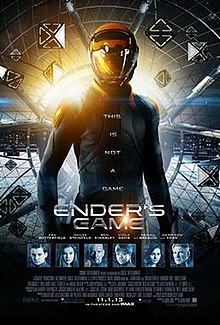
Ender's Game (2013)

★★★

I can never view a movie based on a book except through the lens of the book itself. Probably that's not fair, but here goes...

The movie is sufficiently different from the book that I think the modifications changed the nature of Ender's struggle and development, which basically defined the book. Key themes were undermined by the liberties taken in the movie. For example, Ender's confrontations all fit a pattern of fighting to win "all future fights" against a given adversary, not just the one fight at hand. But his face-off with Bonzo didn't fit this profile, and the way it did unfold took away from Ender's character development as intended in the book. Also, it was critical that Ender be isolated so he would not grow to rely on anyone else nor form any emotional attachments. That internal struggle of his, always feeling alone, was lost in the movie, particularly when his friends were put in the same simulation room with him at Commander School. In the movie, he lost the sense of separation and loneliness that was supposed to define him in the book.

I went into the movie assuming that maybe one thing a big screen version of Ender's Game could offer over the book might be a really action-packed and suspenseful final battle scene. Somehow, though, I didn't find that scene - and the revelation that followed - nearly as dramatic as it was in the book.

Sunday, January 27, 2013

Before Sunset (2004)

★★★

*** WARNING: This review contains MAJOR SPOILERS!!! ***

In my own cynical mind, I imagined that neither Jesse nor Celine showed up in Vienna six months later. I figured both would look upon their magical night in Vienna as a once-in-a-lifetime experience, and they would try to re-integrate into the real world as best they could, though both would remain haunted by the memory of the other, and they would never truly get over each other. I guess I was more or less correct, except I hadn't thought much about how either person would have changed over the nine years that had passed, and I have to admit, I was kind of disappointed.

Nine years earlier, neither Jesse nor Celine were smokers, though at that time, they were in their early 20's, when most people who ever smoke seem to go through their smoking phase. The fact that they became smokers later in life seemed to put them in a less than flattering light, for me. Rather than being young and full of idealism, they now seemed like pretentious, aging adults who wanted to hold on to their youth by talking philosophy in between drags on a cigarette in a Paris cafe.

I also found Celine to be overly pre-occupied with sex. This strange twist on her personality was especially confusing in light of her bizarre show of pretending to forget that she and Jesse had slept together nine years ago. I just didn't get it.

After finding out that Jesse was actually married with a kid, I was surprised that I wasn't as bothered as I thought I would be. I did find myself thinking about his poor wife at home, caring for their 4-year-old son, but Jesse painted such a sad picture of their loveless marriage that I started to feel sympathy for him, figuring that, given the marriage counseling that he said they had tried, surely his wife must be as lonely in the relationship as he was.

Like Before Sunrise, the beauty of this movie lies in the extended scenes of back and forth dialogue between Jesse and Celine. Though maybe there was a profound insight or two - Ken said he knew just what Celine was talking about when she described how being cut off from the rest of the world can be a freeing experience - for the most part, I found the conversations less interesting than in Before Sunrise.

Once again, the ending is intentionally left ambiguous. But, I didn't get that same sense of hope that I had at the end of Before Sunrise. Instead, I saw two sad people who seemed to have wasted so much of their life holding on to a dream of "what could have been", and now that they have the chance, given the place each of them is in his / her life, they just want to make sure they don't have any more regrets. My guess: Jesse misses his flight, he spends the night with Celine, and upon returning home, he asks his wife for a divorce. He and Celine become committed to giving their relationship a try, but it's not clear that the relationship will work out. My only hope is that Celine moves to the Unites States, rather than Jesse moving to Paris, so that Jesse can still be a regular part of his son's life. I'd hate to think he ditches his son.

Sunday, December 30, 2012

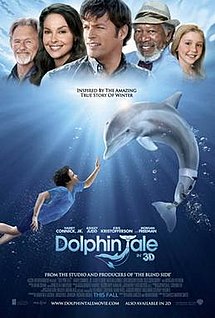
Dolphin Tale (2011)

★★★

*** Warning! This review contains spoilers. ***

A good movie for kids. Even Isabelle - who has seen very few movies because she is easily scared or emotionally upset by scenes that are in any way unpleasant - watched the whole movie and enjoyed it.

I liked the messages that the movie conveyed. A boy who struggled in school found joy in learning when he found a subject about which he was enthusiastic. The same boy saw a problem and found a solution - even though implementing that solution required going out on a limb and committing a lot more than he ever imagined. A young man who was dealt a major blow in the prime of his life learns - with some help from the boy - to overcome personal, physical, and emotional challenges. You get the idea that you should push yourself to do more than you think you can, and every person can make a real impact if they are willing to take action.

I thought for sure that the single mom and the single dad would get together, but the movie skipped that Hollywood twist.

Tuesday, November 20, 2012

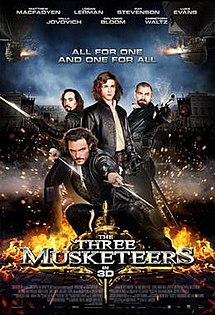
The Three Musketeers (2011)

★★★

Definitely an action-adventure flick. The movie has a lot more swashbuckling and gun fighting than the book, and it's clear this is a Hollywood production. I didn't realize until afterwards that the movie was intended for 3D, and in retrospect, it probably would have been a lot more impressive as a big screen, 3D experience.

From the very beginning, this movie plays fast and loose with the original story. The movie invents a crazy back story in which Athos, Porthos, and Aramis are in cahoots with Milady, and they are involved in some kind of James Bond-like intrigue. Oddly, Buckingham is an over-stylized villain.

I thought Orlando Bloom was overly dramatic as Buckingham, and actually, I would have preferred to see him as d'Artagnan! d'Artagnan was a bit younger than I expected (15-ish instead of 19-ish), and Athos and Porthos came across as a lot older than I expected (mid-30's instead of mid-20's). Buckingham and Aramis shared an uncanny resemblance, which is actually an important point in the book, but completely irrelevant in this movie.

I did enjoy the casting of the cardinal, the king, and the queen.

Besides the glaring deviations from the book, and the altogether invented material, I also wondered why smaller deviations were made. Why make Athos, Porthos, and Aramis ex-musketeers? It would have been fun to see them in musketeer uniforms.

There were also shortcuts and LOTS of omissions - no Captain de Treville, no Grimaud or Mosqueton or Bazin, no fleur-de-lis, no Lord de Winter. But what else could be expected, the book is much too long and complex to be done justice in a two-hour movie.

The ending is completely different from the book's ending, but it's about what you would expect from a Hollywood movie. Clearly there is a sequel in the works, but I don't expect it to be in any way related to the books. Overall, the movie is comfortably light-hearted, and the song for the closing credits, "When We Were Young," really captures the spirit if the book.

Thursday, August 4, 2011

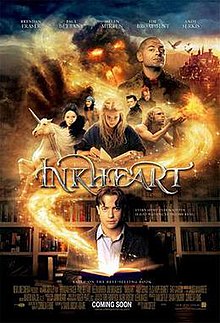
Inkheart (2008)

★★★

A rare case in which the movie was actually better than the book!

I liked the book, but I wouldn't say I'm a huge fan, so all the deviations in the movie really didn't bother me. The movie was true to the spirit of the book, and all the condensing made for a well-paced movie.

I was pleasantly surprised that the character of Dustfinger was much more appealing than he was in the book. The Black Jackets were a bit over-the-top - even considering that I expected them to be over-the-top - but their campiness made the movie more suitable for kids anyway. Capricorn reminded me of the Sheriff in the BBC series Robin Hood.

I actually much preferred the movie's ending over the book's ending. The book is the first of a trilogy, and even though I haven't read the second or third books yet, the finality of the movie's ending makes it seem like there are no plans to make movie versions of books two and three.

Thursday, July 28, 2011

Harry Potter and the Deathly Hallows - Part 1 (#7, 2010)

★★★

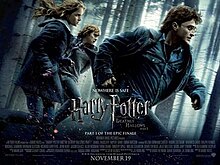
The movie had a good opening, but then it sort of fizzled. Three teenagers on a quest to find and destroy horcruxes is a just a bit too much to swallow, even within the wizarding realm. A big deal was made of Ron destroying the locket, but why couldn't Harry have done it himself? And that scene in which Harry tries to cheer up Hermione with a little dancing was just too sappy and out of place. Still, lots of action carried the story along, and I'm looking forward to watching Part 2!

Harry Potter and the Half-Blood Prince (#6, 2009)

★★★

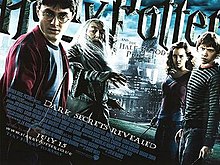
I don't know why, but Ginny Weasley never really impressed me. Maybe it's because her character wasn't properly developed in the movies over the course of the series, but the budding romance between her and Harry annoyed me. Overall, though, I did enjoy the scenes involving teen romance.

This movie had a lot of good moments, but it didn't feel so much like a stand-alone movie as it did a bridge between movies. Also, I was disappointed that even when the identity of the Half-Blood Prince was revealed, the movie didn't explain why that person called himself the Half-Blood Prince. It's not a particularly interesting answer, but I'm sure I would have wondered if I didn't already know.

Harry Potter and the Order of the Phoenix (#5, 2007)

★★★

I had completely forgotten about Dolores Umbrage! Her character was so frustratingly annoying that it actually detracted from my viewing pleasure. And I know Harry's just a kid, but it still seemed like the whole big fight at the Ministry wouldn't even have happened if only he hadn't acted so rashly. I kind of remember the book being even more annoying, but since I've forgotten most everything in the books, I think watching the movie without the book fresh in my mind might have made this second viewing of the movie more enjoyable than the first. The first time I watched it, I thought there were too many characters, too many things going on, and not enough cohesion to hold it all together.

Wednesday, June 22, 2011

Hereafter (2010)

★★★

*** Warning: Minor Spoilers - But Nothing You Couldn't Have Predicted Yourself ***

Kind of slow. Ken said the whole movie had a European feel to it. The girl in Matt Damon's cooking class annoyed me for some reason, and I felt like all her scenes were over-the-top. Of the three disjointed stories, I much preferred Marcus's. Poor kid. I could really feel for him. When everything finally came together in the end, I was left oddly unsatisfied. I felt like Marcus's communion with Jason was anti-climactic, and what was it supposed to mean that Matt Damon and the French lady were able to shake hands without Matt Damon making a "connection"?

Friday, June 3, 2011

The Town (2010)

★★★

After Gone Baby Gone, I had pretty high expectations for another Ben Affleck movie set in Boston. Unfortunately, this one fell short. For a guy who plans and executes expertly-timed heists, Doug showed remarkably poor judgment when he started spending time with Claire. It was too out of character, but since that one relationship was basically the crux of the whole movie, I just couldn't get into it. I was unsatisfied with the ending, too. It did have some strong elements, e.g., Doug's personal history, and the way bank robbery was portrayed as a family business.

Saturday, May 21, 2011

Sense and Sensibility (1971 TV Mini-Series)

★★★

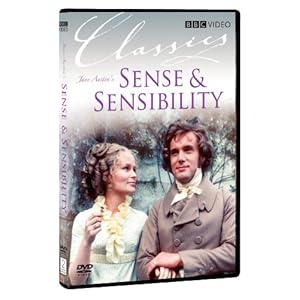
This adaptation was kind of a mixed bag. On one hand, I thought pretty much all the characters were well-cast. I did not mind at all that Margaret was entirely omitted (she was only a marginal character in the book, after all), and only Willoughby was not quite as charming as he should have been. On the other hand, I kept feeling disappointed. Some events, particularly towards the beginning, were a bit jumbled. Bizarrely, Elinor and Marianne were often dressed alike, like twin children. In another odd production decision, there is a scene in which Lucy Steele and Elinor are talking, but the sound of Marianne playing the pianoforte in the background is loud and distracting.

This adaptation's interpretation of Lucy was a bit harsh, I think. It was accurate in that Lucy's actions were always selfishly motivated, as in the book, but the mini-series took it one step further by making her transparently insincere.

What really baffled me, though, was why the adaptation bothered changing Colonel Brandon's background story. When he explains to Elinor why he had to rush off to London so many months ago, it's a story that is entirely told in words - no additional scenes are required. To change the story coming out of his mouth seemed to be a change for change's sake.

I liked the fourth and final episode the best. The scene in which Willoughby confesses to Elinor, when he thought Marianne was dying, was well-done. It also did a good job portraying Marianne's growing regard for Colonel Brandon. One drawback, though, is that when Edward showed up at Barton Cottage at the end, he did not adequately explain how or why Lucy's affections were transferred to his brother Robert.

Wednesday, May 4, 2011

Mansfield Park (1999)

★★★

I liked the casting for this movie so much that it's a real shame that the story deviated so much from the novel. Every character was well-acted and physically well-cast, even if the characters themselves were not true to the book. The actor who played Edmund also played Mr. Knightley in Emma, but I much preferred him in this role.

Fanny was spirited and lively, an imaginative writer of fanciful stories - a far cry from the timid and fearful creature in the book. Eldest brother Tom Bertram was made to be even more disgraceful than in the book (though he was given the moral high ground in the movie), but the real liberties were taken with Lady Bertram - made to be an opium addict! - and Sir Thomas, who, in the movie, had a morally reprehensible role in the slave trade.

Great liberties were taken with the story as well, though I have to admit that the movie managed to faithfully incorporate a lot of dialogue - even if, rather frequently, words were attributed to different characters. Very surprisingly, beloved brother William was entirely left out! His role was more or less replaced by sister Susan. Of course, without him, other elements of the story had to change as well. Many scenes were based on scenes in the book, but were in some way twisted around. One major deviation from the book involving Fanny and Henry Crawford had Fanny acting entirely out of character - basically negating the very principles by which her character was defined in the book. Another very flagrant alteration was in regards to Henry Crawford and Maria's relationship towards the end - the movie sensationalized their behavior, as if assuming the audience would not be entertained enough by early 19th century sensibilities.

All told, the movie was well-made and well-paced, but not a very accurate representation of the book. I should, however, cut it some slack because the credits themselves say the movie is based not only on Mansfield Park but also on Jane Austen's "letters and early journals". It's as if they tried to fit Jane Austen into Fanny's role, which, I dare say, makes me want to find out more about Jane Austen herself.

Saturday, April 30, 2011

Mansfield Park (2007 TV Movie)

★★★

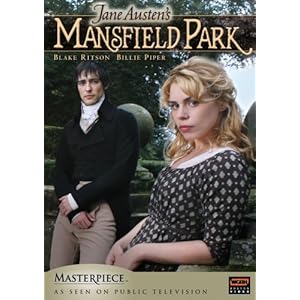
The more screen adaptations I watch, the more I realize how much of an image for each character I already have in my mind for having read the book first. In this case, I thought Miss Crawford and Edmund (the same actor who played Mr. Elton in a version of Emma) were well-portrayed, but the rest of the cast fell short of my expectations. Fanny's dark eyebrows were distracting, and she was much more gay and lively than the timid and frail creature presented in the book. Mrs. Norris was not at all the selfish, bustling busybody and Fanny's cruel oppressor that she was in the book, and she was actually rather reserved. Lady Bertram was improved upon nicely, but several characters were entirely omitted.

The movie managed to stay very true to some scenes in the book while taking very great liberties with others. Fanny hardly seemed to be the second-class family member that was so central to her character in the book, and maybe because of that, the movie did not include her visit to her family (as it wasn't necessary for this character's development). The movie also did not include any charming childhood scenes, which set the tone in the book for Fanny and Edmund's relationship. What was included was well-done, and the movie was well-paced.

As for the final scene - I have to admit, I'm not sure what the point was of having Edmund and Fanny show off a new style of dance, nice as it was to watch.

Tuesday, April 19, 2011

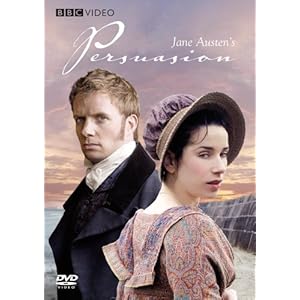
Persuasion (2007 TV Movie)

★★★

With less than two hours' running time, a bit of condensing is not unexpected. This movie goes further, though, and takes quite a lot of liberties going beyond simply omitting scenes or combining multiple scenes into one - both of which do occur in this movie. A lot of additional dialogue not in the book was created to fill in some backstory (I have to admit, at least a few scenes were well-done and added to the story's flow), and a lot of memorable dialogue in the book was unfortunately left out. Surprisingly, a particular conversation towards the end of the book that serves a very significant purpose is relocated to much earlier in the movie, and one of the speakers is substituted with another character. Moreover, the movie went so far as to create its own drama beyond that of the book. Finally, a lot of understanding that might have been conveyed through acting was instead conveniently and straightforwardly explained via an internal monologue as Anne writes in a diary.

Except for Mary and Sir Walter - both of whom I thought overacted - the rest of the characters were well-cast. Lyme, however, was not so picturesque. The overall story, though somewhat jumbled, did follow the basic arc of the book. But I just couldn't get past all the deviations from the book. And I wasn't too fond of the shaky camera trick, either.

Saturday, April 2, 2011

Sense and Sensibility (2008 TV Mini-Series)

★★★

This is actually a 3-hour mini-series, and being a bit longer than the movie, it's well-expected that this adaptation should have enough time to incorporate more of the details from the book, including characters that the movie omitted.

Even though this adaptation was faithful to the book, I couldn't help but be occassionally disappointed by it. The opening seduction scene seemed entirely out of place. The pace was sometimes slow, and the music over-dramatic, but on the whole the series did improve as it went along. Strangely, in many ways this adaptation seemed to be based in part on the 1995 movie, as it included multiple scenes from that movie that weren't even in the book. Finally, characters sometimes deviated from the book in ways that seemed not to suit them. For example, Edward was more charming and eloquent, and less socially awkward, than in the book; Colonel Brandon was also more charming and less brooding (he doesn't hold a candle to Alan Rickman's portrayal); and Willoughby is not so dashing or easily likeable, even going so far as having something of an air of some kind of evil.

Thursday, March 24, 2011

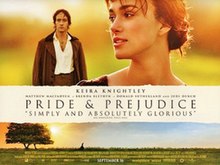
Pride and Prejudice (2005)

★★★

Watching this on the heels of the almost perfect TV mini-series, I can't help but compare the two. While this movie was quite a bit less satisfying than the mini-series, I think, judged by itself, it does a relatively good job standing on its own.

A respectable amount of dialogue was taken from the book, which I always like. Even more impressive was that some of my favorite lines that were left out of the mini-series were included in this movie. The story is faithful to the book, even if much of it is super-condensed - multiple scenes and conversations occurring over many days in the book are sometimes rolled together into one scene in the movie. I have to admit it did perhaps as well a job as could have been done under the time constraints.

Many characters are entirely omitted, and some characters are portrayed slightly differently than in the book: Elizabeth is much more passionate and, from the beginning, is more engaged in the process of finding a husband, Mrs. Bennett is not so dramatic, Mr. Bingley bumbles too much, Mr. Collins is too serious, and Mr. Darcy, I'm afraid, is not quite so proud. The movie also portrays conflicts much more obviously and heatedly than in the book, and a number of scenes were altered for dramatic effect.

Finally, the set design and costume seemed more along the lines of American Colonial, not so much British Regency. For me, this bit of poetic license detracted from the elegance and charm of the story's context.

All in all, I think I would have been more satisfied with this version had I not seen the mini-series first.