Showing posts with label Beverly Cleary. Show all posts

Tuesday, September 15, 2015

Socks by Beverly Cleary

★★★★★

Being as big a fan of Beverly Cleary as I am, I can't believe I hadn't read this one before. As it turns out, I think this book would be a good read not only for elementary school-aged kids, but also for first-time expectant parents, especially those with pets, and also parents who are expecting their second child (to gently remind them not to inadvertently neglect the first-born).

Socks is a cat who was adopted by a lovely couple. He had a happy life until the day the couple had their own baby. As the first-time parents fussed over their precious Charles William - with a certain amount of comical cluelessness that I recall from my own first days as a new parent! - poor Socks was ignored, overlooked, and actually relegated to the laundry room.

The good news is, there is a happy ending. But along the way, I really felt for Socks! Poor thing. He deserved better.

Friday, March 28, 2014

The Mouse and the Motorcycle (Ralph S. Mouse #1) by Beverly Cleary

★★★

I'm generally not a huge fan of anthropomorphized animals, and I am even less of a fan when the animals and humans converse with each other. Maybe I just lack the necessary imagination for suspended disbelief. I didn't even like the idea that the toy motorcycle could be powered to actually run simply by making fake motorcycle noises!

All that aside, I do see value in this book. Mostly I like it because it held Sebastien's interest. This was our first chapter book outside of the Magic Tree House series. He wasn't crazy about it, and he didn't ask me to read it as eagerly as he had asked for the Magic Tree House books to be read at bedtime, but he let me finish the book, and he wants to read the next one.

It's a cute story, with some nice lessons about being responsible and growing up.

Saturday, March 15, 2014

Leigh Botts Roundup

I surprised myself by giving both the books in this 2-book series a 5-star rating!

Even though I prefer reading series books back-to-back, I have to say, I think these two books should be split up by a few years. Dear Mr. Henshaw is very appropriate for elementary school readers, but I think kids will get more out of Strider if they read it in middle school.

Strider (Leigh Botts #2) by Beverly Cleary

★★★★★

Even though I have clear memories of reading Dear Mr. Henshaw, I had never read Strider. Now that I'm reading all these series books with Isabelle, I have a kind of compulsion for finishing series that are the least bit interesting to me. As it turned out, Strider was published in 1991 - when I was about the same age as Leigh in the story! I'm kind of bummed now that I didn't read it when it first came out, but I don't even remember hearing about it at the time.

I read this book right on the heels of Dear Mr. Henshaw, but it still took me a few chapters to get into it.

If Dear Mr. Henshaw was at times wistful and sad, with Leigh feeling lonely and despairing, then this book is - for a while anyway - downright depressing. It's sad that Leigh and his father don't have a good relationship, especially since there's a sense that they did before the divorce, even if his dad was on the road a lot. I know it's the last thing that children of divorce of supposed to do, but there was a part of me that actually hoped Leigh's parents would get back together! Well, of course, that's not the sort of book that Beverly Cleary would write, and the story definitely picked up and ended on a very happy, satisfying note.

Even though Leigh has problems, he's actually very well-adjusted. He's self-aware enough to write about his feelings in a diary, and he has a healthy, balanced perspective on life. The reading level is appropriate for upper elementary school readers, but I think middle school students might get more out of it.

Thursday, March 13, 2014

Dear Mr. Henshaw (Leigh Botts #1) by Beverly Cleary

★★★★★

I think reading the Daddy-Long-Legs books got me into a mood for reading epistolary novels!

This is another book I clearly remember reading as a kid. I think at the time, I just really enjoyed the letter format, and it was fun to imagine what Mr. Henshaw wrote in his responses.

Now, reading this book as an adult, I just think it's such a great book for young people. In contrast to some of Beverly Cleary's other books - like the Ramona and Henry Huggins series - Leigh Botts doesn't have a perfect home life. Written in 1983, this book seems to have more modern sensibilities. Plus, Leigh is in sixth grade, so he's a bit older than Ramona and Henry were in their books. Leigh's parents are divorced, he's the new kid in school, and he's just not happy. Even if a young reader doesn't exactly identify with Leigh and his problems, I think it's a good eye-opener that can help kids to be sensitive to other people's problems.

Poor Leigh Botts is really unhappy about many things. Basically, his letters to Mr. Henshaw, and Mr. Henshaw's measured responses, help him to sort through his emotions and figure out how to deal with his problems. The book left me with a nice feeling that even if life doesn't turn out the way you want - even if you do feel sad and lonely now - you really will be okay.

Also, Leigh's interactions with Mr. Henshaw, Mr. Fridley, and Angela Badger reminded me just how much of an impression adults can make in a young person's life. Even the smallest words exchanged can be so meaningful to a young person.

Wednesday, March 12, 2014

Otis Spofford (Ellen & Otis #2) by Beverly Cleary

★★½

Aw, I guess Otis Spofford is alright. This is another book that I have clear memories of reading when I was a kid, but I'm not sure where it fits in in today's society.

In this follow-up to Ellen Tebbits, we get to know the troublemaker in Ellen's class, Otis Spofford. Surprisingly - and this is the genius of Beverly Cleary - I actually got to feel sorry for Otis. On the one hand, he purposely went looking for trouble - though he called it "excitement". He knew he was misbehaving, and he wanted to see how far he could push Ellen and his teacher, Mrs. Gitler. And, he didn't care whose toes he stepped on in order to get what he wanted. On the other hand, we don't know where his father is, but we know he lives in a small apartment with his busy working mother who doesn't seem to have much time for him. He has his "pals" in school, but they aren't really "friends"; Otis doesn't ever consider George or Stewy's feelings when he goes about his search for excitement, and they egg him on in his bad behavior, never having to face the consequences of Otis's actions.

Most striking to me, as an adult reader, is how Otis's bad behavior in school was disciplined in school, and his mother was never informed of his antics. I wonder if that was really the case in the 1950's - that school was considered a much more separate institution from home. These days, when many schools have a climate of hyper-awareness when it comes to bullying, it seems like Otis's mother would be frequently called into school to meet with the teacher or the principal or a child psychologist.

Anyway, in the end, there's a solid lesson about standing up for yourself against bullies, but even though Otis got his "come-uppance", I'm not really sure there was any real resolution for him. I find myself wishing there was a sequel to this book, to find out how Otis might have been made to shape up for real. Maybe it would have involved some big brotherly treatment from someone like Hack Battleson, the football player Otis looked up to.

Sunday, March 9, 2014

Ellen & Otis Roundup

Another 2-book "series", but still worth compiling!

Mostly, these two books seem dated to their 1950's time period. It's fun to read about Ellen and Otis, but their experiences don't seem like they would necessarily resonate with modern readers.

Ellen Tebbits (Ellen & Otis #1) by Beverly Cleary

★★★

I have clear memories of reading this book as a child! But interestingly, reading it as an adult, it mostly just struck me as old-fashioned. Even though it's set in about the same time period as the Ramona and Henry Huggins books, it just seemed out of date, while the Ramona and Henry Huggins series seem timeless.

Many of the anecdotes take place within classrooms, and I was so surprised to find myself feeling that the classroom dynamics were inappropriate, even though they reminded me of just what my own elementary school days were like. For example, rather than assigning and rotating job duties fairly among all students - which is the norm in today's classrooms - the teachers simply handpicked students to do special jobs, making the students who were never chosen feel as though the teacher didn't like them.

There was another kind of childhood injustice depicted in the book that I think is still quite prevalent today. More than once, Ellen is called out for whispering in dance class, even though she is only trying to respond to Otis's bad behavior by asking him to stop. Ellen gets disciplined, but Otis does not. I remember feeling wronged as a child when I was disciplined for doing something bad while the other child who "started it" got away with their bad behavior. Like Ellen, I didn't dare speak up to defend myself, and even if I did, it would probably have been seen as talking back to the adult, or tattling on the other student. I know that both my kids have experienced this type of inequity already, and at the very least, I like that this book shows them that they are not the only ones who are sometimes treated unfairly due to a misunderstanding or an adult's incomplete view of a situation. Or, as in Ellen's case, perhaps a true bias, as the instigator, Otis, was the dance teacher's son!

Anyway, I think Ellen and Austine's friendship was realistic, and on the one hand I think it's nice for children to read about all kinds of relationship dynamics, so they get to understand that a whole range of experiences - including fighting with friends - is normal. On the other hand, though, I really disliked the way Austine so quickly replaced Ellen, and what would become of Linda after Ellen and Austine made up? Still, I really liked that Ellen and Austine resolved everything between themselves, not just apologizing, but also fairly understanding the other person's point of view.

Thursday, April 4, 2013

My Own Two Feet by Beverly Cleary

★★★★

This book literally picks up where A Girl from Yamhill leaves off, with the author on a bus heading for junior college in California.

I enjoyed this book and found it more personal than A Girl from Yamhill, which I thought was written rather matter-of-factly.

We follow the author as she attends college, goes to librarian school, and finds employment, all the while making friends, meeting men, and learning and striving to stand "on her own two feet". Her naivete, and her retrospective self-awareness of it, is amusing.

I think this book would make a good read for a teenage girl who was a fan of Beverly Cleary's books as a child. Even if many of the references are old-fashioned, the author makes for a good role model. She shows integrity, perseverance, and diligence while also making time for an active social life.

Much of what I found interesting in this book was the author's first-hand account of life during the Depression and World War II. Her experiences as a librarian during a time in which reference questions could not be easily and conveniently Googled and carefully maintained card catalogs were the backbone of libraries was fascinating. Perhaps I am showing my ignorance or my age, but I will mention that the author used the acronyms NYA and WPA without explaining them; one quick Google search told me that NYA = National Youth Administration and WPA = Works Progress Administration.

While A Girl from Yamhill offered sporadic connections to Beverly Cleary's books in the early chapters, it is only in the very last part of the final chapter of My Own Two Feet that we are given a satisfying glimpse into the author's writing of her first book, Henry Huggins.

As a fan of Beverly Cleary's works, I wish the book had provided even more background on her life as an author, like where she found her inspiration for other characters besides Henry Huggins, and what anecdotes in her books came from incidents in real life. By the time she wrote this memoir, she had already won awards (she makes a very brief mention of one in particular), and I would have loved to read about how she felt when she received her first award, and what it was like for her to meet and/or receive letters from fans. Her strained relationship with her mother was a theme in both her autobiographies, and I found myself wondering how that relationship might have affected the way she mothered her own children. This book, however, only briefly mentions that she had twins later in life, and the narrative stops right after Henry Huggins was published, before she becomes a mother. As a mother myself, I further wondered how being a mother might have affected her writing, or how her experience as a children's librarian and author might have affected her parenting.

Sunday, March 24, 2013

A Girl From Yamhill by Beverly Cleary

★★★★

*** Warning: This review contains spoilers! ***

I picked up this book to read aloud with Isabelle because I really, really enjoyed reading the Ramona Quimby and Henry Huggins series with her. We both thought it would be fun to learn more about the author together.

This book was just on the verge of holding Isabelle's interest. It does not have a strong narrative flow besides being told chronologically. The author basically very matter-of-factly recounts a series of choppy remembrances from her childhood. While there is an occasional bit of self-analysis, mostly there isn't a lot of depth. But, there are plenty of interesting anecdotes, and overall, this book is a good read for any Beverly Cleary fan.

Some of the stories about the author's childhood on a farm, and the histories of her ancestors who ventured out west in covered wagons, were reminiscent of the Little House series, which Isabelle loves. It was fun to draw connections between Beverly Cleary's family's life and Laura Ingalls Wilder's family's life.

Every so often, especially in the earlier chapters, we were treated to childhood experiences that clearly served as inspiration for Ramona Quimby's behavior or other aspects of Beverly Cleary's books. Isabelle and I enjoyed making those connections, too.

It was fascinating to read a first-hand account of how different life was back in the 1920's and 1930's, particularly during the Depression. I like that Isabelle was exposed to a whole different way of life that was part of the American experience. Schools especially have changed quite a bit. The author really had quite a difficult childhood after her family moved to the city. She frequently felt out of place among her peers, she and her family constantly worried about money, and her parents seemed unhappy and were not demonstrably affectionate with each other or with their daughter. In some ways, it was sad to realize that the author of so many happy children's books felt so much unhappiness in her own childhood. I actually think the book showed Isabelle that she has a lot to appreciate, though I don't know if she really got that message.

This book is appropriately categorized as "Young Adult". I do think Isabelle got a lot out of this book, even though I ended up not reading every word verbatim. I had assumed that the categorization was based predominantly on the length of the book, vocabulary, and sentence structure; it didn't occur to me that this book might contain "mature content", which it does. Besides having to explain to Isabelle the meaning of concepts like "mortgage" and "the Great Depression" (suitable topics, but mostly above her head), I also had to gloss over, or skip entirely, parts that included ideas that she just isn't old enough for. In one case, I did read the questionable material (ad-libbing when necessary), and then used the author's experience as a springboard for discussion.

Specifically, these are the "Young Adult" a.k.a. "not for children" topics that are mentioned in the book:
  • The book talks explicitly of Santa Claus's non-existence.

  • The author had a creepy uncle who made sexual advances towards her. For the most part, this chapter remained "PG-rated", though the word "sex" did appear a couple times throughout the book.

  • There is a brief mention of the fact that one of the author's friends had a father who committed suicide.

  • One of the author's friends innocently uses the word "chippy" as short for "chipmunk", only to find out later that it is slang for "prostitute".
A couple times, Isabelle realized that I was not reading the book word for word, and apparently, that really bothered her. She felt like she was missing out on something. I just had to remind her that the book is for "Young Adults", and some ideas or words in the book just aren't appropriate for a child her age.

This book ends with Beverly Cleary going off to junior college. To learn about her adult life, I will have to read her other autobiography, My Own Two Feet. That book is also categorized as "Young Adult", and I plan to read it on my own, though Isabelle has already expressed that she would like me to tell her the highlights!

Wednesday, February 20, 2013

Henry Huggins Roundup

Here's a summary of all my ratings for the Henry Huggins series:
  1. Henry Huggins (#1) ★★★★★
  2. Henry and Beezus (#2) ★★★★½
  3. Henry and Ribsy (#3) ★★★★★
  4. Henry and the Paper Route (#4) ★★★★★
  5. Henry and the Clubhouse (#5) ★★★★★
  6. Ribsy (#6) ★★★★

Ribsy (Henry Huggins #6) by Beverly Cleary

★★★★

I'm so sad to see the Henry Huggins series come to an end!

In this book, Ribsy gets lost, and we follow his adventures as he tries to find his way home. It reads kind of like Harry the Dirty Dog, in that the main character is a dog, and we see events from the dog's perspective.

This is a great book about Ribsy, but I did find that I missed Henry and Beezus and the other kids on Klickitat Street. Isabelle gave it 4 stars because she thought it was too exciting; she actually felt a lot of anxiety about whether or not and how Ribsy would get back to Henry. I had to repeatedly reassure her that Beverly Cleary wouldn't let Ribsy stay lost forever, and it was a bit of comfort, too, that she peeked ahead and saw an illustration of Henry and Ribsy together at the very end of the book.

Tuesday, February 12, 2013

Henry and the Clubhouse (Henry Huggins #5) by Beverly Cleary

★★★★★

Another fantastic book about Henry Huggins! This book ended on such a high note that towards the end, I just couldn't stop smiling.

It's true the book is about Henry building his clubhouse, but the title easily could have been Henry and Ramona. I loved seeing Ramona play a bigger role in this book, and I especially enjoyed reading about her relationship with Henry. Even though Ramona is generally considered the neighborhood pest, she really redeems herself in the last couple chapters of this book. She is downright endearing! (Especially if you read an edition illustrated by Tracy Dockray.)

As usual, I just loved Henry Huggins. He is so resourceful and hard-working! Just an all-around really good kid. He knows the value of a good idea, he understands the importance of seeing things through (even if it's something you don't want to do, but you know you have to do it), and he takes pride in his work. He's not perfect, and we see how he struggles with Ramona, who bugs him a lot. But instead of just complaining about her, he finds a solution - and not just any solution! A really ingenious one!

Tuesday, February 5, 2013

Henry and the Paper Route (Henry Huggins #4) by Beverly Cleary

★★★★★

This installment of the Henry Huggins series does not disappoint! As soon as I read the final sentence and closed the book, Isabelle shouted, "Five stars!"

In this book, Henry shows compassion, initiative, drive, and determination. He sees four adorable kittens and goes to great lengths to keep them from being sent to the pound. He wants a paper route, and by golly, he will convince Mr. Capper that he is responsible enough to have one! His school has a paper drive, and - inspired by an off-hand suggestion from a friend - he comes up with an idea to collect the most paper. Henry quickly becomes overwhelmed with the success of his idea, but he follows through and keeps his word.

I LOVE that Henry typed up his advertisements on a typewriter and used carbon paper! It was really fun talking to Isabelle about how Henry had to do things the old-fashioned way because home computers, printers, and photocopiers weren't invented yet. It was interesting, too, to see how the primary definition of a word can change over a few decades. To Henry, a "premium" is something that comes free with the purchase of something else, while I generally associate the noun "premium" with the cost of insurance.

Saturday, February 2, 2013

Henry and Ribsy (Henry Huggins #3) by Beverly Cleary

★★★★★

*** Warning: This review contains spoilers! ***

This book is aptly named. Even though Ribsy is an important supporting character in all the Henry Huggins books, in this one, he is in the spotlight. If he behaves, Henry can go on a fishing trip with his dad!

For some reason, this book was much more dramatic than any of the other Beverly Cleary books we've read so far. At one point, there is a scene in which Henry is in a bit of a pickle. He is at the playground, and a bunch of mothers gather around him because it looks like Ribsy chased a wailing Ramona up the jungle gym. We readers know that the situation is not at all what it looks like, but the mothers are determined to get Ribsy sent to the pound. Isabelle was so anxious, she actually stood up because she couldn't sit still! She made worried, whining noises, and couldn't bear the suspense - I thought she might even cry! Even though it was like I couldn't read fast enough for her, I had to pause and calm her down, reminding her that Henry is resourceful, and Beverly Cleary wouldn't let anything bad happen to Ribsy! (Thankfully, the resolution was very satisfying, and both Isabelle and I felt relieved!)

The ending of this book also seemed like it was more of a high than any other happy occasion in any of the other books. Henry goes on the fishing trip with his father, and though it started off disappointing, Henry more than made up for it with his big catch! It was such an exciting crescendo that Isabelle and I were practically giddy as we read. And of course, Isabelle said her favorite thing about this book was that Henry caught his fish!

Thursday, January 24, 2013

Ramona Quimby Roundup

I remembered that I had summarized my ratings for all the Jane Austen novels I read, and maybe I should do the same for the Ramona series.
  1. Beezus and Ramona (#1) ★★★★★
  2. Ramona the Pest (#2) ★★★★★
  3. Ramona the Brave (#3) ★★★★★
  4. Ramona and Her Father (#4) ★★★★★
  5. Ramona and Her Mother (#5) ★★★★
  6. Ramona Quimby, Age 8 (#6) ★★★★
  7. Ramona Forever (#7) ★★★½
  8. Ramona's World (#8) ★★★★★

Henry and Beezus (Henry Huggins #2) by Beverly Cleary

★★★★½

*** Warning: This review contains spoilers! ***

Isabelle emphatically wanted to give this book 5 stars, and I probably would have given it 4 stars, so I'm compromising with 4 1/2.

The book it titled Henry and Beezus, and Beezus does have a nice supporting role, but their relationship wasn't exactly a focal point, like the way the relationship between Beezus and Ramona was a central concern in Beezus and Ramona. Scooter McCarthy is probably mentioned more often than Beezus, though Henry's relationship with Scooter is kind of about friendly one-upmanship, and perhaps not title-worthy. Going into this book, I thought maybe it would be more about Henry and Beezus planning stuff together, or getting into trouble together, but more often than not, Beezus just happened to be there, or she - and Ramona - tagged along while Henry resigned himself to their company, or at best was indifferent. Still, any time Beezus was involved, she invariable came to Henry's aid or otherwise supported him in some way. I think she was a good friend to Henry, and I wish the book had explored that friendship more, and maybe even had Henry seeking out and enjoying - or at least appreciating - her company more often.

Also, one detail at the end of the book bothered me, and I'm not sure if I missed something, or what. Henry was embarrassed to win a bunch of beauty salon coupons at a raffle, but was then quite pleased with his prize when he realized that his mother and her friends would buy the coupons off of him. The thing is, Beezus was the first to offer to buy a coupon for a free permanent wave (I love how dated the book is!) - Henry had won 2 such coupons - and she was thrilled when Henry said yes. But then later, Henry's mother and Scooter's mom offer to buy the same coupons for more money, and the implication is that they get the coupons - so Beezus is left with nothing! But the book doesn't even mention Beezus getting shafted, so it seems like that point was entirely overlooked...

Anyway, other than those two shortcomings, it really is an enjoyable book. Henry is on a quest to own a bicycle, and I love how he exhibits patience and resourcefulness as he goes about earning the money himself. Of course, Isabelle says her favorite thing about this book is that Henry gets his bike!

Saturday, January 19, 2013

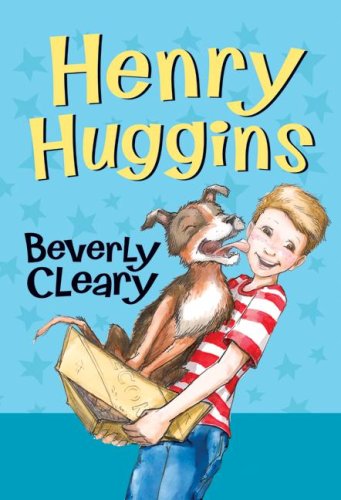
Henry Huggins (Henry Huggins #1) by Beverly Cleary

★★★★★

I never did read any of the Henry Huggins books when I was a kid, and boy, did I miss out!

Isabelle said she wanted to give this book 4 1/2 stars, and when I asked her why not 5 stars, she said, "Because it wasn't long enough." So, given that the only "problem" was that the book left her wanting more, I think 5 stars is a fair rating for both of us.

I really loved how good-natured Henry is. I'm not sure how old he is in the book - maybe 5th grade? He is basically an all-around good kid. As we watch him navigate his adventures (all of which are quite humorous!), we see that he is well-meaning, resourceful, and hard-working. He is not afraid of new experiences, he figures things out as he goes, and he is not easily frustrated, upset, or discouraged. I am sure Isabelle did not identify with Henry as much as she did with misunderstood Ramona and her growing pains, but I think Henry - like older, responsible Beezus - is a good role model for behavior.

When asked what she likes about this book, Isabelle said simply, "That Henry finds Ribsy." Though not all of the stories in this book involve Ribsy, it's clear that Henry and Ribsy have that special boy-and-his-dog relationship that is more akin to friendship than ownership.

Saturday, December 22, 2012

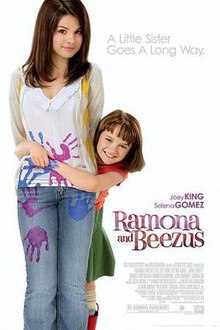
Ramona and Beezus (2010)

★★★½

Isabelle was the one who actually gave this movie the 3 1/2 star rating, and when I asked her why it wasn't so great, she said, "The beginning wasn't very interesting." I agree! It started out kind of slow, and we had no problem pausing it in the middle to eat dinner. Returning to the movie after dinner, it gradually got better so that by the end, I was really enjoying it.

Even though the Ramona Quimby books span ages four through ten for Ramona, Ramona is nine years old in this movie. Still, the movie manages to include plenty of Ramona's misadventures from the entire series, and they are all tied together really well.

As you'd expect, there was plenty from the books that was omitted. I didn't mind Daisy being left out, but I did miss Yard Ape.

Actually, any disappointment I may have felt about omissions was probably made up for by the clever additions. In the books, Beezus, as Aunt Bea's namesake, seemed to have more of a connection with Aunt Bea. In the movie, Ramona also had a connection because they were both younger sisters. I liked that Beezus and Henry Huggins were into each other in high school. (Henry gradually just faded away in the books.) Uncle Hobart was more likable in the movie, and he and Aunt Bea's relationship was more fleshed out, though his profession wasn't exactly clear in the movie. Mr. Quimby was well portrayed, and I like the way his job situation was resolved in the movie.

In the movie, a bigger deal was made about the Quimby family having to move so that Mr. Quimby can accept a job farther away. In the book, it was just a possibility, but in the movie, the house was actually put up for sale. Isabelle said her favorite part of the movie was that the Quimbys got to stay in their home.

Ramona's World (Ramona Quimby #8) by Beverly Cleary

★★★★★

Even though I was so sad to say goodbye to Ramona, I was pleased that the series ended on a high note.

This book returns to the familiar format of the earlier books in the series. It focuses on Ramona, her growing-up experiences, and how she deals with them. In Ramona's World, Ramona makes a new best friend, her friendship with Yard Ape continues to develop, and she and Susan even come to a bit of an understanding. She is more mature and responsible, though she still manages to inadvertently get herself into trouble.

I like that this book also puts a spotlight on Beezus's growing-up experiences. It's her first year in high school, and she is worried about her complexion, she makes new friends, gets her ears pierced, and goes to her first boy-girl party.

Isabelle may not be old enough to really understand some of the Beezus stuff, but I think she can relate to Ramona's struggle with spelling - that is, having to put up with something she has to do, but doesn't like. (In Isabelle's case, that would be Chinese school homework.)

I even picked up a little parenting tip! When Ramona faces a situation in which she turns to her mother for help, Mrs. Quimby says to Ramona, "Cope". I like that! Instead of getting into a wordy reminder to "find a solution" and "work it out yourself" - just one word is needed.

Finally, I like that Ramona's attitude towards Roberta is more complicated now than it was when she was first born. At first, Ramona was all happy and welcoming, but just like in real life, the reality of having a new family member quickly sinks in. Ramona doesn't get so far as to resent Roberta, but she is no longer always thrilled to have the baby around, and it's clear that she understands that she has to share her mother even more now, and she especially values any time she gets to spend with her mother.

As for Isabelle, what she liked most about this book is that Ramona and Yard Ape become friends. I like that, too!